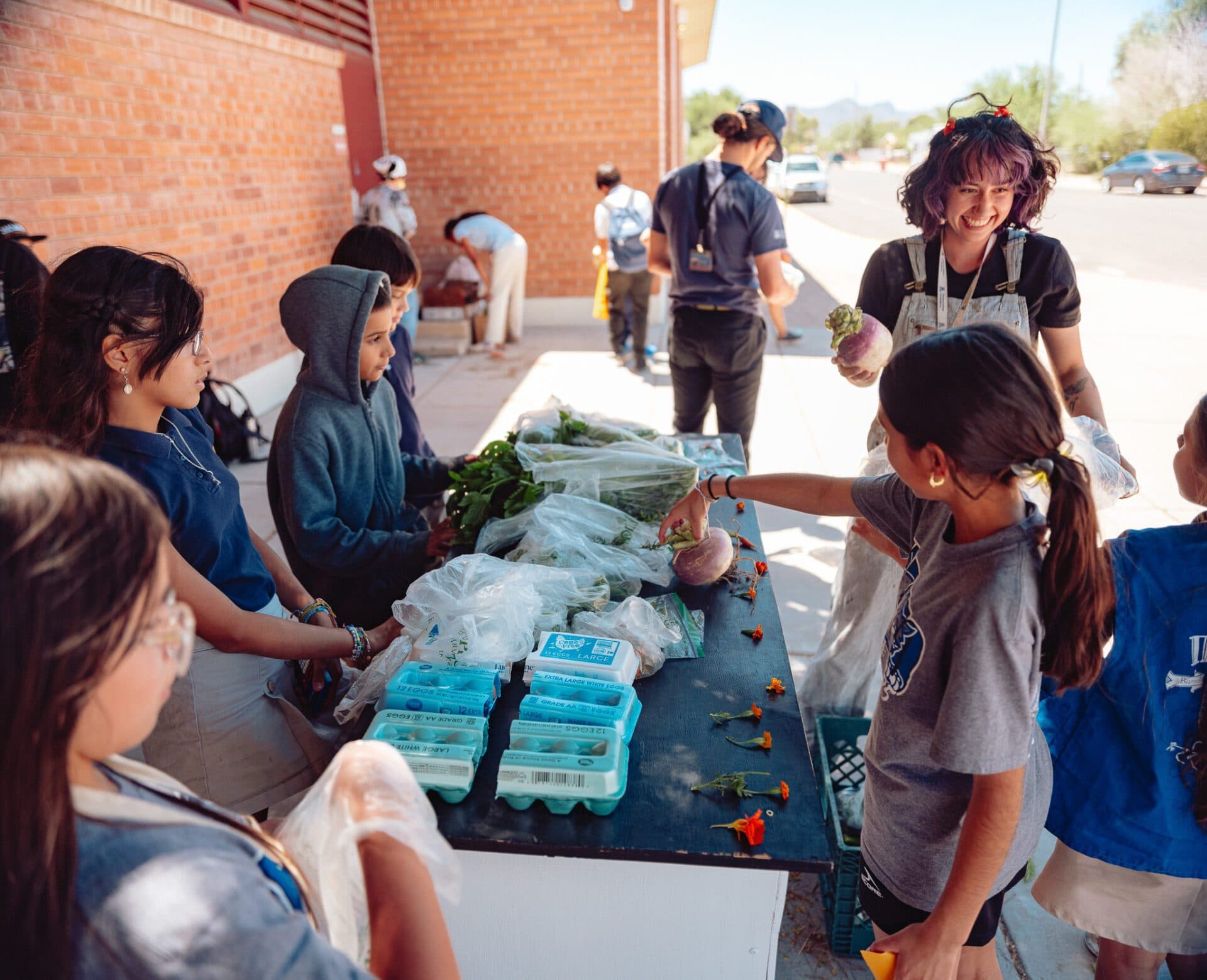

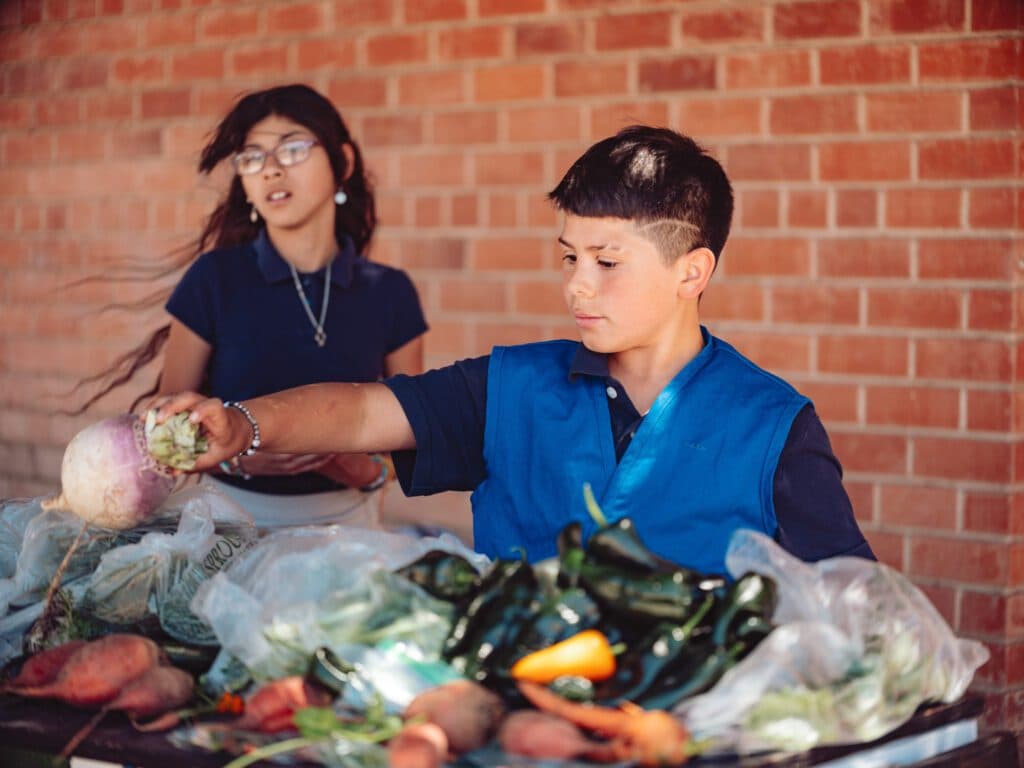
“I like eating carrots, celery, and some of the squashes” said Charlotte Johnson, a fifth grader at Manzo Elementary School. She’s talking about some of the vegetables she helped grow in the school gardens. “If it’s new, I’ll try a little bit, but if I don’t like it, that’s okay. I’ll try something else.”
Charlotte also enjoys giving garden tours to visitors and selling produce in the school’s weekly farmers market.
Social confidence and culinary adventurousness are among the many evident benefits of the School Garden Workshop program, a partnership of the Tucson Unified School District (TUSD) and the University of Arizona. Moses Thompson, the program’s director, says its value wasn’t fully appreciated until the pandemic hit.
“For a long time, no one took whole child wellness and the therapeutic benefits of gardening and connecting kids with nature seriously,” Thompson said. “When the schools closed, the mental health of K-12 students went sideways. Now, social and emotional learning in schools is really front and center.”
A Bit of Background
Many people helped create the School Garden Workshop program, but two stand out as its prime drivers.
At TUSD, Thompson set things in motion. In 2006, he started working as a guidance counselor at Manzo, a Title One school in Barrio Hollywood. Thompson soon enlisted his students in a service project for the Student Council.
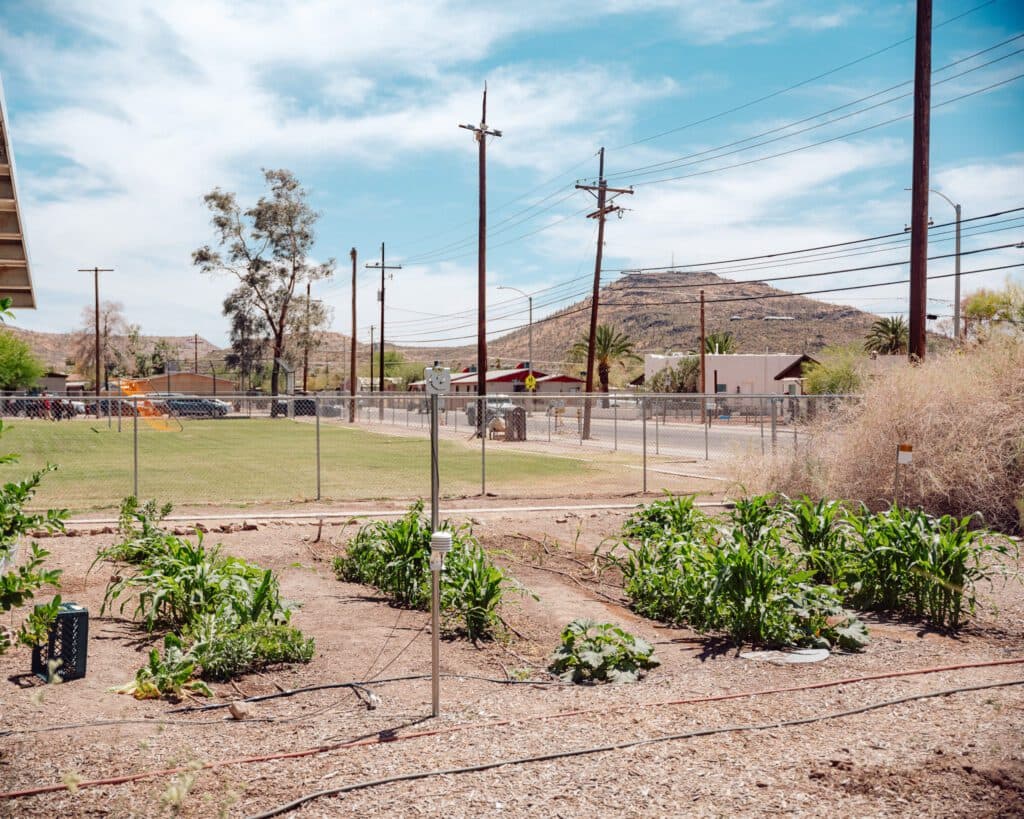
“There was a vacant lot that belongs to the city across from the school that was always full of old mattresses and tires and things,” he said. “We removed everything, restored the soil, and made a kind of Sonoran Desert ecosystem.”
Thompson soon began to see how working outside the classroom could enhance both emotional and academic learning.
“I started using gardens therapeutically with the students and to connect with the neighborhood and the families, to do counseling work that was more culturally responsive,” he said. Over a ten-year period, “we went from that project to the front of the school where the students began rainwater harvesting, to a tortoise habitat, to the vegetable garden… It was very organic, very grassroots. We didn’t have a grand vision. We just used what we learned and expanded on it.”
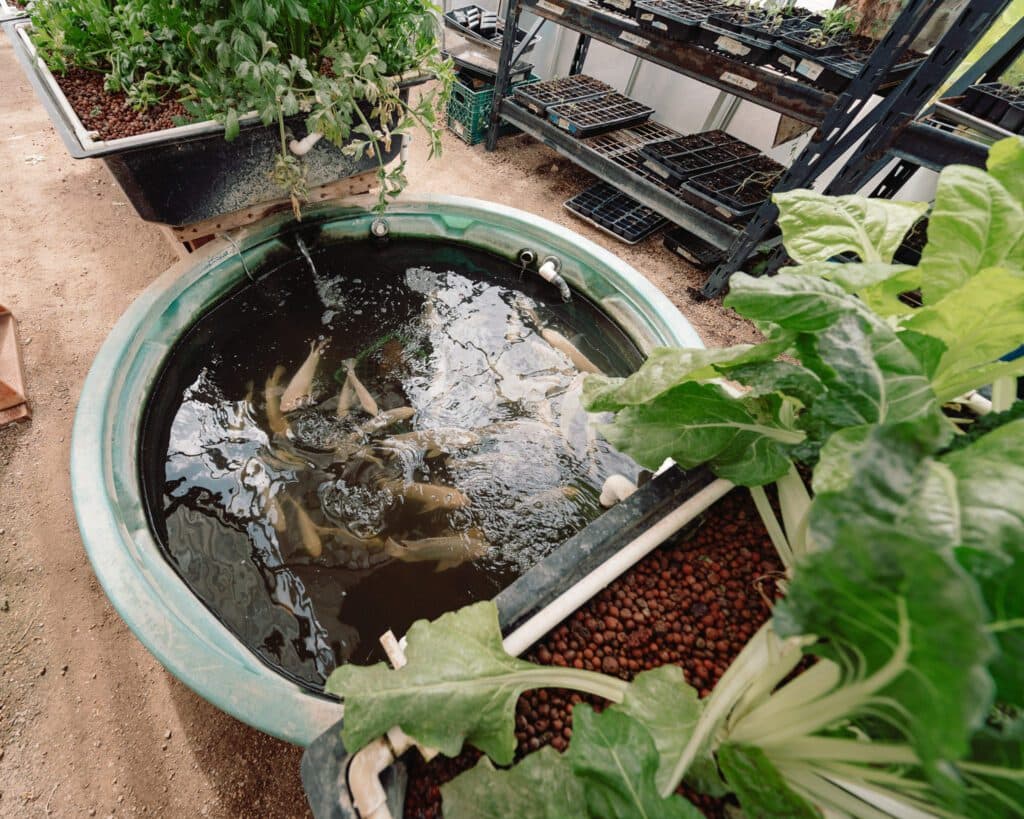
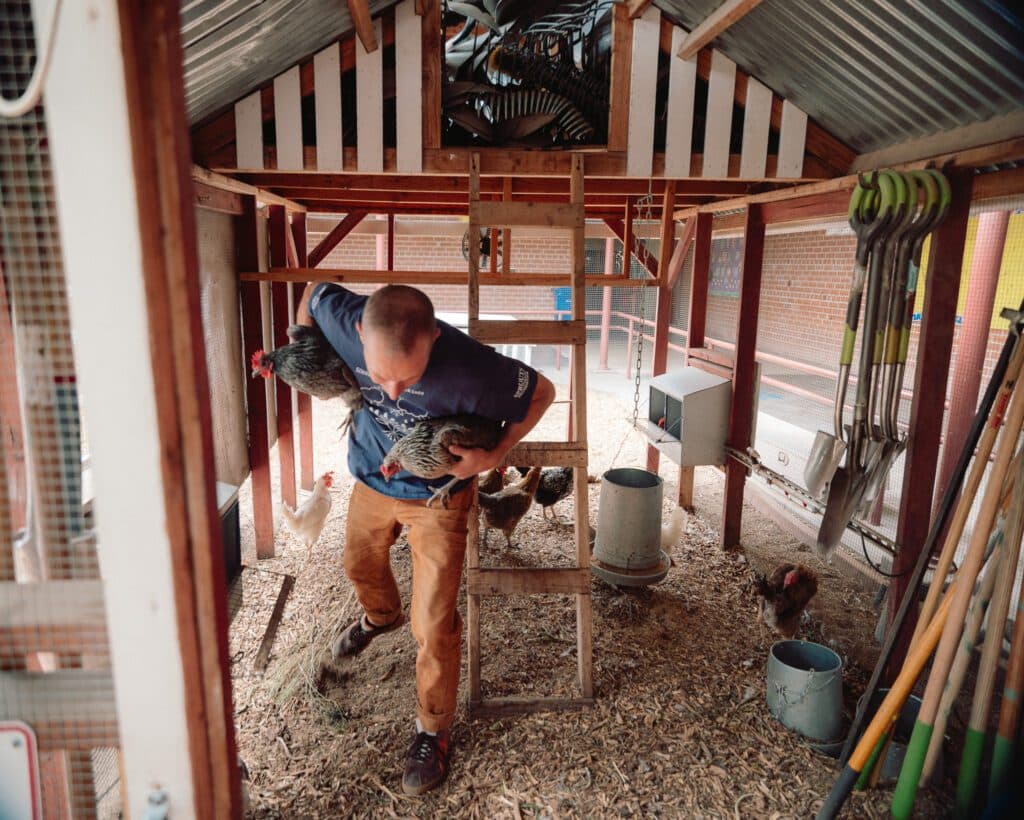
Added features along the way included a tilapia-powered hydroponic garden, an experimental garden shaded by solar tiles, and a chicken coop — a student favorite. The farmers market and cafeteria-centered Food Literacy Program were also designed to engage the local community.
During this initial period, other gardens in the TUSD system got basic support from outside sources, including a grant from the Community Food Bank of Southern Arizona. However, the teachers didn’t have the time – or the ability – to provide the kind of deep enrichment that Thompson offered at Manzo.
Enter the University of Arizona. In 2009, and Professor Sallie Marston was teaching a class in Political Economy at the School of Geography, Development and Environment. One of her undergraduates, Morgan Apicella, asked if Marston would supervise an independent study at Project MORE High School, dedicated to keep at-risk students from dropping out. He proposed helping a teacher at the school use their garden for learning outside the classroom.
Marston recalled their initial conversation: “I said, ‘Why are you coming to me? I don’t garden.’ He replied ‘No, but I know you’ll be sympathetic because this is about social justice, helping these kids to finish high school in a way that makes sense to them, that has practical implications.’”
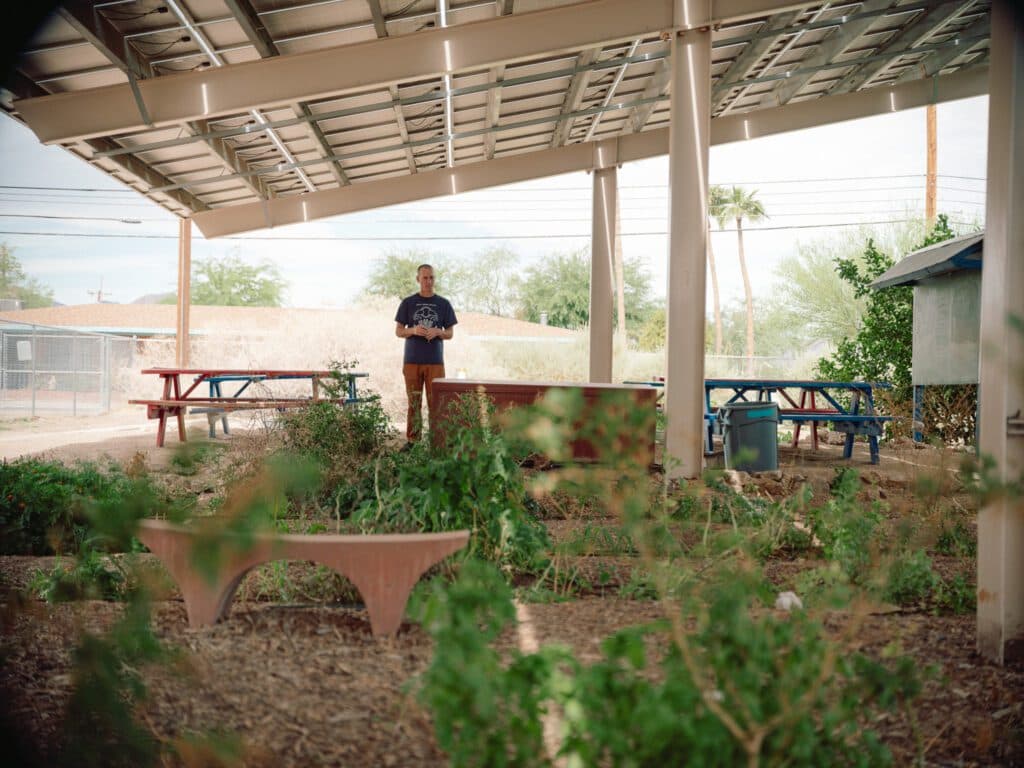
The independent study was a success. Apicella told a few fellow students about it. They told a few other students. When 15 of them expressed interest, Marston asked her department head to formalize the program.
Marston, now retired but still involved in its progress, served as the School Garden Workshop’s first director.
Thompson summed up the program’s evolution: “What started with one student as an independent study now is 50 to 60 students every semester through a formal internship course. We train the students to grow food in the Sonoran Desert, to use gardens academically and therapeutically. And then those students go out and do internships in our network of gardens, working for six to eight hours a week at those schools.”
He estimated that, of the 86 schools in TUSD, the program supports some 70 gardens with professional development and curriculum assistance, while some 15 to 20 of them get onsite interns each semester.
Beyond Tucson
The reach of the garden program extends well beyond the Tucson community. One example is its contribution to research in agrivoltaics, the term a mashup of “agriculture” and “photovoltaic solar.” Led by Greg Baron-Gafford, Associate Director of the School Garden Workshop and instructor at UA’s Biosphere 2 campus, the discipline works to address the crisis of a rapidly heating planet, studying how plants and solar panels can work together to reduce the need for water.
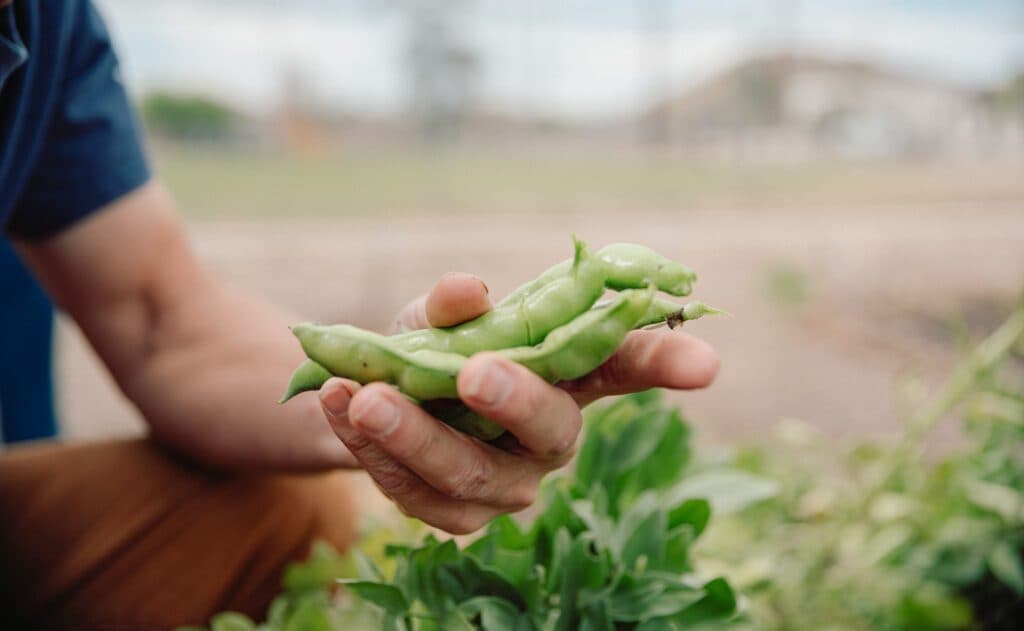
At Manzo, children collect data from the school’s agrivoltaic garden and from an unshaded control garden with the same plantings, among them fava beans, tomatoes, basil, chiltepines, and marigolds, believed to act as bug repellants. The goal is to identify agrivoltaic “winners”: crops that do well in harsh conditions.
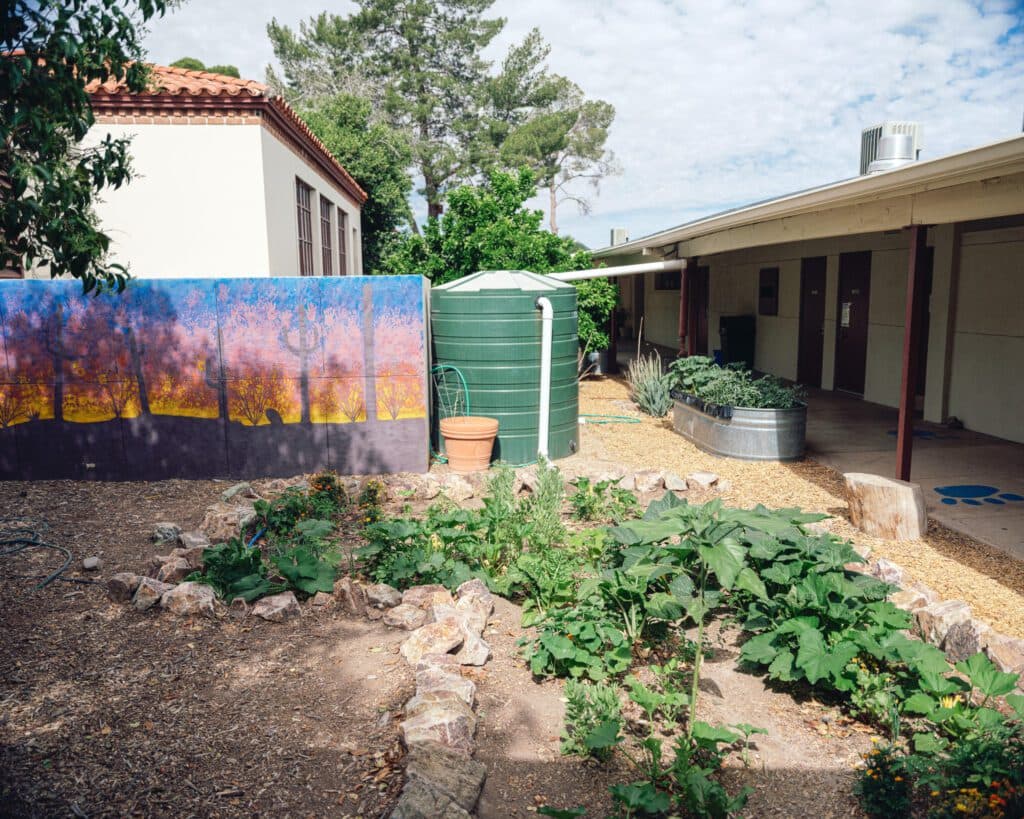
“I wish you could hear the students that are in the fourth and fifth grade talk about this,” Marston said. “They go out there and they measure leaf size and plant height in millimeters. They look at whether the plants are stressed because they have bugs, when they flower and when they fruit. They have a QR code that they use to input their data to the larger study.”
That larger study is not only conducted in the agrivoltaic garden at Biosphere 2, but also in similar gardens in the U.S. and as far away as Africa and the Middle East.
The School Garden Workshop has itself achieved widespread recognition.
“We’re positioned as some of the leaders on the national stage because we’ve been doing it for more than 20 years,” Thompson said. “We’ve been on planning committees for national conferences, and we’ve spoken at them. We’ve gone out and supported other school garden nonprofits in different parts of the country and brought different nonprofits to Tucson to do workshops here.”
Not widely known is the fact that a great deal of this national outreach is funded by the Sprouts Healthy Communities Foundation, the nonprofit division of the Sprouts grocery chain. That low-profile will soon be raised. As a result of its $1,050,000 donation towards the creation of a new program hub, to be known as Sprouts House, the Foundation’s essential support of the School Garden Workshop is about to achieve widespread recognition.
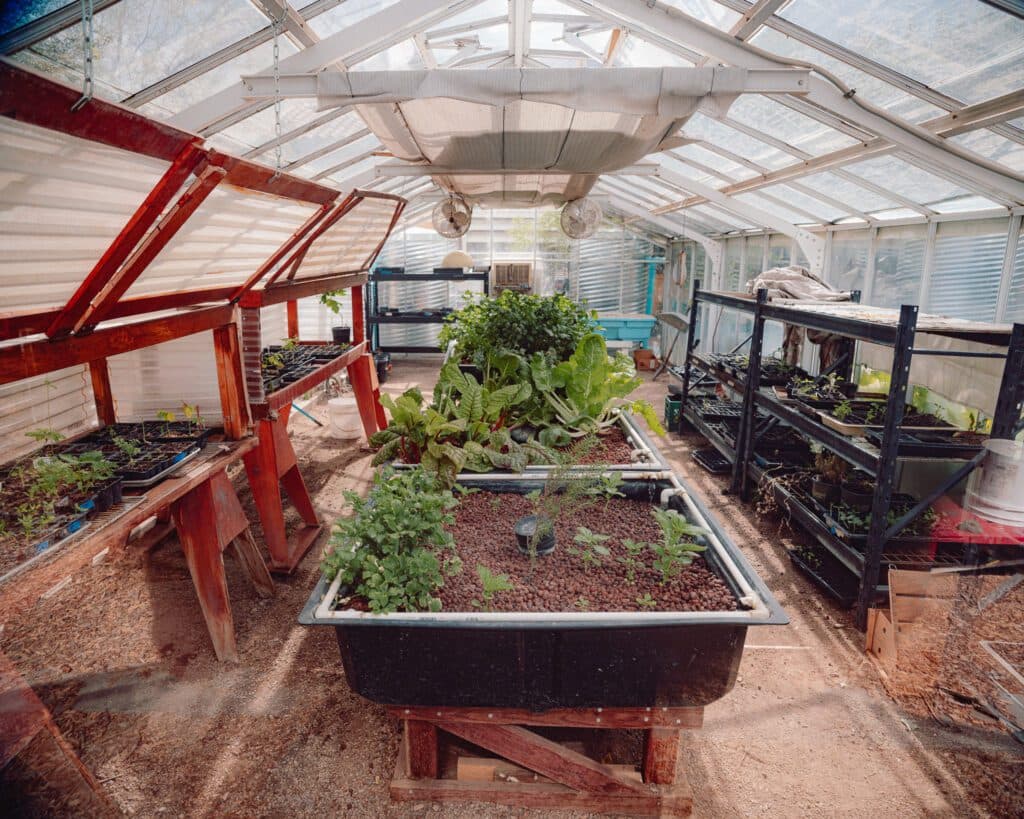
The first phase of the estimated $2.5 million project, slated to be completed in mid-September, is the renovation of two historic bungalows owned by the UA and located next to Mansfield Middle School. One of the bungalows will serve as a community classroom, the other as a commercial kitchen to host cooking demonstrations. This phase will be followed by the groundbreaking of the central garden, to include a greenhouse. A key component: the complex’s proximity to the UA makes it ideal for training interns enrolled in the School Garden Workshop course.
In the meantime, the TUSD gardens are working their educational magic, one schoolkid at a time.
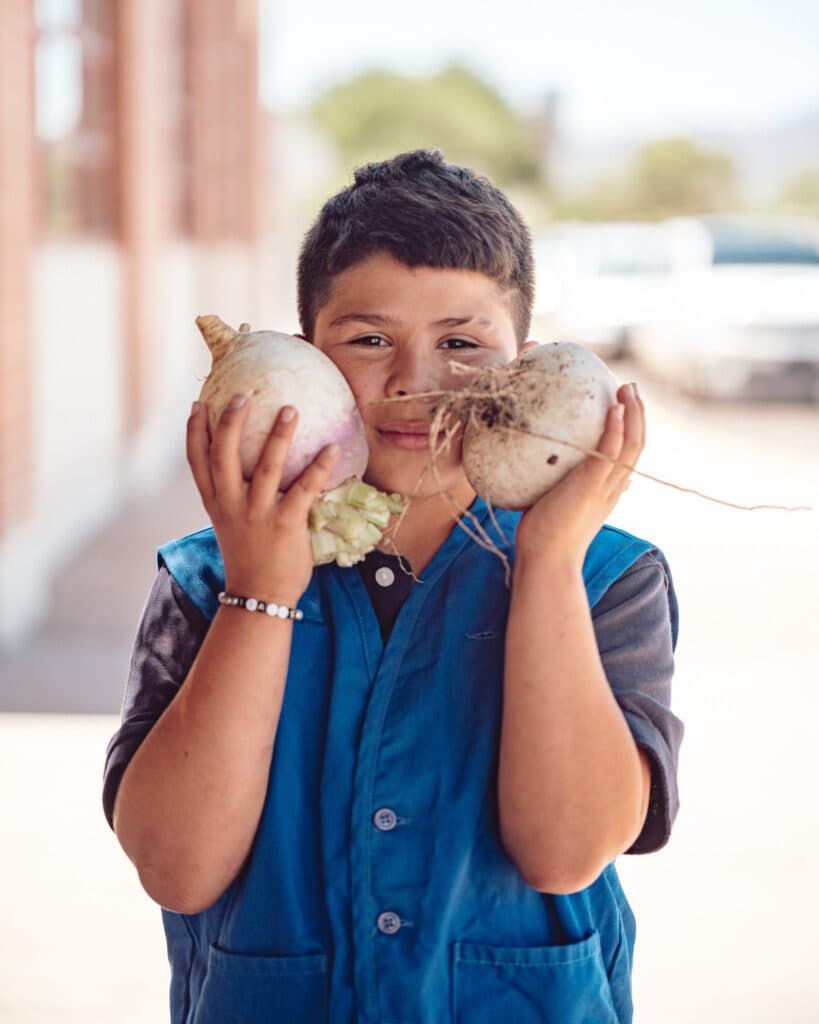
Charlotte Johnson summed up her experience at Manzo: “I’m learning a lot of different things. I learned how to work together to grow plants. I learned how to cook.”
For more information, visit schoolgardens.arizona.edu.

![How Jun Dynasty built a loyal following in Tucson since 2013 [PHOTOS]](/_next/image?url=https%3A%2F%2Fwgwexrkqokkyffktcsqd.storage.supabase.co%2Fstorage%2Fv1%2Fobject%2Fpublic%2Fmedia%2Fmedia%2Flocations%2Ftf-jun-dynasty-beef-and-tofu-stew-in-flaming-chili-oil-0097-3ab869e30c42.jpg&w=3840&q=75)