
Like diners everywhere, Tucsonans tend to gripe about the local culinary scene. They’re upset because a favorite restaurant has closed, because the service at a nearby mom ‘n’ pop place has gotten spotty, because a dish they love is no longer on the menu, because everything costs a lot more than it used to cost…
It’s understandable. Patrons want their dining-out experiences to be great, especially when money is tight. But the economic crunch works both ways.
Profit Margins Slim to None
There’s a common misconception that restaurateurs are sitting pretty. In fact, profit margins for independent restaurants tend to be razor thin.
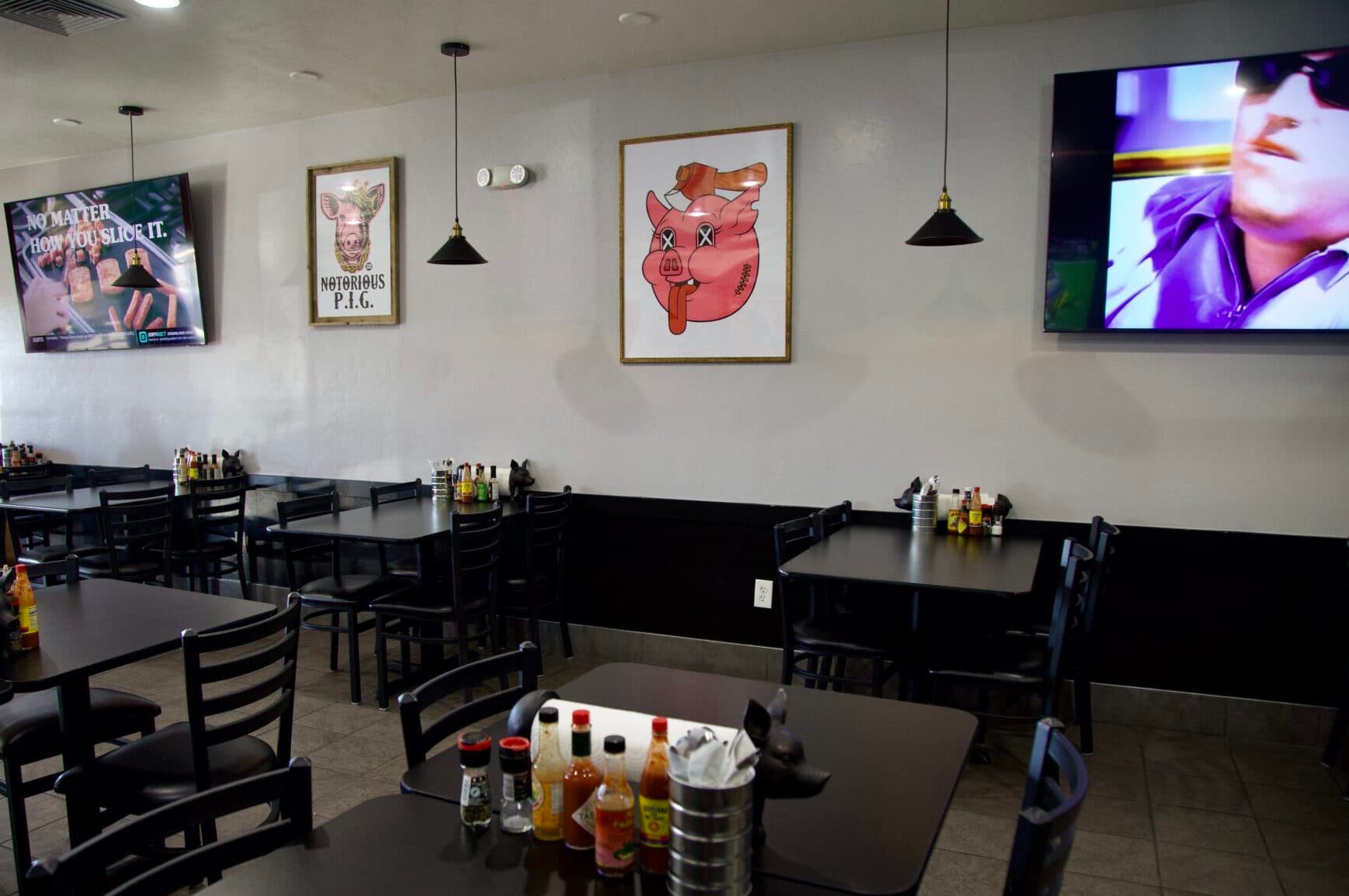
CJ Hamm, whose fast-casual Hammbone’s A Meat & Three Joint shut its doors earlier this year, said, “In the heyday of the ‘90s, restaurants were making a 10% profit margin. Now, if you get .05%, you’re celebrating.”
Labor Costs and the Changing Wage Landscape
Tyler Fenton, chef-owner of Reilly’s Craft Pizza and Drink, BATA, and Fentonelli’s Pizzeria & Bar, concurs.
“You hear about a bunch of restaurants closing,” he said. “And you hear people say, ‘Oh, man, I loved that place.’ I think most people don’t realize how close to the edge most restaurants are operating at.” He added, “For me, the hardest part about restaurants is it’s a labor heavy model and you’re also selling perishable things.”
The rising price of labor has a huge impact on service, according to Fenton. When Reilly’s opened in 2012, the minimum wage was $7.65. It’s currently $15.
“You could argue that we could staff twice as many people to have the same payroll as you would have now,” Fenton said. “People might get used to going into a restaurant where there were eight servers, for example, but financially, it might only be feasible to operate with three now, and three people can only be reasonably asked to do so much.”
Along with the upsurge in the minimum wage, an Arizona law mandating that it must apply to all workers, including tipped employees, took effect in 2025.
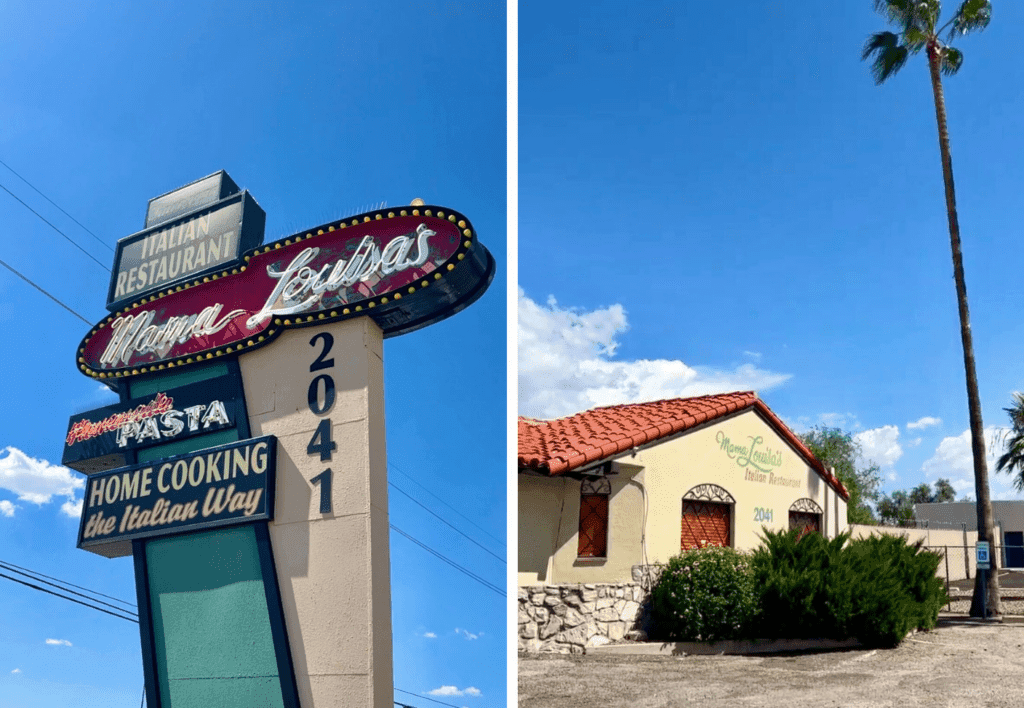
Michael Elefante, chef-owner of Mama Louisa’s Italian Restaurant, said, “When you hear restaurateurs get upset at the idea of artificially raising [the wage], it’s not because we’re bad people or we’re hoarding a gold trove of money. We just want to be able to make payroll for all our other employees.” He balks at paying minimum wage to a “15- or 16-year-old who’s washing dishes, who has no skills, where I could be paying more to my cooks who actually have developed the skills.”
In contrast, Fenton cited COVID as “a time of reckoning for restaurants to achieve fairness and equity.” Post-pandemic, before the 2025 Arizona law went into effect, he said, “We pivoted our model at all of our restaurants to pool tips so all of our employees are paid at least the full minimum wage. It allows the kitchen staff to share in tips. And we do it for the entire two-week payroll period. It’s a step to normalize wages so you don’t have the really great Friday and then really crappy Tuesday. It blends out to an hourly rate that you get for the hours that you worked.”
Pandemic Price Hikes Never Reversed
As with the cost of staffing, the pandemic was an inflection point for food prices.
Elefante said, “COVID increased prices to begin with and they never came down, even when things kind of stabilized.” Mama Louisa’s has been in his family since it opened 69 years ago, and Elefante laughed, “My mom wanted to save our catering menu so we didn’t have to reprint them in case the prices came down.” He correctly predicted that this was never going to happen.
Weathering the Storm: The 4th Avenue Deli Story
For some restaurateurs, the pandemic proved the old adage,“What doesn’t kill you makes you stronger.” Kylie Myers had just taken over the ownership of the 4th Avenue Delicatessen when the pandemic hit.
“It was two-and-a-half months or so before I had to shut it all down,” she said. “I would say COVID was probably the toughest thing that I will ever go through — hopefully. I feel if we were able to survive, we can keep going with pretty much anything.”
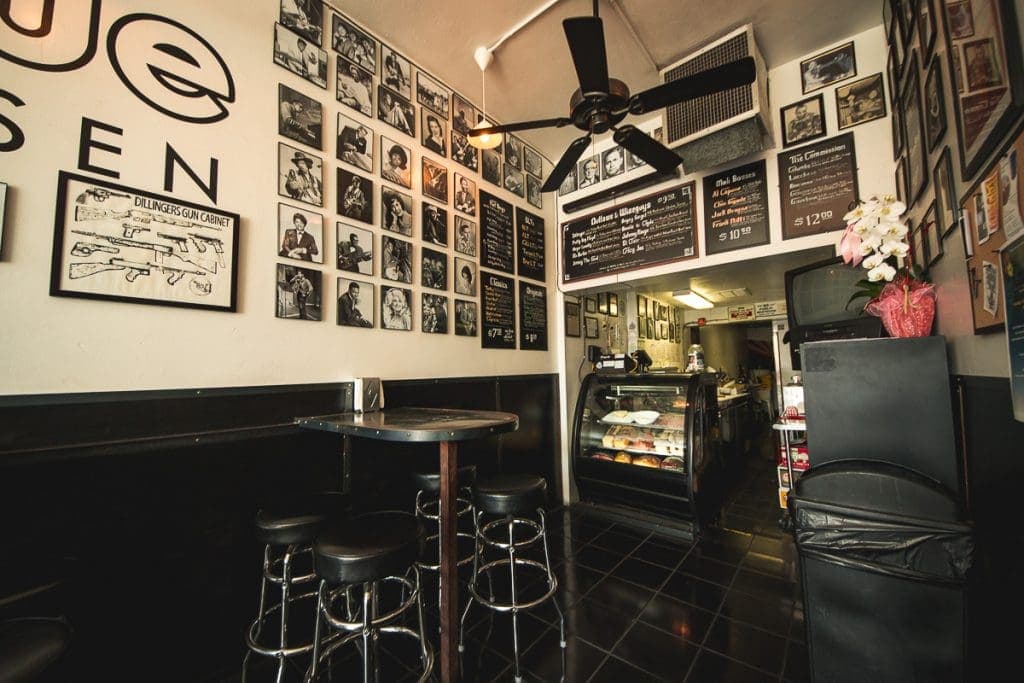
Myers’ survival strategies included taking out loans, working long, hard hours by herself, offering gift cards — to be redeemed when people could start coming in again — and using third-party delivery apps like Uber Eats and Grubhub and DoorDash.
“You have to give them their cut,” she said, “But I think it really helped keep us open.”
Myers also created goodwill by offering free sandwiches to people who were out of work.
“I think people really appreciated that,” she said. “So when they could support us, they wanted to.”
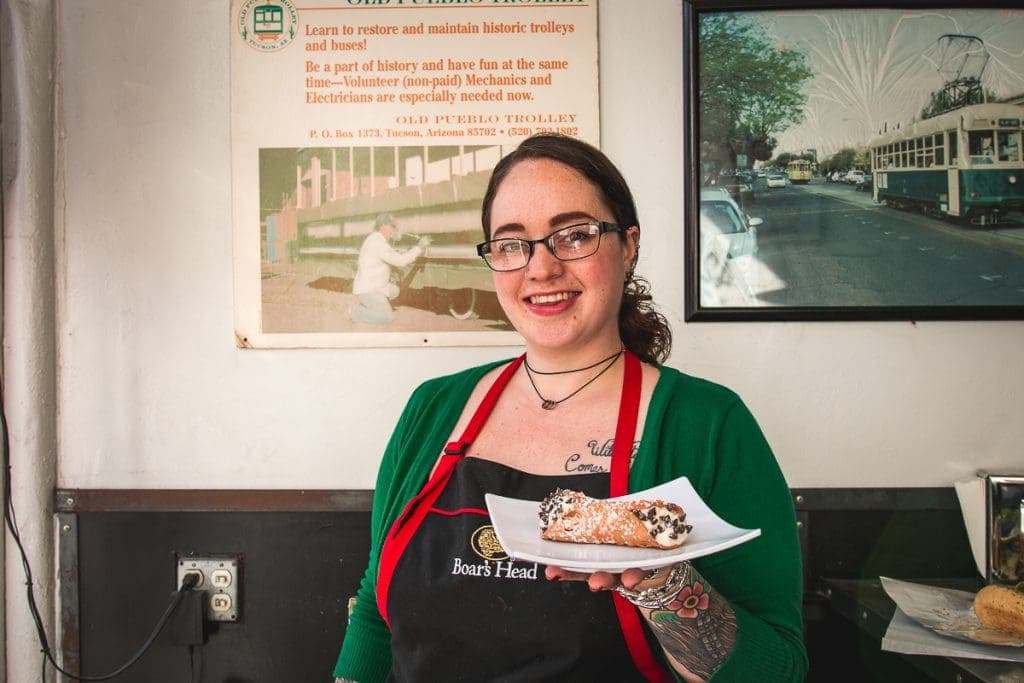
However, she currently faces the drop in patronage that downtown and 4th Avenue eateries experience every summer when University of Arizona students leave town and it’s too hot for locals to stroll around. She also worries that the rising cost of food, especially imports impacted by tariffs, will affect her business in high season.
“I haven’t raised my prices this year so far,” Myers said, “but it’s probably going to have to happen before the end of this year or by next year. It’s the only way to cover food costs and to keep paying our employees and offering the same quality products.”
Generational Loyalty at Mama Louisa’s
The loyal customer base at Mama Louisa’s, spanning several generations, has helped the restaurant stay afloat, as has the restaurant’s experience in weathering fluctuating costs and supply-chain glitches. Nevertheless, some menu changes were inevitable.
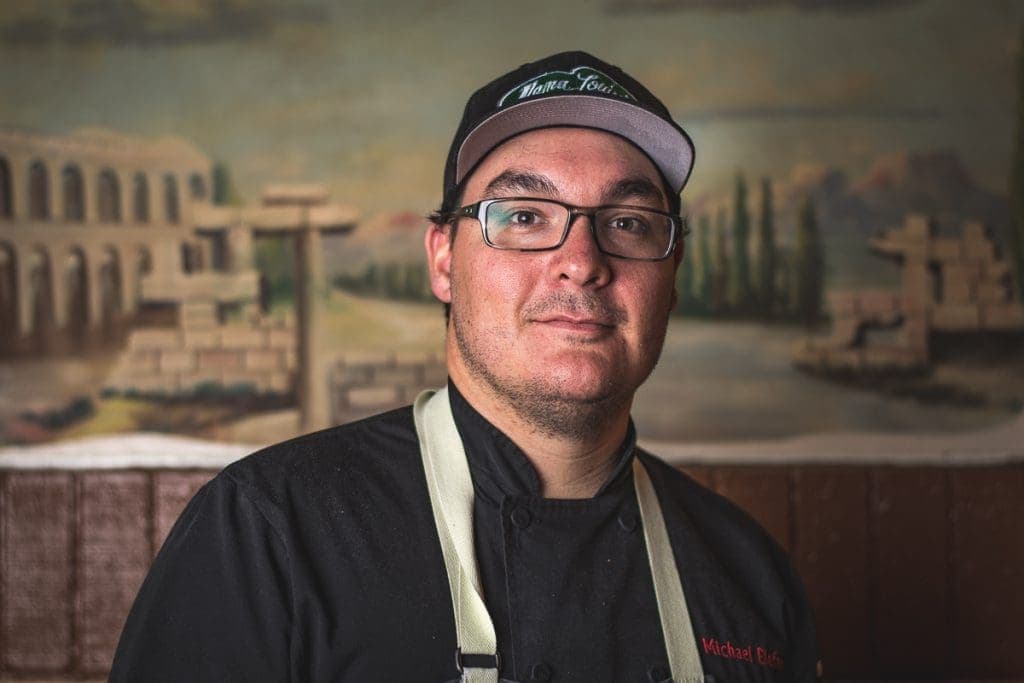
“When COVID came, we closed down buffets and never brought them back,” Elefante said. “We used to offer a soup- and-salad bar at $5 a person to add it onto your meal. We’ve looked into it and now, if we were even to do a condensed version of that, it would probably cost about $15 to $17 to add it to a meal.”
Lessons from a Closure: The Hammbone Experience
CJ Hamm is the first to admit he wasn’t sufficiently prepared when it came to opening Hammbone’s in 2024. Hamm had managed, cooked at, and shared in the ownership of several other Tucson restaurants but couldn’t sustain his first solo venture for more than six months. For one thing, he hadn’t anticipated the dramatic uptick in cost to get the space ready.
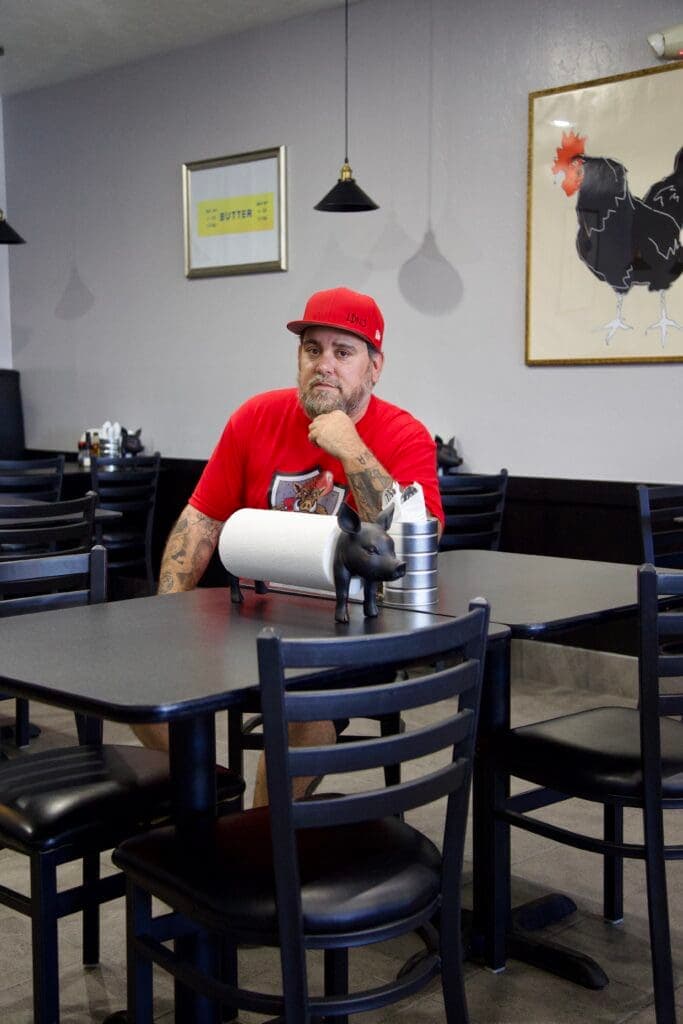
“I started to open up the place because I knew it was a quick build out for a quick service restaurant,” he said. “Back when I was starting places with other people that had some money, this would have been $150,000 open. Now it was $400,000.” Labor was a major outlay: “Painters would have probably quoted me around $1750 to paint all of Hammbone’s in 2016,” he said. “I paid six grand.”
For another thing, he hadn’t vetted the current suitability of his location on South Craycroft, near Davis-Monthan, relying instead on past experience. “I knew my location back in the heyday when it was Chaco’s Cafe, and that place was packed every day,” he said. “Research would have shown that people now do not go off base for lunch.”
Perhaps his biggest lesson learned: “Do not open any restaurant where you’re leasing the property.” Hamm accurately notes that landlords often charge restaurants higher rents than they do other retail businesses for a variety of reasons, including higher insurance costs.
Final Plea: Support Restaurants Through Change
All in all, most restaurateurs would agree that juggling the guest side of things with the business side is a tough act. They hope that diners will cut them some slack.
As Elefante put it, “It’s no use getting mad at a restaurant for trying to adapt and survive. They might not do it right, but they’re trying to figure it out. And so the food’s good, and the service is good, and you like the people, still support them, even though it might be a little different than what you’re used to seeing.”