
This article was written by Annie Tacey and first appeared on Arizona Sonoran News.
Tucson restaurant owners are bracing for a new minimum wage of $15.45 per hour, set to take effect Jan. 1, 2026.
The increase, mandated by the Tucson Minimum Wage Act, exceeds the statewide minimum of $15.15, putting pressure on hospitality operators already contending with tight margins, rising food costs and staffing challenges.
Steve Chucri, president of the Arizona Restaurant Association, warned that even a modest increase to labor expenses can erode profitability.
“Restaurants already operate on razor-thin margins,” he said. “It’s an added cost, and that doesn’t necessarily mean you can raise menu prices to offset it.”
He noted that independent restaurants, which make up roughly 65% of Arizona’s food establishments, are especially vulnerable. Without a larger network to spread costs, these smaller operators must closely manage their spending.
“Even a 30- or 40-cent hike adds up when you consider how many people you employ and how many hours they work,” Chucri said.
Chucri added that many restaurants are increasingly relying on technology to absorb rising labor costs.
“We’re seeing more restaurants lean into technology – robotic arms in the kitchen, ordering kiosks instead of cashiers – to survive,” he said.
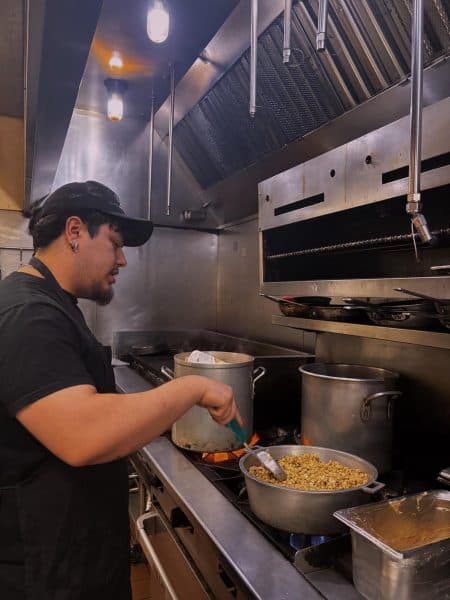
“When labor costs and the cost of goods both rise, it takes a major hit out of an already fragile margin,” he said. “A one- or two-point shift can push restaurants from barely profitable to losing money very quickly.”
On a good day, he added, many restaurants run only a 3–5% profit.
Krueger said that the rise in inflation over the past several years has made it harder to absorb these dual pressures.
“Minimum wage increases plus inflation over the last few years have caused an unprecedented rise in both labor and food costs,” he said, adding that, in turn, forces menu adjustments that risk alienating customers.
“When prices go up, it hurts guest satisfaction. Nobody wants to pay more,” he said.
To balance this, Krueger said his company leans heavily into technology. Their cloud-based scheduling system lets servers swap shifts, and staffing can flex based on predicted demand. Platforms like Restaurant365, accounting software that tracks workforce and payroll and food costs weekly, allows restaurants to respond faster to price swings.
Krueger also criticized Arizona’s $3 tip-credit law that has remained unchanged since 2016. The law requires restaurants to pay servers the difference if their tip income does not equal the full minimum wage.
Ray Flores, president of Flores Concepts (El Charro Cafe, Charro Steak & Del Rey, The Monica, Charro Chico), said the cost realities go deeper than wages.
“Food costs rise and fall, but much of it is driven by market behavior,” he said, citing high egg prices during bird flu scares and the rising cost of chicken wings during football and basketball seasons as market reactions, not policy-driven spikes.
“Independent restaurants don’t have the contracts or bulk purchasing power to soften those swings,” he said.
Rather than immediately raising prices, Flores said his group is rethinking labor strategy including reducing employee hours, selectively trimming operations and investing more in training and tip-management software.
“One big change is we don’t hire as many teens for summer jobs anymore,” he said. “Training someone for a few weeks isn’t cost-effective.”
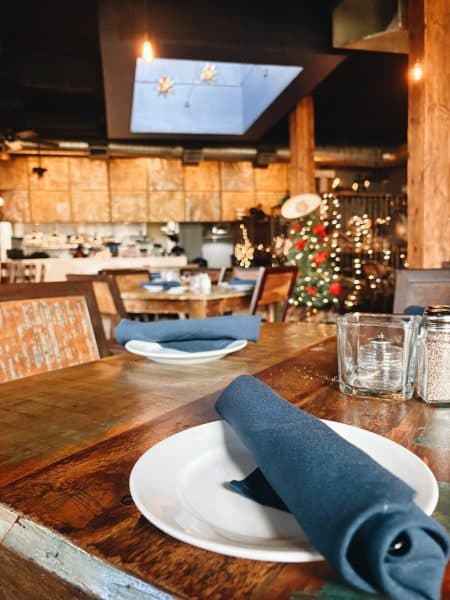
Flores also pointed to structural labor challenges.
“Some employees want extra hours and volunteer to pick up shifts at our other restaurants, but if they do, overtime rules force us to pay more than we budgeted,” Flores said.
Flores emphasized the importance of independent restaurants to the fabric of Tucson.
“If only big chains can survive, you end up with drive-thrus on every corner and fewer shared meals,” he said. “That hurts the local economy and building community identity.”
In November 2021, Tucson voters approved the Tucson Minimum Wage Act, which sets the 2026 minimum at $15.45, 30 cents higher than the state minimum.
Arizona Sonoran News is a news service of the University of Arizona School of Journalism.