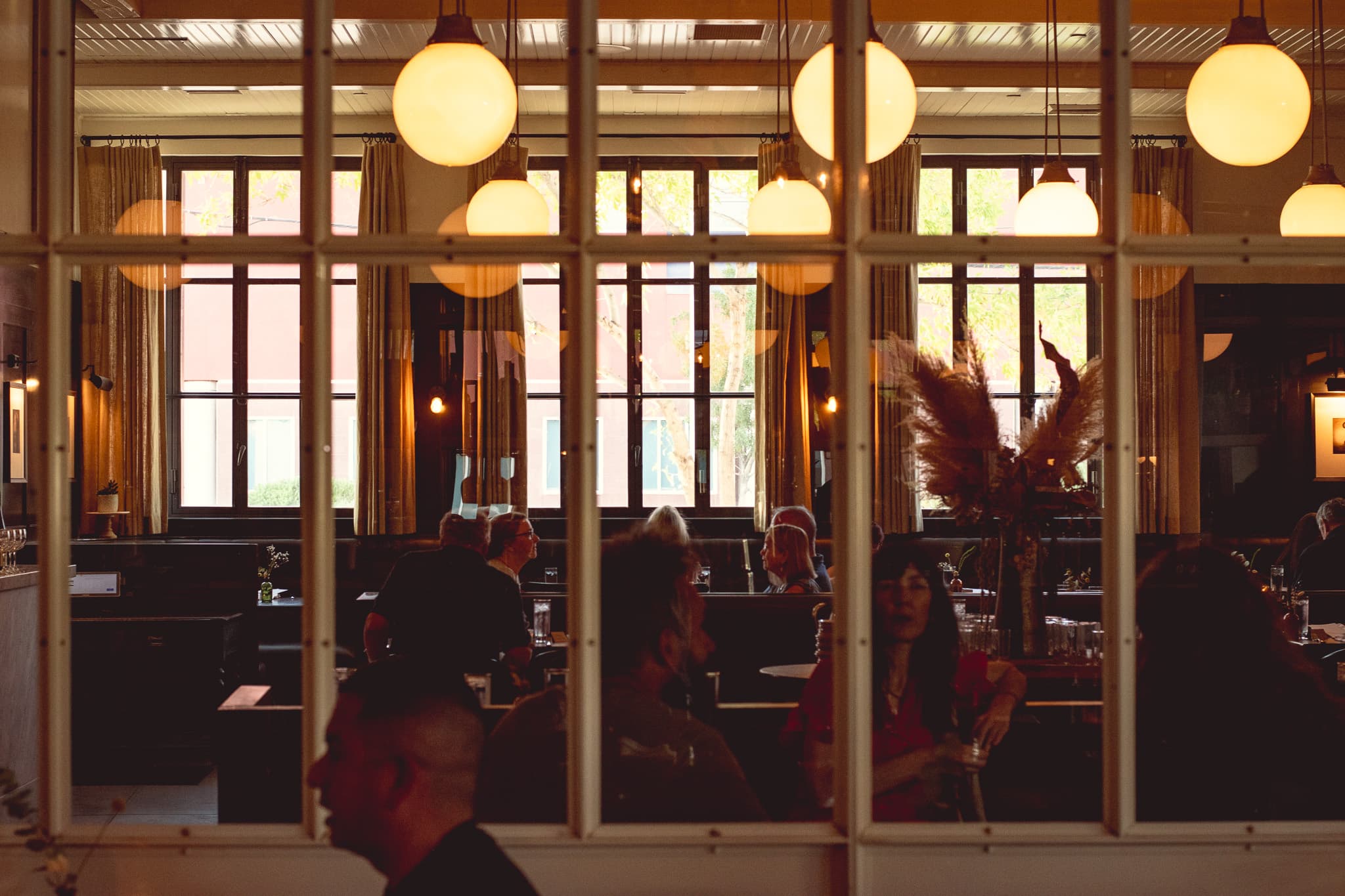
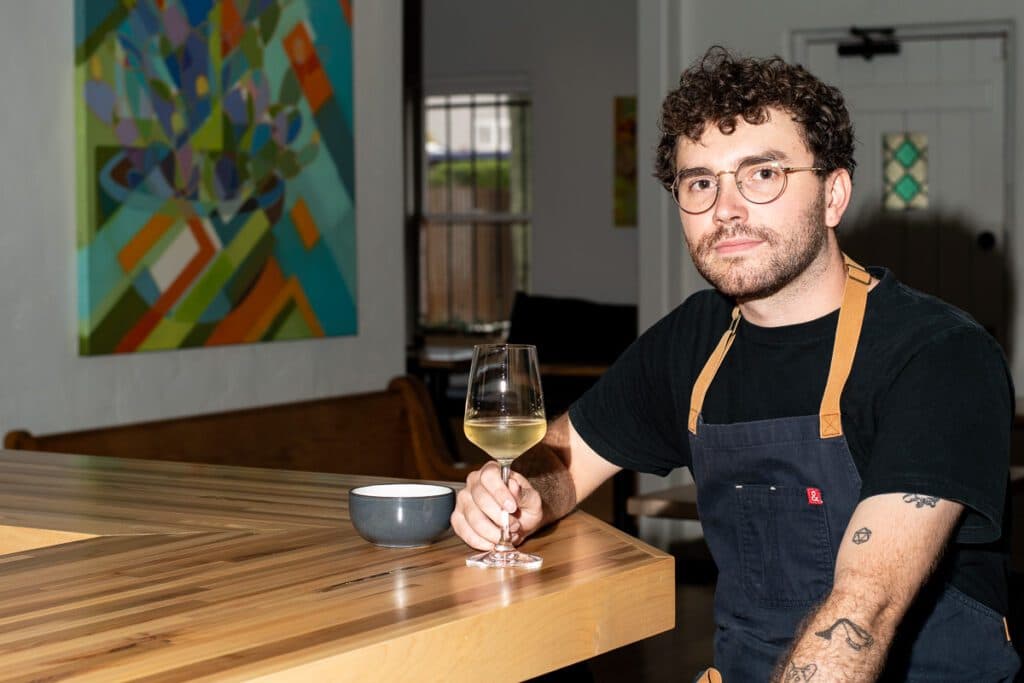
At just 25, Wyatt Carrizosa is quietly helping shape the future of how Tucson eats and drinks. As chef de cuisine at Sunshine Wine, he’s crafting a menu that feels both familiar and daring, pairing local ingredients with techniques rooted in fermentation and preservation. The result is a deeply thoughtful, flavor-forward dining experience that mirrors the wine bar’s cozy energy and creative spirit.
Carrizosa’s path to the kitchen wasn’t straightforward. He started in computer engineering before realizing he belonged in the kitchen, not in front of a screen. Since then, he’s sharpened his skills under some notable Tucson chefs, including Brian Smith (formerly at Maynards) and Tyler Fenton at BATA. Those kitchens taught him discipline, creativity, and the value of hospitality.
Working in a compact, hoodless kitchen, Carrizosa thrives on constraint. His team turns limitations into innovation, from smoked carrot miso to mesquite-candied nuts. Through it all, he creates food that connects Tucson’s seasons, soil, and people.
In this Q&A, Carrizosa talks about fermentation, finding his voice as a young chef, and why the best meals come from working with what you have.
Q&A with Wyatt Carrizosa
Can you tell us about your journey into the culinary world and what led you to become the chef at Sunshine Wine?
As a kid I was always cooking and trying new foods. I learned a lot of classic and southern techniques from my stepmom, Anita, who was always in the kitchen when I was a kid. After high school was when I really started taking it seriously, though. I was originally in school for computer engineering and found myself struggling to keep up. A few major changes and one pandemic later, I found myself at the Pima Community College culinary program, of which I also dropped out of. I found that more than anything, I wanted to connect with the people in my community and carve out more space for fermentation in Tucson.
I applied to be a prep cook under chef Brian Smith at Maynards, which gave me a really solid foundation to find my own voice in my cooking. After he left, I was given the opportunity to be chef de cuisine, mainly focusing on bigger projects and the creative aspects of the menu. After my time there, I worked under chef Tyler Fenton and Jackson Dennis at BATA. I worked through all of the stations, refined my skill set and attitude, and had some dishes make it on the menu. There I learned the importance of making the entire experience special for every guest, and that kind of restaurant culture is what I hope to bring to Sunshine Wine.
What was your goal when making the menu at Sunshine Wine?
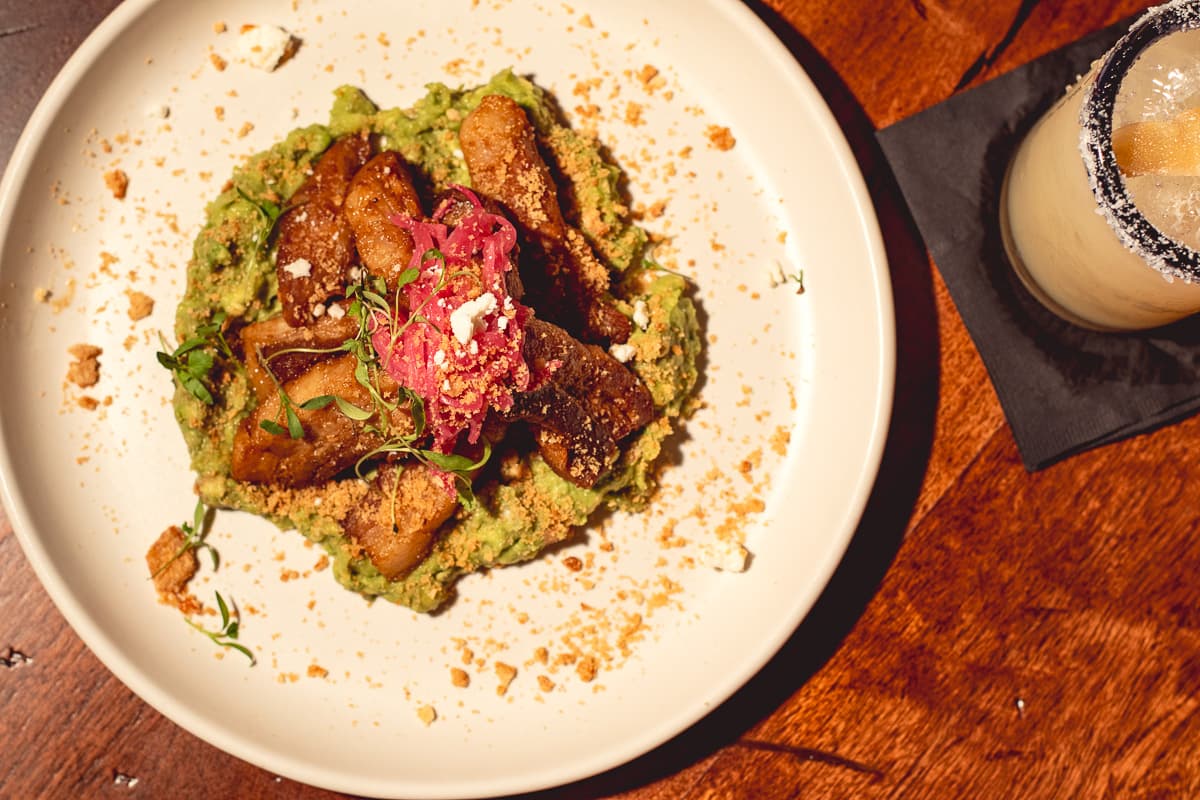
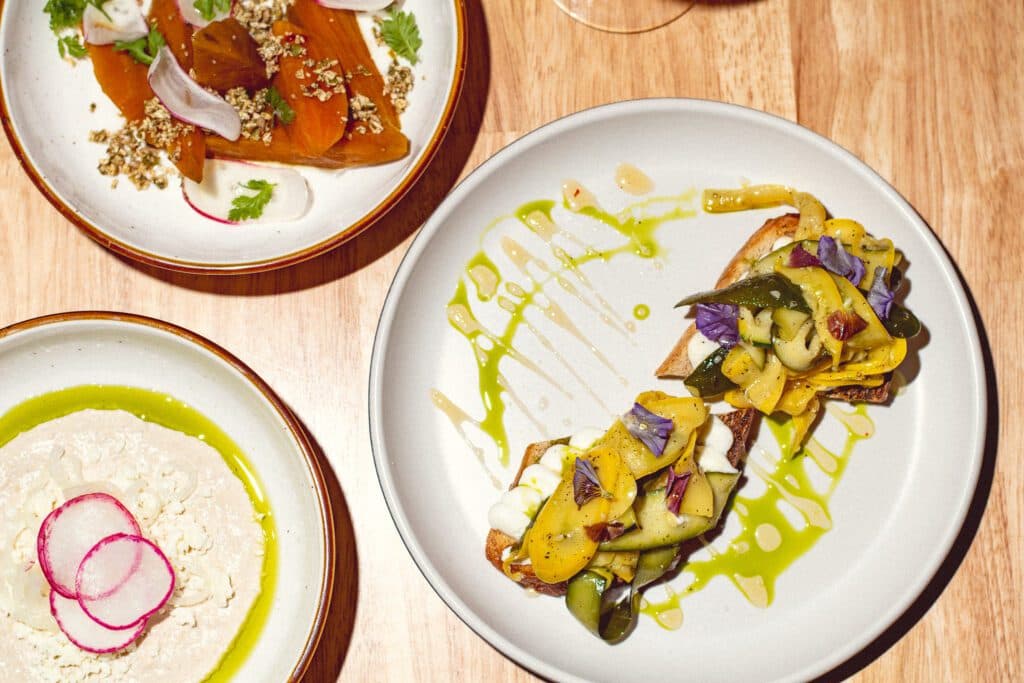
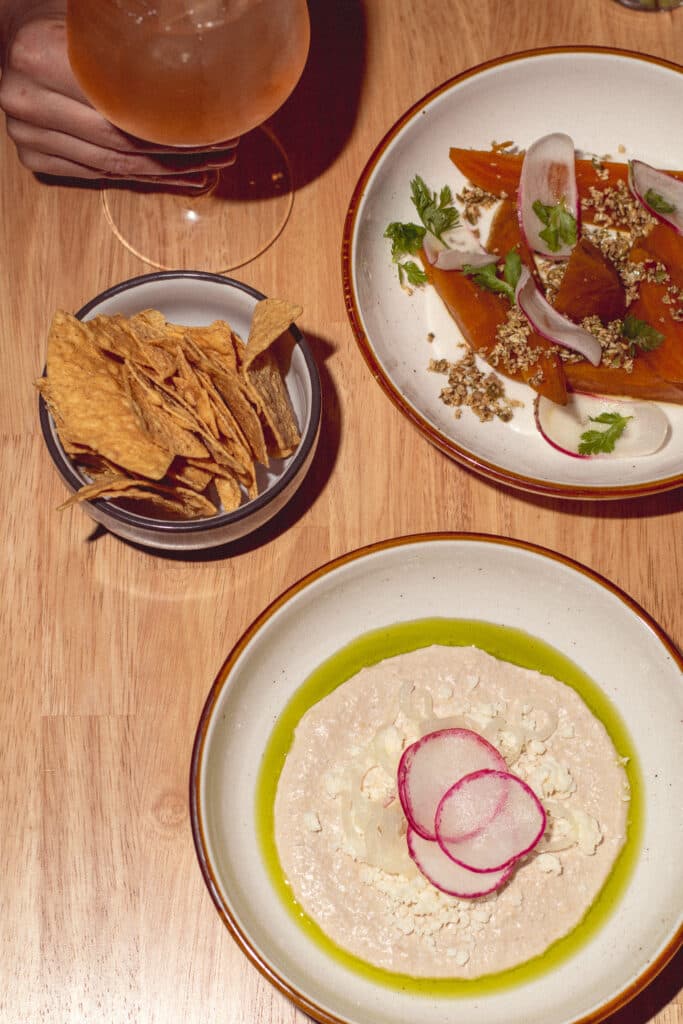
My goal for the Sunshine menu is to showcase local, high quality produce in technique driven dishes. I want things that people are familiar with, while also introducing people to ingredients or processes they maybe didn’t know about. Preservation and fermentation is always at the core of what we do, so we are always thinking seasons or years ahead. Right now we have some riffs on classic wine bar snacks but through the lens of the Southwest. Things like aguachile marinated olives, mesquite smoke candied nuts, pinto bean hummus, and roasted white sonora wheat ice cream. These will probably always stick around in some fashion but we plan on adding more hot dishes and full plates as we grow and get more comfortable in our small space.
You have a pretty extensive background in fermentation compared to most Tucson chefs; what ways are you incorporating it on the current menu? Anything else exciting fermenting for future use?
Right now we’re utilizing tons of different ferments on the menu. Some short-term fermentation techniques like yogurt, creme fraiche, cultured butter, and lacto-fermenting produce like pickles and chiles. We also have some long-term ferments like miso, shoyu, amino sauces, and vinegars in the works. A big positive of working with ferments in a restaurant setting is that we’re able to utilize a lot of scraps that would normally be thrown out. It feels great to reduce our footprint and grow our larder at the same time. Currently we have a smoked carrot miso, various kinds of stone fruit umeboshi, and a chickpea and pinto miso I have dubbed the “clean bean miso machine.”
You’re also one of the younger chefs in Tucson; any unique challenges with that?
I think as I was starting my career, I was so worried about fitting into the Tucson food scene that I would get in my own way trying to chase that dream. I found myself unintentionally cooking food for the chefs I looked up to as opposed to cooking for myself. As I’ve continued to grow and find my voice and become more confident in myself, I no longer feel the need to prove myself in any capacity and now just make things that make me happy. Seasoned folks in the industry like to poke fun at the newer generation of chefs coming in but I truly think the younger crowd of chefs in Tucson are consistently putting out some of the best food in the city. Folks like chefs Mataya at Forbes, Jackson, Mauricio, and Savanah at BATA, Tanner and Mallorie at the Coronet, and so many more lovely people that I have the pleasure of working closely with.
I remember hearing the kitchen there doesn’t have fryers? Any other interesting limitations compared to a standard restaurant kitchen? How has that affected your approach to the menu?
That’s right! We are an all electric, hoodless kitchen. We have a couple induction burners, the world’s smallest oven, and a lot of creativity. These limitations are actually why I was so interested in this job. While they can be challenging to navigate, that challenge forces us to think about creative solutions and alternate techniques to achieve our goals.
Can you share a bit about the sourcing of your ingredients and any local partnerships you have in Tucson?
We are proudly working with the amazing folks over at Pivot for sourcing most of our local produce. We also work closely with farmers in California that provide us with incredible produce curated from the Santa Monica Farmers Market. I truly believe that we get some of the best fruits and veggies in the country. I’m also at the local farmers markets every week, typically sourcing from Sleeping Frog Farms, Southwinds Farms, and any stall I find interesting that day.
Are there any upcoming events or collaborations at Sunshine Wine that guests should look forward to?
As the busy season starts in Tucson, we plan on hosting some really great wine pairing dinners with some curated menu items to highlight the region we want to showcase. On October 23, we also have a collaboration dinner with chef Tanner Fleming at The Coronet. It’s going to be a lovely, multi-course dinner with cozy vibes and great bites. We’ll be announcing more events, wine tastings, and pop-ups on our Instagram, @sunshine_wine_tucson, so follow us to stay up to date with all of that!
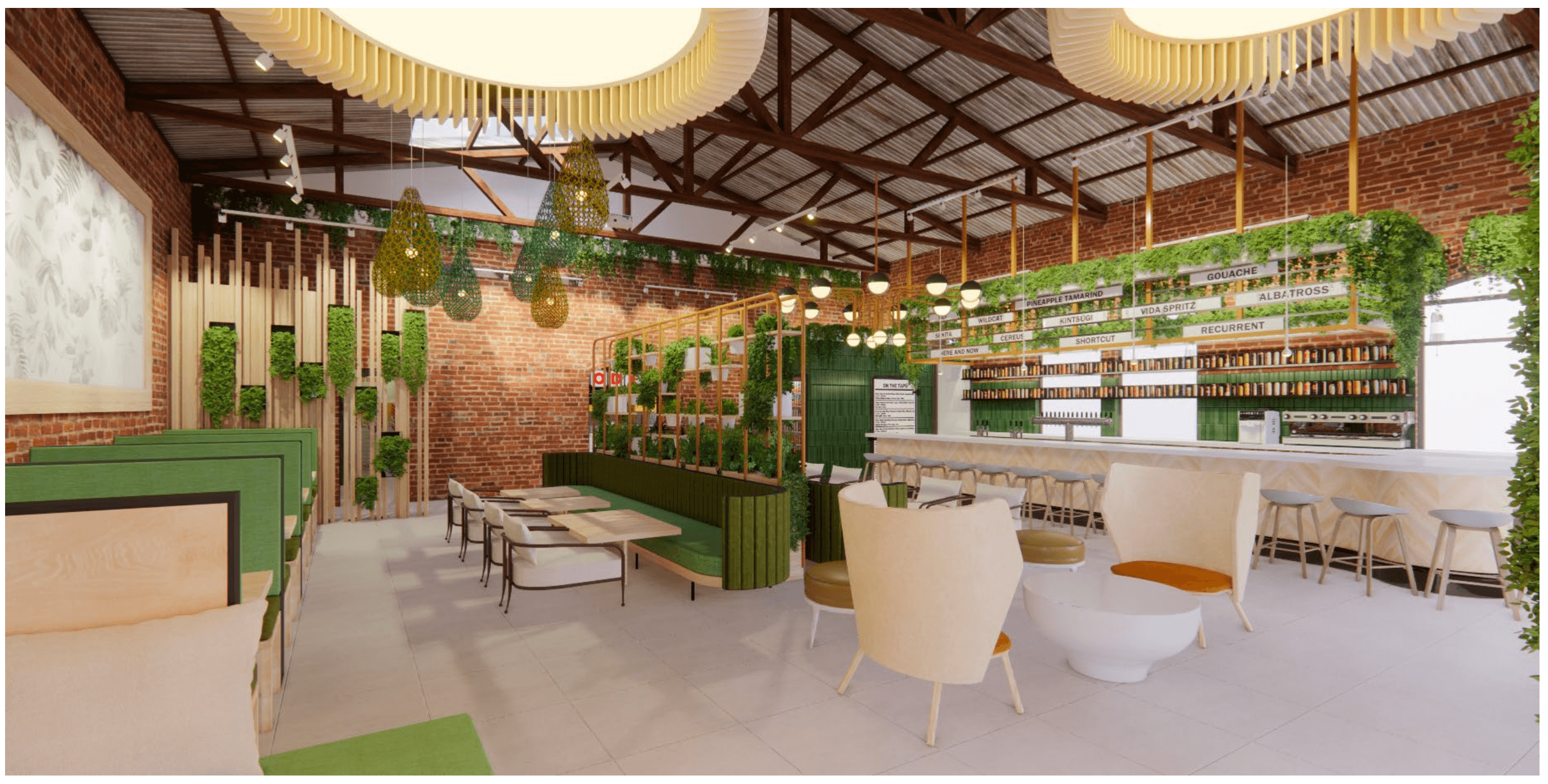
Sunshine Wine is located at 15 N. Santa Rita Ave. For more information, visit thetapandbottle.com/sunshine-wine and keep up with Sunshine Wine on Instagram.