
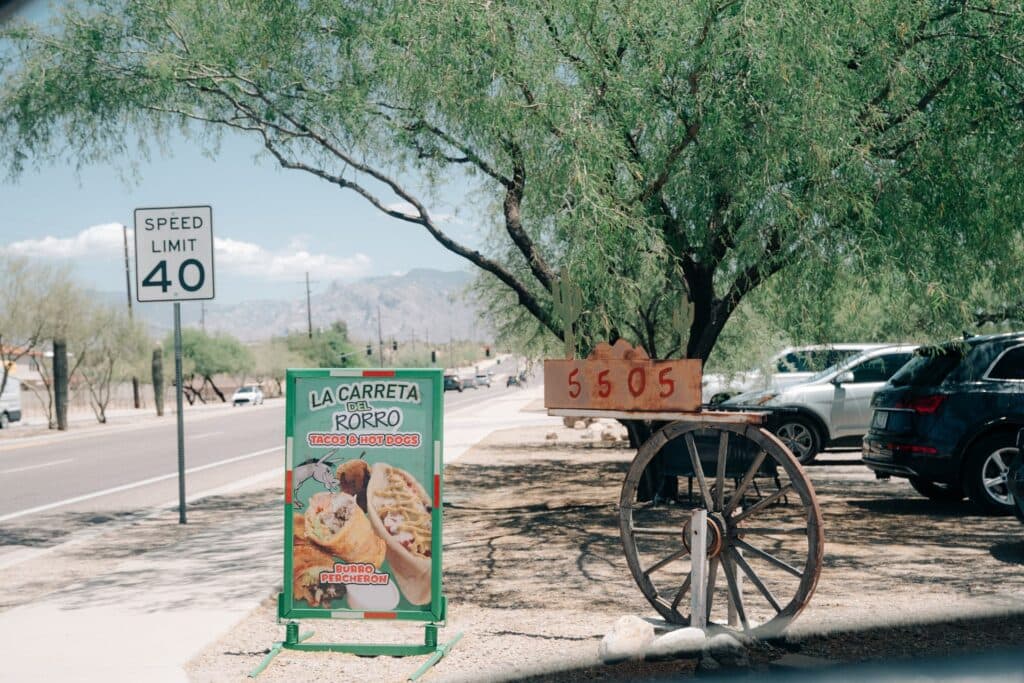
Just east of the I-10 at Cortaro Road, you’ll find a wagon wheel missing a spoke, an open-air patio painted orange and bright green, and an American flag and a Mexican flag flying side by side.
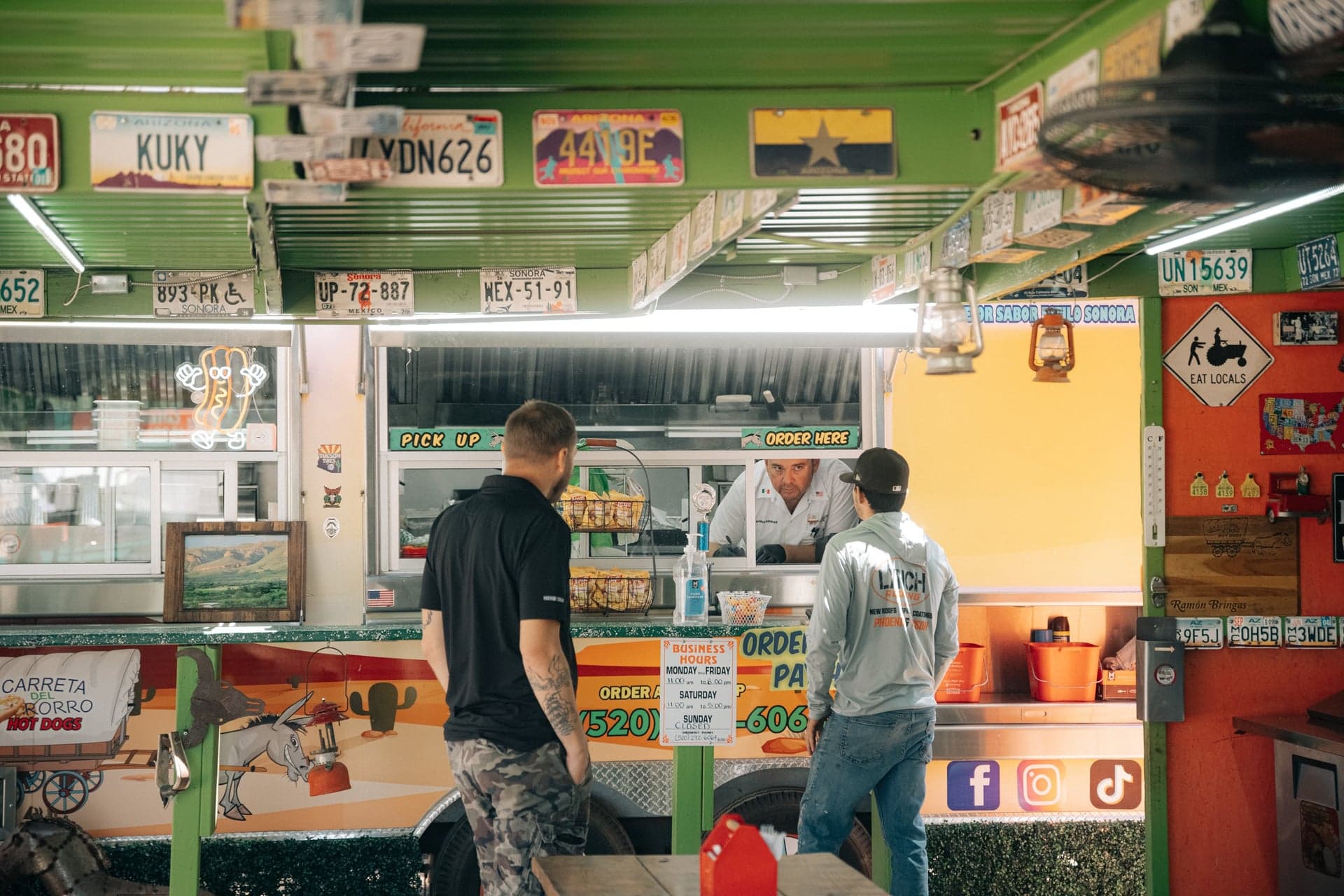
Pull in and a food truck is parked right up against the patio. The walls are lined with metal rectangles: Texas, New York, Mexico, Italy, and a novelty hundred-dollar bill. License plates cover more of the wall than paint. They’re hung on the rafters too, and on the posts, and above the drink fridge someone’s spelled out “happy wife happy life” in a collage of cut-up letters from a dozen different states.
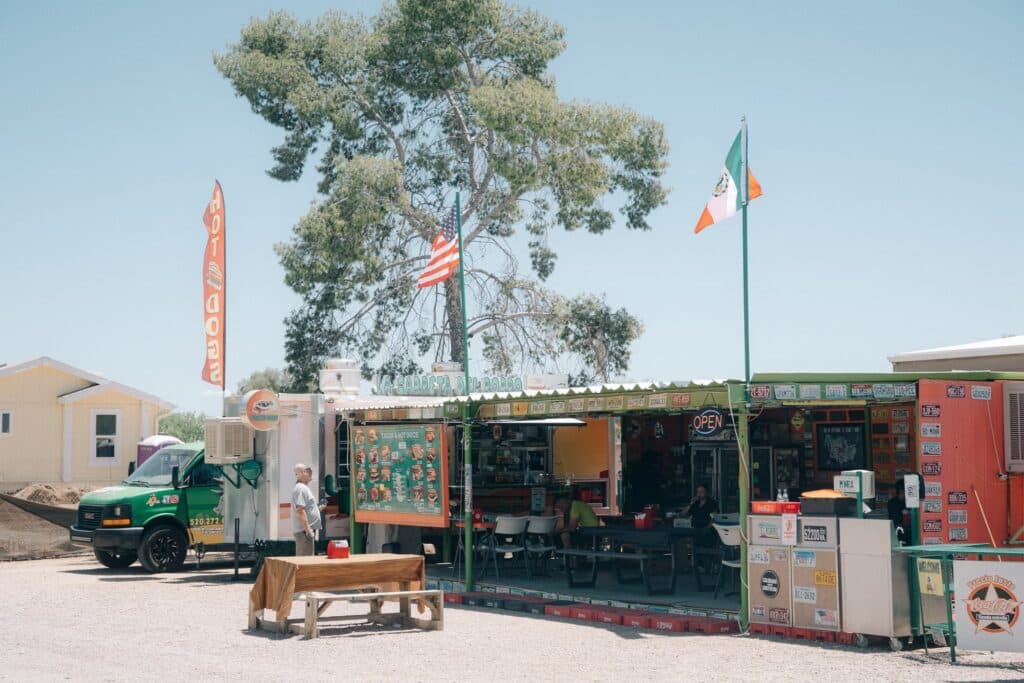
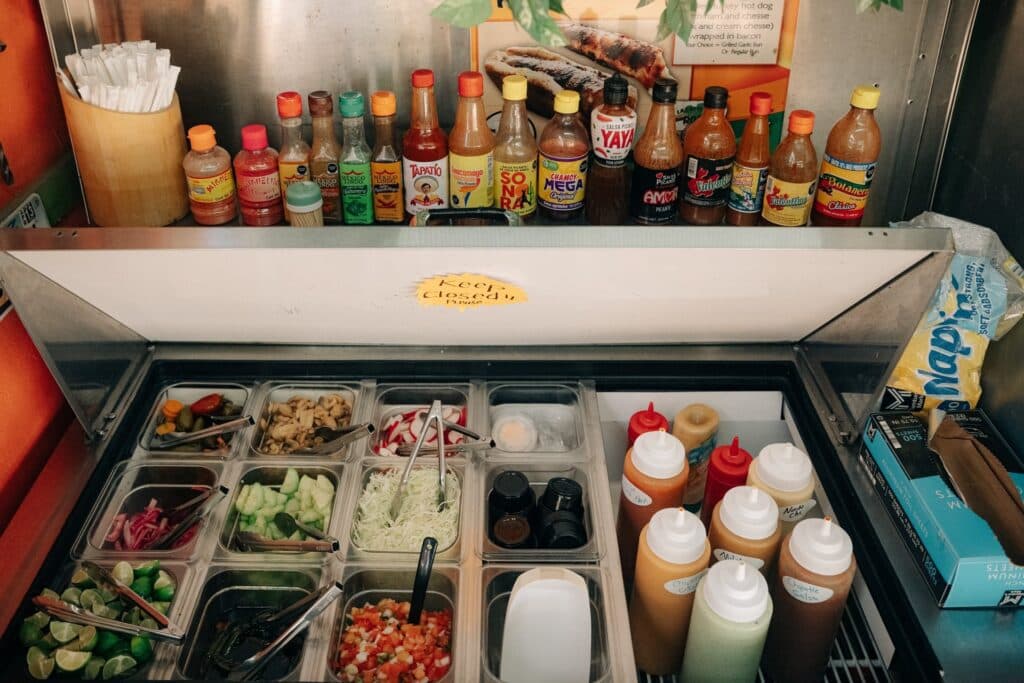
A salsa bar sits at the back, as colorful as the place itself.
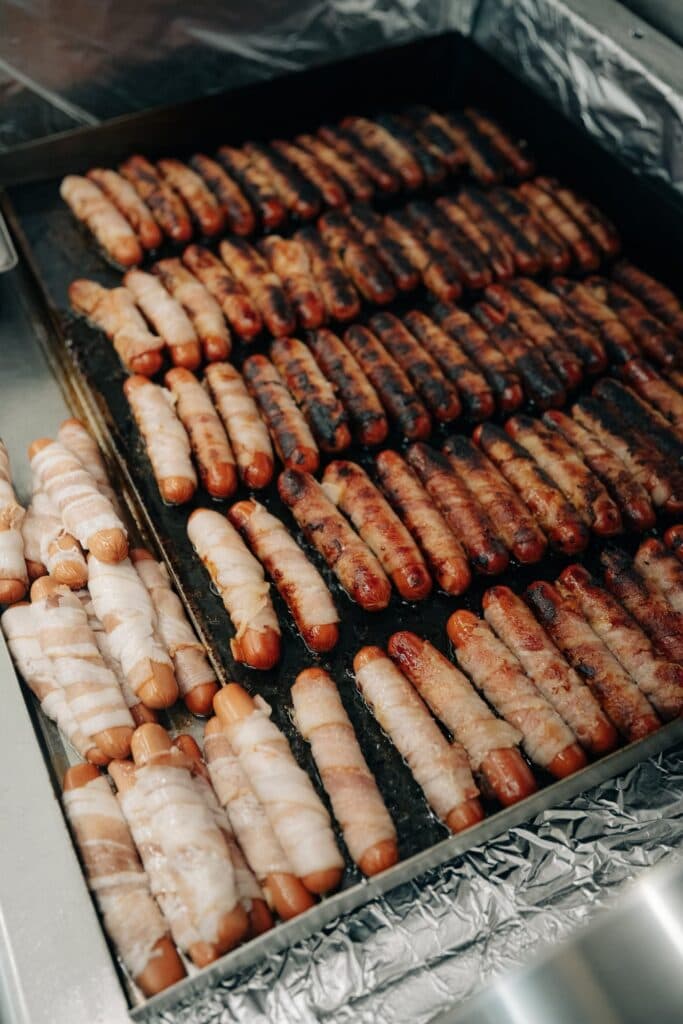
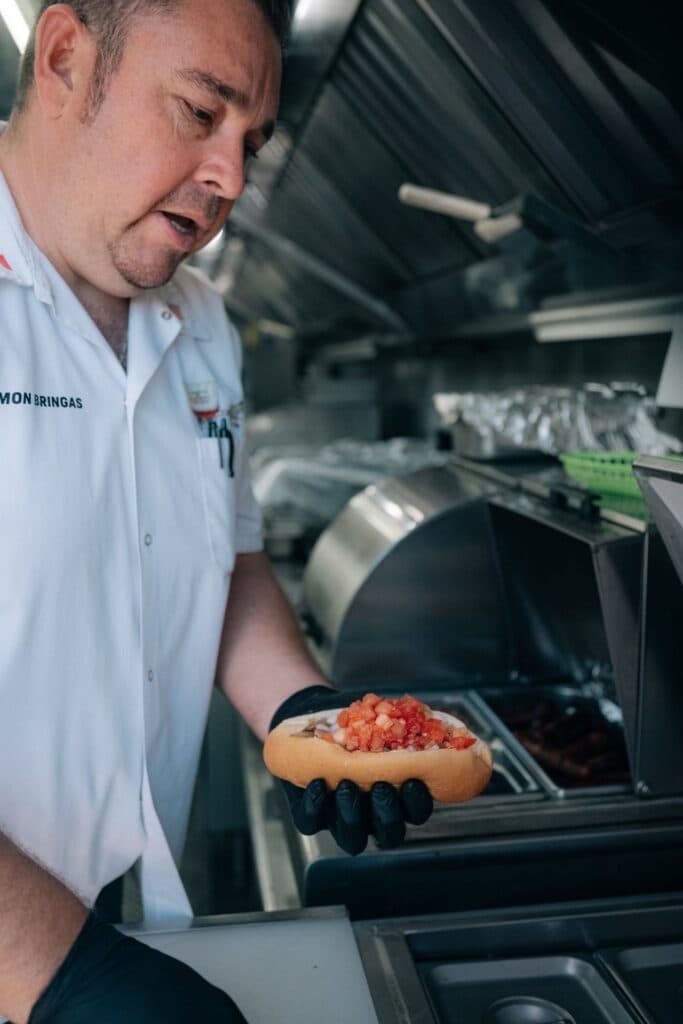
Behind the order window, Ramon Bringas commands the flat-top next to a pile of steaming buns, cooking up his next batch of Sonoran dogs for the day.
The license plates that decorate La Carreta del Rorro aren’t just from Ramon’s own collection, although that’s how it started out.
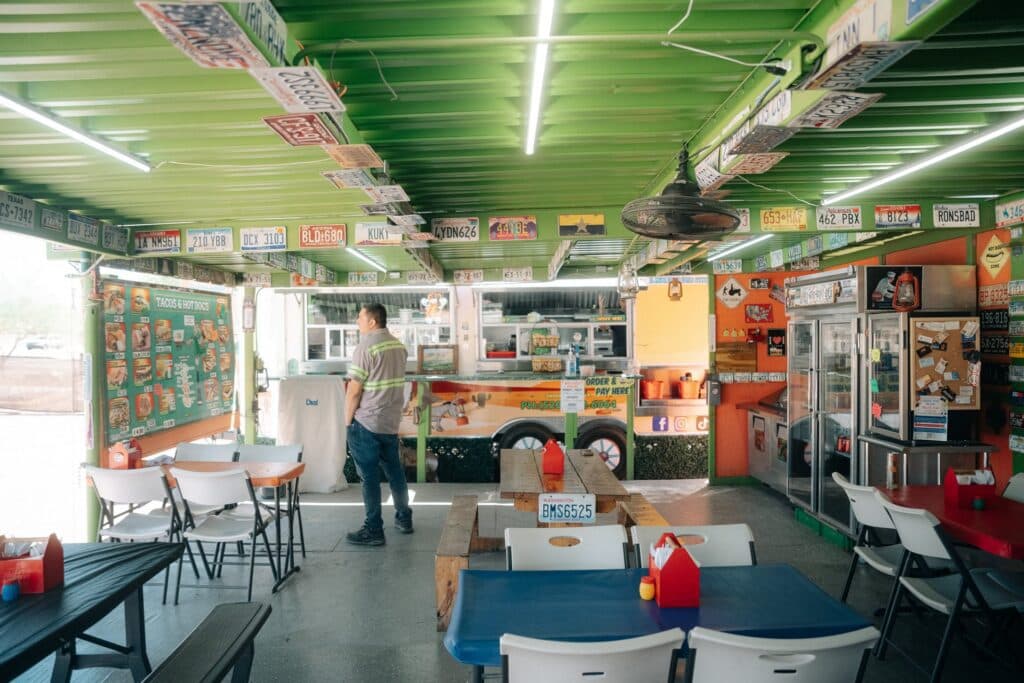
“I had about 30 license plates in my garage,” Ramon said. “So I needed to put something up for decoration. Something different.” Once they went up, customers started bringing their own. “People were like, ‘Oh, here’s a license plate. I’m gonna trade for a hot dog.”
Rorro from Hermosillo
Ramon was born and raised in Hermosillo, Sonora, the city known as the birthplace of the Sonoran dog. As a kid, family called him Rorro.
“Somebody, like, big, little chubby, cutie,” he said. “They used to call me like that when I was little. I don’t know why.”
He came to the U.S. for more opportunities and spent two decades working in other people’s kitchens. After ten years at a homestyle diner in Flagstaff cooking steaks and pancakes, he moved to Tucson and spent some time working in the kitchen at Stone Canyon Golf Club here in town. But he wanted something for himself.
“I got tired of working for somebody else,” he said.
In August of 2014, he found a corner on Camino de la Tierra and Orange Grove, put up a sign that read Sonoran Hot Dogs, and opened a small stand. The funny part, he says, is he didn’t really know how to make one yet.
“I didn’t even know how to cook a Sonoran hot dog,” he said. “But I did know all the ingredients on them, because I’m from Hermosillo, Sonora. That’s where they’re coming from, you know?”
At first he didn’t know if anyone would show up, but they did.
“The first day,” he said, still a little surprised about it, “we sold about, like, 180 hot dogs.”
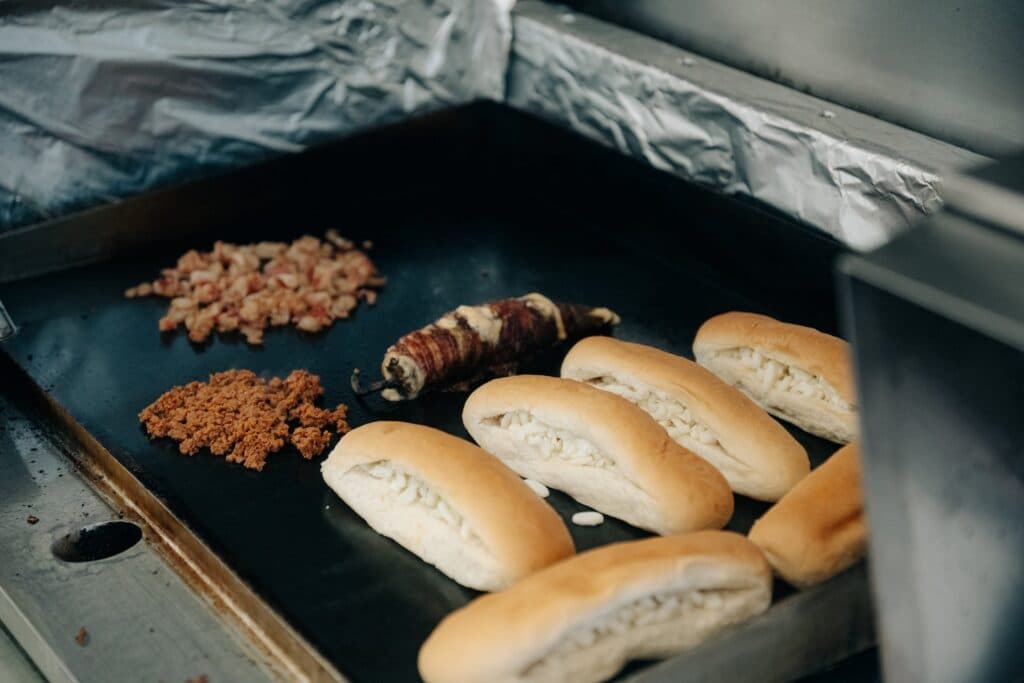
A Real Sonoran Hot Dog
The first thing Ramon told me about a Sonoran dog is what it’s not: it isn’t toasted.
“A real Sonoran hot dog has to be steamed,” he said, and the buns are steaming the whole time he works. Pillowy white bread delivered every morning from El Triunfo Bakery and Tortilleria, a Mexican bakery in Tucson’s south side. He won’t toast them and doesn’t understand why anyone else does.
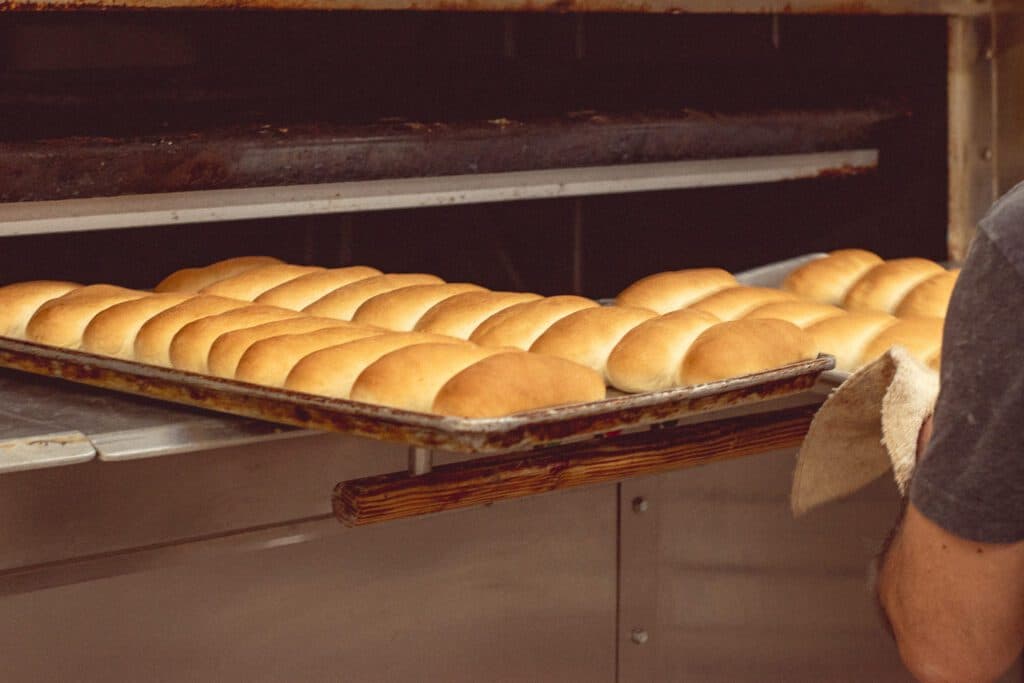
“I see a lot of people who come right here and ask for toasted buns,” he said. “I don’t know why.”
The beans are the other tell, he said. “A lot of people use canned beans. I don’t like that. So we make our own beans, like from scratch.”
A bestseller at Carreta del Rorro, the original Sonoran dog arrives in a paper boat with green-checkered paper on an orange tray. The first thing I noticed was the weight, under which the paper boat almost collapsed. The first bite was soft and messy, mostly bun, mayo, and bean. The second bite added the hearty bacon-wrapped dog, with a spicy and tangy hint of mustard and jalapeno sauce. The third bite brings it all together with the tomato, adding a quick brightness. The bun stays soft the entire time, falling apart under the weight of the toppings as you tear into it.
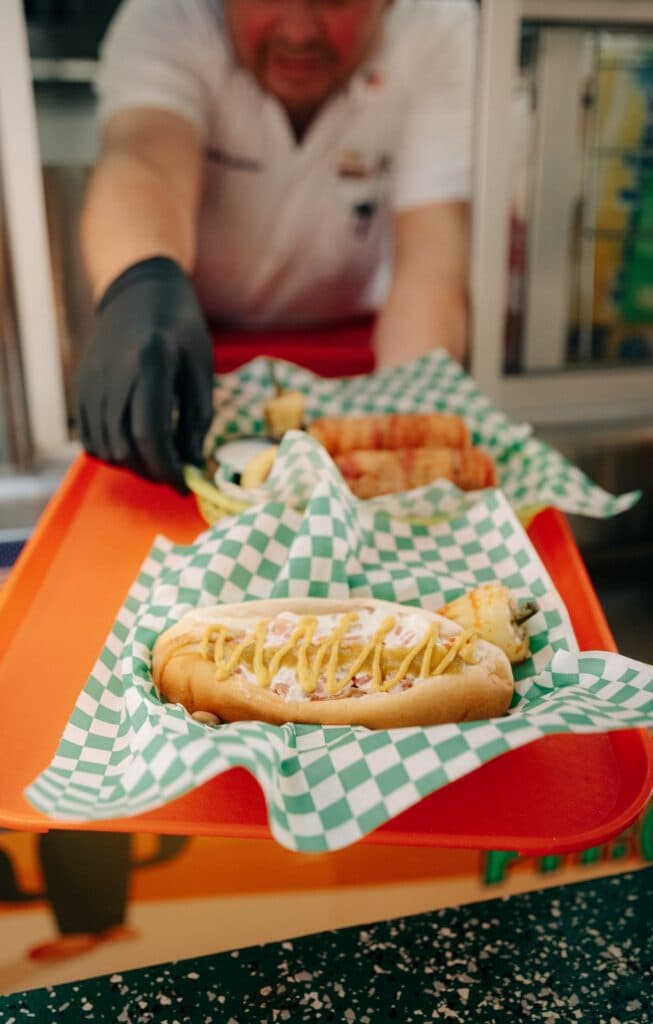
The trophy by the window
In 2017, Desert Diamond Casino hosted a competition for the best Sonoran hot dog in town. Trucks, chefs, weekend stand-runners all came to compete, and Ramon was there too. He entered two dogs: a chorizo dog and the Chile-Rorro, which is his own creation.
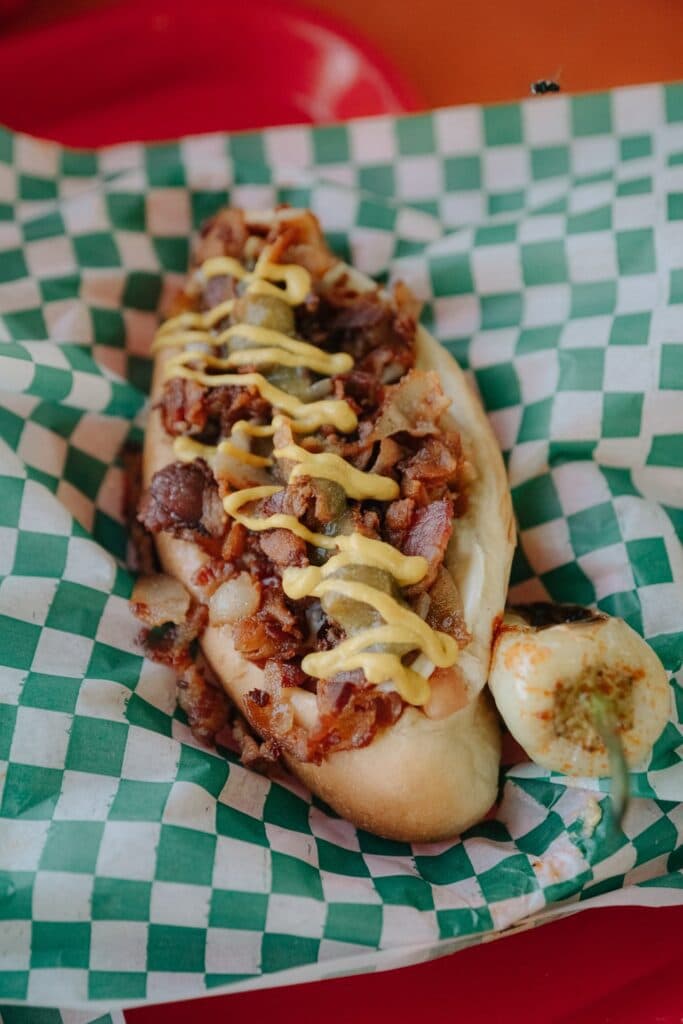
A fire-roasted green chile stuffed with three cheeses, wrapped in bacon, and topped with all the Sonoran dog fixings. The judges, he said, were unanimous in choosing the Chile-Rorro. [Editor’s note: I was a judge at that competition and can confirm that thing slaps.]
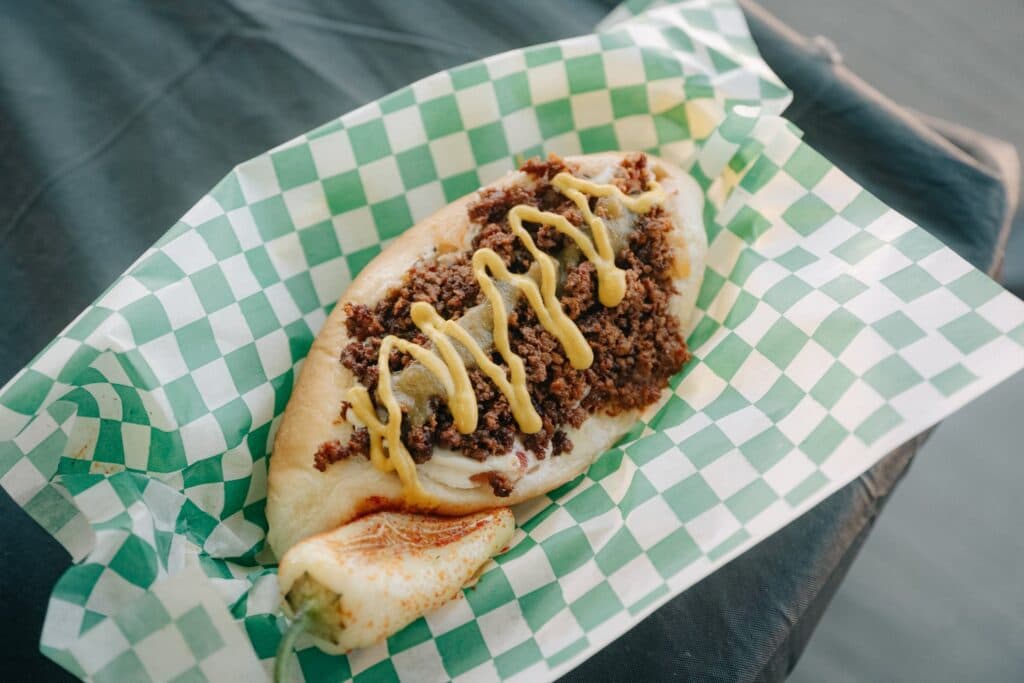
Why did he think his hot dogs won?
“Cause they’re good,” he said with a shrug. He isn’t a man of many words.
The trophy is next to the order window.
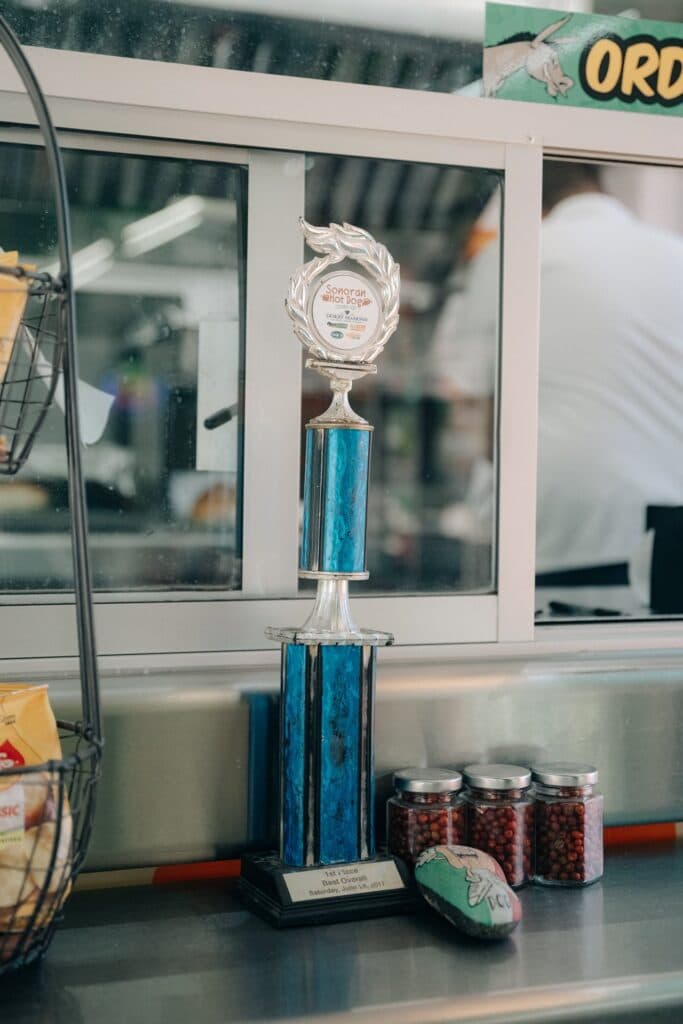
The Chile-Rorro
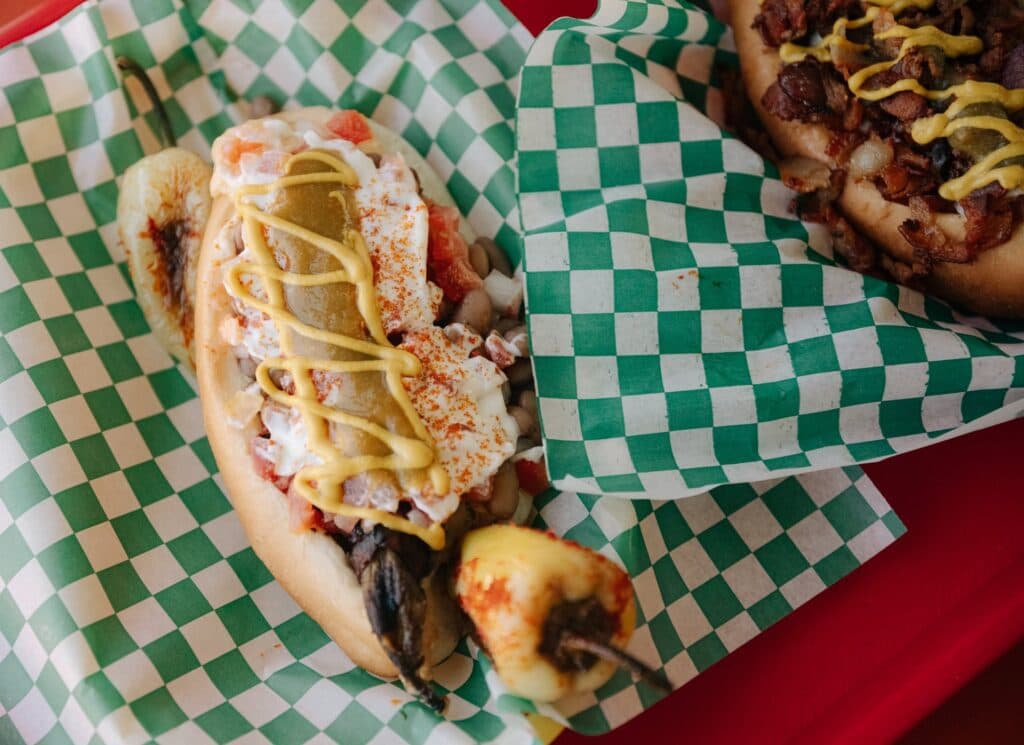
The Chile-Rorro is what I would imagine if a Sonoran dog and a chile relleno had a baby. The roasted green chile splits with the first bite and releases three creamy cheeses. The bacon holds it together for as long as it can, and the chile brings a low, steady heat that builds over the back half of the dog and lingers.
Eighty hours a week
By 2018, Ramon had ten employees, three locations, and a full menu due to the success of his Sonoran dogs. The first Carreta was located at Camino de la Tierra and Orange Grove, on a lot six times the size of the current one. Ramon had a mesquite grill out there, a charcoal pit, a salsa bar he was proud of, but things got difficult when the landowner decided to sell.
“They only gave me, like, two weeks notice,” he said. “They don’t even give me time to tell the customers where I’m gonna be.”
He scrambled and found a new spot in a Lowe’s parking lot, only for the pandemic to hit. Ramon hit red tape and couldn’t open up the shop. After eight months of being on the sidelines, Ramon finally opened back up Carreta del Rorro, although this time it was a smaller operation. Most days it’s just him and his wife.
“It seems easy, but it’s not,” he said. “Right now, I’ve been working more than 80 hours a week.”
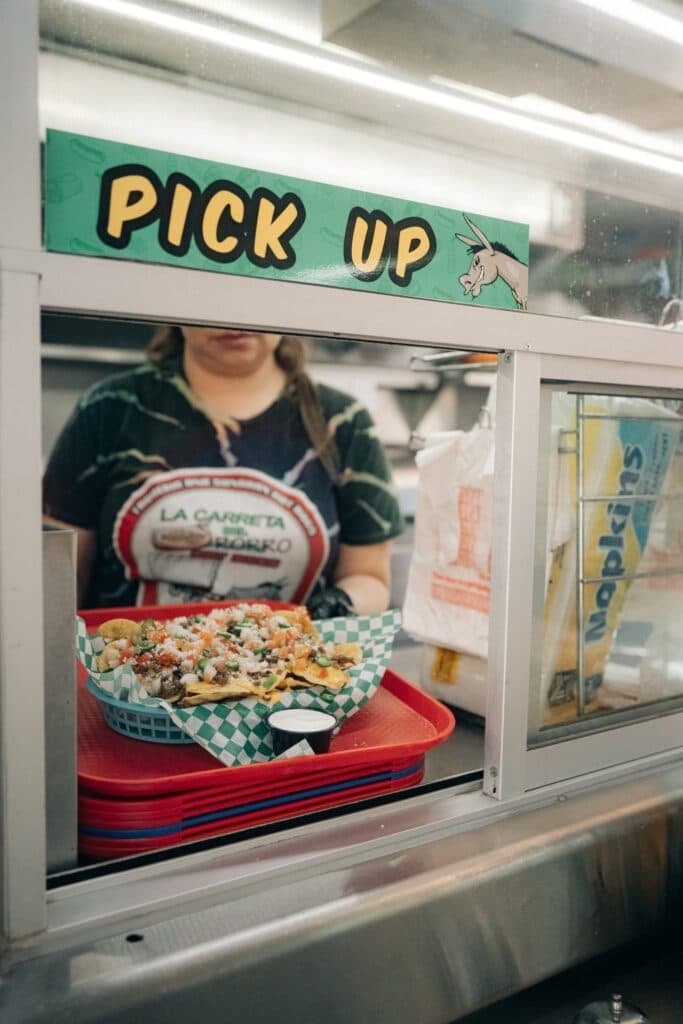
The nachos arrived looking like the Mexican flag. Cheesy tortilla chips piled high under red tomatoes, white onion, and green jalapeños. It comes with sour cream and mole on the side, but if that’s not enough toppings for you, there’s a full salsa bar with at least a dozen options waiting for you to ruin a clean shirt.
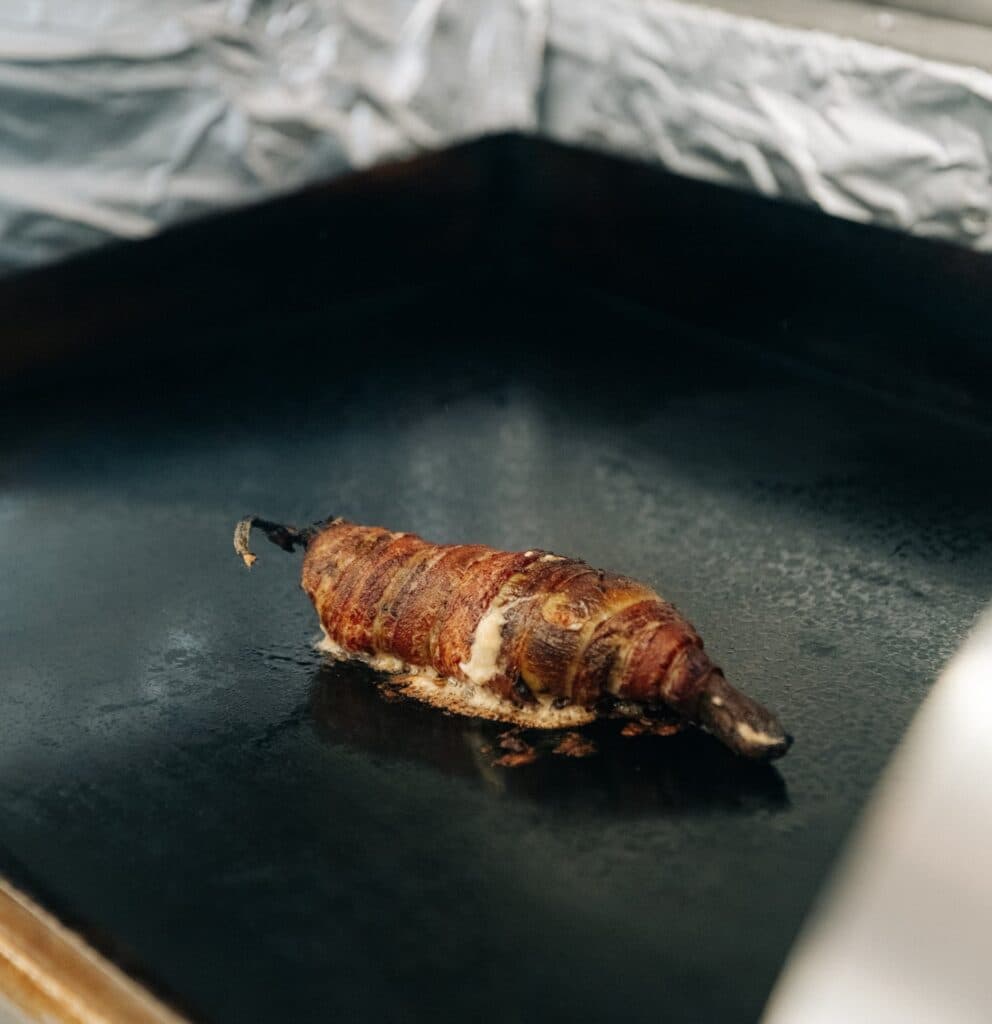
Chile Güeritos are yellow chili peppers that come grilled on the side with most meals at Carreta. They come stuffed with cheese and wrapped with bacon if you order the popular Tori-Rorro (which was sold out when I was there). A Tajín-like seasoning, which Ramon makes himself and won’t talk about, dusts the top.
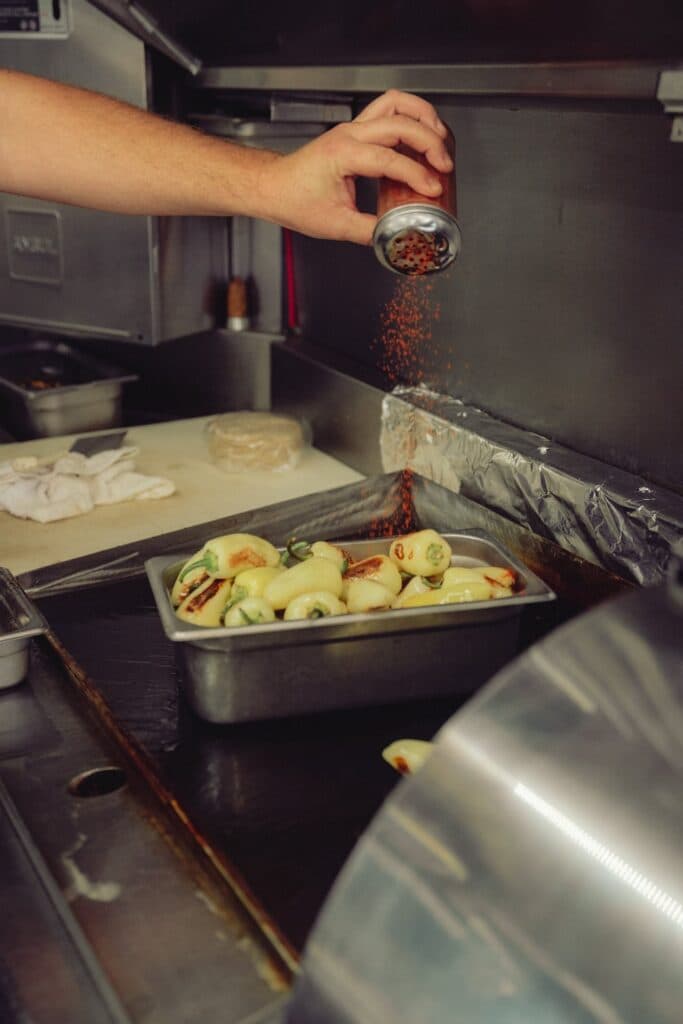
“It’s a secret recipe,” he said with a smirk.
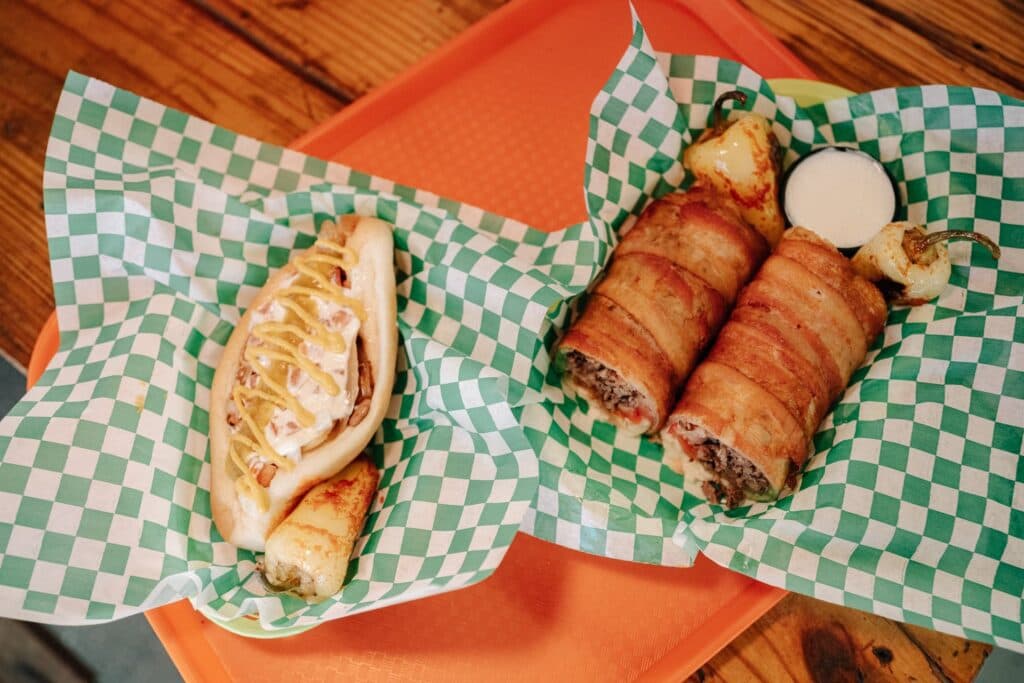
My personal favorite thing on the menu was not a Sonoran dog at all, but the Burro Percherón, which might be the creamiest burro I’ve had. The first bite offers a crackling crunch from a bacon-wrapped flour tortilla. The steak filling is tender and almost gets lost in a creamy flood of melted mozzarella. Thick, buttery slices of avocado mash together with mayo for a decadent texture. A pop of diced tomatoes cuts through, resetting your taste buds for the next bite. It’s heavy and messy in the best way.
Delicioso y diferente
Twelve years in, La Carreta del Rorro sits a quarter mile off I-10. Most of the out-of-state plates on the wall got there because someone pulled over hungry on their way somewhere else.
“We get a lot of customers from everywhere,” he said. “I mean, you can tell from the license plates.”
I asked Ramon to describe his food in three words. He laughed and waved me off. He called his wife over. She thought for a second and then she gave a succinct answer.
“Delicioso y diferente.” Delicious and different.
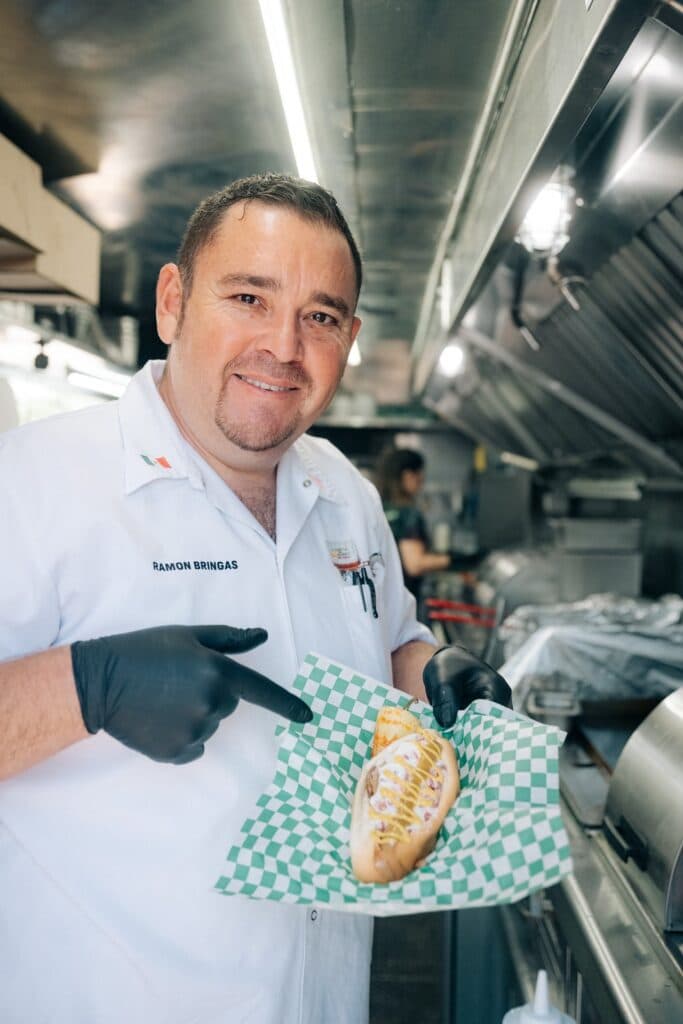
Ramon’s own pitch is short too.
“Just come and try the hot dogs,” he said. “I don’t know how to explain it to you, but just come and try it.”
If you’re driving by exit 246 at Cortaro Road and you’ve got an old license plate sitting around the garage, all the more reason to stop. I asked him if he still takes them as payment. “Yes, just bring me one,” he said, “We’ll trade for a hot dog.”
La Carreta del Rorro is located at 5505 W. Cortaro Farms Rd. Keep up with La Carreta del Rorro on Instagram.

![How Jun Dynasty built a loyal following in Tucson since 2013 [PHOTOS]](/_next/image?url=https%3A%2F%2Fwgwexrkqokkyffktcsqd.storage.supabase.co%2Fstorage%2Fv1%2Fobject%2Fpublic%2Fmedia%2Fmedia%2Flocations%2Ftf-jun-dynasty-beef-and-tofu-stew-in-flaming-chili-oil-0097-3ab869e30c42.jpg&w=3840&q=75)