Desert Drifter Coffee officially opens its first Tucson location on at 5 a.m. on Friday, October 3, at 419 W. Speedway Blvd.
Founder Eddy Yunkherr, who has worked in coffee for more than 15 years, built Desert Drifter with the goal of blending convenience with quality.
“Our mission is simple: bring back the old-school values of community, authenticity, and care,” he said.
Tucson Roots and Local Partners
Although Desert Drifter started as an idea far from Arizona, Yunkherr and his team now call Tucson home. Since moving here in 2020, they have embraced the city’s culture and food scene.
To highlight Tucson’s culinary talent, Desert Drifter partners with local artisans including Presta Coffee Roasters, Tucson Chocolate Factory, and Maya Tea Company. Customers will find signature drinks like the Sonoran Spice Mocha and nitro teas alongside smoothies and acai bowls.
Food collaborations include a breakfast panino by Holy Focaccia, cookie sandwiches from Aunt Cookie, tres leches cakes and cochitos from Casita de Sololoy, vegan pastries from Houlden’s Rise Above, and baked goods from Breadsmith Oro Valley.
Coffee, Community, and Collaboration
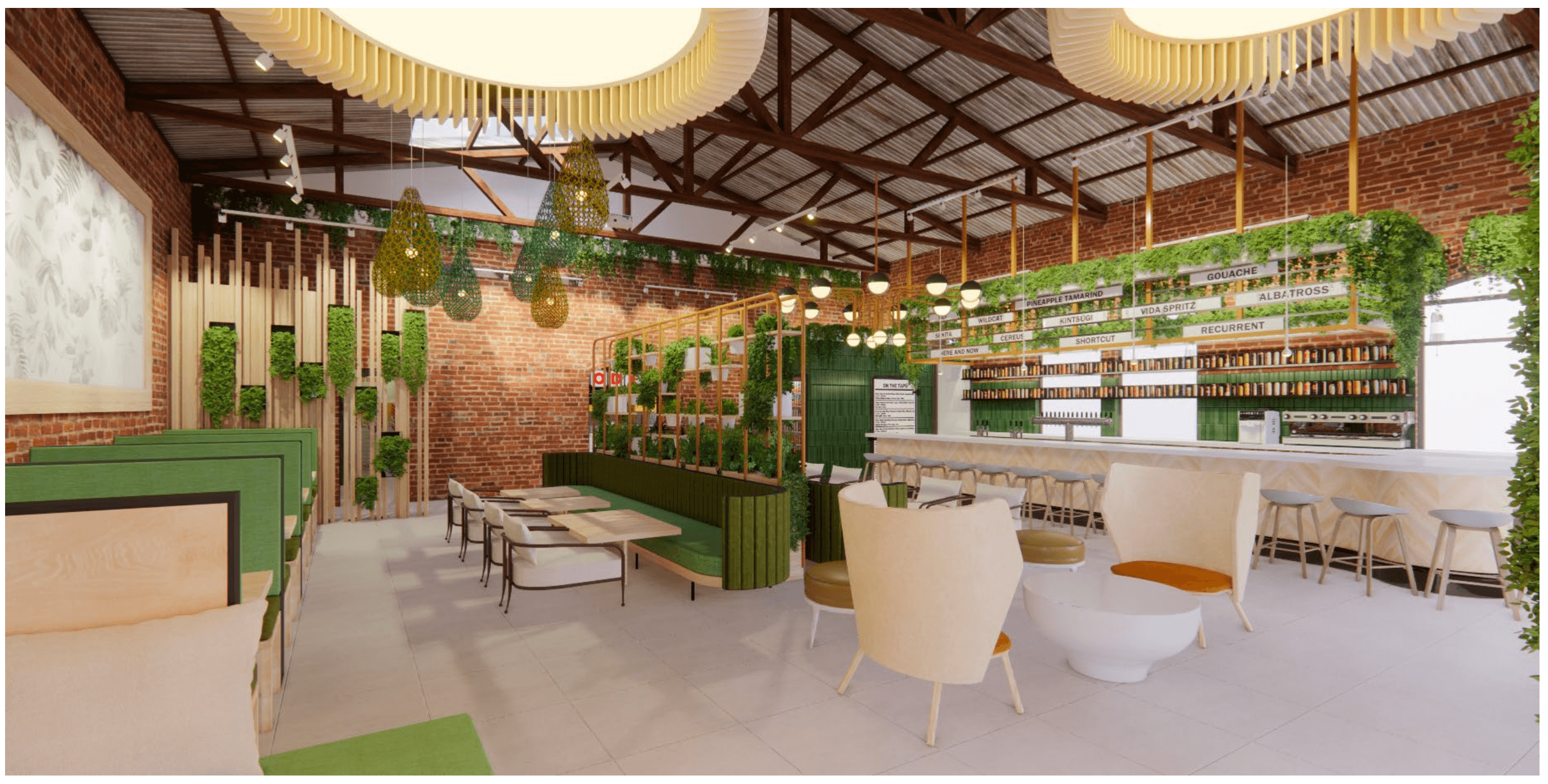
Desert Drifter describes itself as a “second-and-a-half wave” shop, bridging the gap between mainstream drive-thru coffee and third-wave specialty. The Speedway drive-thru will feature a patio, local art by Joe Pagac, and a music playlist free of corporate filters.
Community remains central to the brand. The shop sources local ingredients whenever possible, shares profits with employees, and donates proceeds from a quarterly “Charity Coffee” to local nonprofits.
Grand Opening Celebration
Guests can expect a lively atmosphere at Friday’s launch. The shop will serve from 5 a.m.-7 p.m., welcoming Tucsonans to explore a menu that emphasizes both flavor and local collaboration.
“We want guests to feel, wow, this is cool, and this is really good coffee,” Yunkherr said.
The other two announced locations will be at 3955 E. Broadway Blvd. and 10335 N. La Cañada Dr.
Full Q&A with Eddy Yunkherr, Founder of Desert Drifter Coffee
Q: You have over 15 years of experience in the coffee industry, starting as a teenage barista and even helping open more than a dozen shops. Can you share a bit about your background and how those experiences led you to create Desert Drifter Coffee?
A: I started as a teenage barista in Southern Oregon, right where Dutch Bros was born. Funny enough, our GM at Desert Drifter, Zach, was the ‘cool older brother’ who actually trained me back then, it’s pretty special that we’re building this together now. Over the last 15+ years I’ve touched every corner of this industry: opener, closer, assistant manager, manager, regional manager, owner, even serving on the executive and tech teams in corporate coffee. In total, I’ve helped open 38 coffee shops. Through it all, what mattered most wasn’t the stores, it was the people. Eighty percent of my wedding guests were former employees. But I also saw what happens when coffee companies get too big: quality drops, employees become numbers, and the heart of the community fades. Desert Drifter is about bringing back those old-school values, knowing your team by name & what they are passionate about, serving a product we’re proud of, and making coffee about people first.
Q: What was the inspiration behind launching Desert Drifter Coffee, and what did you want to do differently with this new venture?
A: The inspiration came from what I felt was missing in coffee. I missed the heart of it, the simple things like hanging out with customers, asking an employee how that concert was last weekend, or having music played without a corporate filter. I still remember the day corporate banned Blink-182 from our in-store playlists…. It felt like a small thing, but to me it symbolized how the soul of coffee shops was being stripped away.
There were a lot of moments that pushed me toward starting something new, but the final straw was watching a company cut managers’ pay and try to spin it as a positive. Meanwhile, there was already plenty of profit at the bottom line. That’s when it became crystal clear to me: I wanted to build a company that put people before profits.
At Desert Drifter, we’re intentful about everything. From how we treat our employees and customers to every ingredient we put in a drink. And Tucson became the perfect home for that vision. We didn’t plan it; we accidentally fell in love with this city. Now Desert Drifter isn’t just another coffee shop, it’s Tucson’s coffee shop. Our mission is simple: bring back the old-school values of community, authenticity, and care, and make sure they never get lost again.
Q: I understand you moved to Tucson in 2020 and essentially fell in love with the city at first sight. What drew you to open your business here, and how has Tucson’s community or culture influenced Desert Drifter’s concept?
A: When we first came to Tucson in 2020, we actually missed our exit and ended up on Tangerine Road in Oro Valley. The Catalinas were glowing with this unreal desert sunset, it felt like a movie scene. That was the spark, but what really sealed Tucson as home was everything else: the culture, the food, and the U of A. My wife is a graduate, and I’m a huge sports fan. There’s something special about the energy around campus on game day. And Tucson’s food scene? Best in the world, hands down.
What makes Tucson stand out compared to anywhere else I’ve lived is the mix of people from everywhere. It’s such a rich blend of cultures, and you taste it in the food, feel it in the music, and see it in the community. That’s exactly what we wanted to capture with Desert Drifter. We roast with Tucson’s own Presta, partner with Tucson Chocolate Factory for our Sonoran Spice Mocha, and teamed up with Dirty Tamarindo to create El Tigre del Sol, a wild, uniquely Tucson take on a Red Bull infusion. These aren’t gimmicks, they’re collaborations with the local makers who inspire us. Desert Drifter isn’t just another coffee shop, it’s Tucson’s coffee shop.
Q: You’ve described Desert Drifter as a “second-and-a-half wave” coffee shop, aiming to bridge the gap between mainstream second-wave coffee and the elite third wave. Can you explain what that term means to you and how it will shape the coffee experience and menu at Desert Drifter?
A: When people talk about coffee ‘waves,’ second wave usually means big, mainstream chains like Starbucks, Dutch Bros, or Black Rock. Third wave is the opposite end of the spectrum, think Stumptown, Blue Bottle, or Tucson’s own Presta, where it’s all about elite sourcing and craft. Both have their place, but I always felt there was room in the middle.
That’s what I mean by a ‘second-and-a-half wave’ coffee shop. We’re taking the accessibility and fun of second wave, drive-thrus, a menu with variety, drinks that are approachable, and combining it with the quality and intentionality of third wave. At Desert Drifter, every ingredient is thought through. Our coffee is roasted by Presta, which in my opinion is one of the best in the country. Our Desert Bloom Latte with lavender and honey is a good example, it’s fun and approachable, but made with the kind of quality espresso you usually only find in a third-wave shop. And on top of that, we’ve added smoothies and acai bowls, because we want to be more than just coffee.
The idea is simple; you don’t have to choose between convenience and quality. At Desert Drifter, you get both.
Q: The first Desert Drifter Coffee location is launching as a mobile coffee shop on wheels with a drive-thru service. Why did you choose a mobile, drive-thru setup for your coffee shop, and how do you think this will enhance convenience and the overall customer experience?
A :Our Broadway shop is such a great example of how we approach sites. It’s an 800-square-foot wood-framed building (Just like Speedway), the smallest footprint we can really fit into. Honestly, it would’ve made an amazing sit-down/drive-thru combo if the lot were bigger, but there just isn’t space for that. So do you walk away from a great site just because it doesn’t match some corporate idea of ‘perfect’? Not us. Good sites are good sites.
When we look at new locations, we start with the community. What neighborhood are we entering, and how can we help support the area around the store? Of course, we still check the corporate-style boxes like traffic counts and population density, but we never let format hold us back. Sometimes that means drive-thru only, sometimes it’s a full lobby like Oro Valley. Every drive-thru will still have a patio because we want people to have a place to hang out. At the end of the day, we’re not worried about labels. We just want to open coffee shops and bring Desert Drifter to more Tucson sub-communities.
Q: Sourcing ingredients locally is clearly a priority for you, from using Tucson-roasted Presta coffee beans to milk from Arizona’s Danzeisen Dairy. Why is it important for Desert Drifter to highlight local suppliers and flavors, and how does this local-first approach reflect your values or improve your product?
A: When we started Desert Drifter, we knew our end product had to be better than Dutch, Black Rock, or Starbucks. So we literally analyzed every single thing we carry, 288 items that go into our coffee, smoothies, or food. We went through each one with a fine-tooth comb, asking: is this the best version of this ingredient we can find?
What we discovered is that local products almost always came out on top. They don’t have the stabilizers, the fillers, or the chemicals you see in mass-produced ingredients, and that makes a huge difference. Presta’s beans, Danzeisen’s milk, Tucson Chocolate Factory’s chocolate… it all just tastes better, period. And beyond taste, it reflects our values. By sourcing locally, we’re keeping dollars in Tucson, supporting our neighbors, and making sure every drink is something we’re proud to serve.
At the end of the day, it’s simple; better ingredients make better coffee. And the best ingredients, for us, happen to be right here in Tucson.
Q: Desert Drifter is also about community impact. You plan to share profits with employees and even give 100% of the proceeds from a quarterly “Charity Coffee” to local nonprofits. How did you decide to build these community-oriented practices into your business model, and what do you hope they will achieve for your team and the wider community?
A: I’ve been in this industry long enough to see how often companies put profits over people. I’ve watched managers have their pay cut while executives bought private jets, and I knew I wanted to build something that worked differently. For us, profit sharing with employees and giving 100% of proceeds from our quarterly Charity Coffee isn’t about making headlines, it’s about doing the right thing.
I don’t think it needs to achieve anything beyond that. It’s not a marketing move. It’s simply the way we want to run Desert Drifter. Our team puts in the work, so they deserve to share in the success. And Tucson is our home, so giving back to local nonprofits just feels natural.
At the end of the day, we’re building a coffee shop that puts people first. That’s really all there is to it.
Q: How are you approaching sustainability in your operations? Are there any eco-friendly practices or goals (whether in packaging, waste reduction or sourcing) that Desert Drifter Coffee is committed to as part of its mission?
A: Sustainability is one of those areas where we realized we can do better, and honestly, that’s exciting for us. We’re already making good choices, like using recycled cups and working with Danzeisen Dairy, which delivers milk in reusable glass bottles. But we also see where the gaps are. Syrup bottles, for example, are made from a special type of plastic that doesn’t have a clear recycling path, and straws have always been a challenge.
The cool part is our employees are just as fired up about this as we are. A few of them are leading the charge, helping us track exactly what we’re wasting and pushing us to find better solutions. We even ordered 20 different eco-friendly straws for the team to test, because if they don’t work for our crew, they won’t work for our customers either.
We’re not perfect, but we’re pumped to keep getting better. For us, it’s about building a culture where improving, even in the small things, is something we’re proud and excited to do together.
Q: Launching a new coffee shop is no small feat, and you’re preparing to open three locations in the span of just a few months. What have been some of the biggest challenges in getting Desert Drifter off the ground, and were there any breakthrough moments during the launch process that affirmed you were on the right track?
A: One of the toughest, and honestly most exciting, challenges has been organizing 18 different local vendors and figuring out all the logistics behind that. It’s a lot of moving pieces, but it’s also what makes Desert Drifter special.
I’ve also held on to a few personal traditions that always feel like small breakthroughs. Every time we install a brand-new espresso machine, I FaceTime my dad for the first shot, it’s a ritual we’ve done for years. And the night before drywall goes up, we always have a late-night beer inside the shop. Carrying those old rituals into Desert Drifter has been a reminder that we’re still building this with the same heart as the very first store I opened.
What keeps me going is the people. When you do something you love with people you love, nothing feels impossible. We’ve made plenty of mistakes, but never hit a wall we couldn’t get through.
As for the real breakthrough moment, that’s coming soon. At 5 a.m. on Friday the 3rd, we’ll turn the speakers up loud and play Closer by The Chainsmokers, just like I’ve done at every opening. And then we’ll unlock the doors. I’m sure there will be a few tears in that moment.
Q: With doors set to open in early October, what can guests expect when they visit Desert Drifter Coffee? Describe the experience you’re aiming to create from the atmosphere (we know each shop will feature a mural by local artist Joe Pagac) to the offerings. What are some signature drinks or menu items you’re excited for people to try?
A: When guests come to Desert Drifter, I want their first thought to be, wow, this is cool, and this is really good coffee. Every shop will feel tied to Tucson, with murals by Joe Pagac and patios at every location. Music is a big deal to us too, we don’t do corporate playlists. The vibe is meant to feel fun, local, and alive.
On the menu, we’ve got a few things we’re especially proud of. The Sonoran Spice, our Mexican Mocha collaboration with Tucson Chocolate Factory, is already shaping up to be the drink that defines us. We’ve also partnered with Maya Tea to put their teas on a nitrogen tap system, which means Nitro Matcha and Nitro Chai you won’t find anywhere else. And then there are our smoothies, real fruit, coconut water, and that’s it. No scoops of sugar, no powders, no filler. Just clean, refreshing drinks that beat out the big smoothie chains any day.
We’ve kept the menu tight and intentional, coffee we’re proud of, unique Tucson collaborations, and food and drink that reflect the quality we believe our community deserves. Everything about Desert Drifter is built to deliver that moment where someone takes a sip and says, this is special
Q: You’ve mentioned hopes of eventually growing to as many as 20 stores across Southern Arizona while still “going all in” on being Tucson’s own coffee shop. How do you plan to balance that expansion with maintaining the local focus and community-centered spirit that define Desert Drifter?
A: In the Daily Star article, the way our story was framed didn’t feel true to who we are. The headline called us ‘Oregon transplants’ and focused on the idea of opening 20 locations. For us, that was tough to read because Tucson isn’t just where we’re opening stores, it’s our forever home. My wife graduated from the U of A. We’re season ticket holders, and we’ve put our life savings into this business because we believe in this city.
As for the ‘20 locations’ part, that came from a question about our wildest dreams. After twenty minutes of qualifiers and context, I said maybe 20 someday. But the reality is much simpler; our goal right now is to open these three locations, see how Tucson responds, and grow intentionally from there.
We won’t sacrifice our values for growth in any capacity. Desert Drifter isn’t about chasing numbers or expanding for expansion’s sake. It’s about building something authentic, community-driven, and deeply rooted in Tucson. That’s who we are.
Keep up with Desert Drifter Coffee on Instagram.