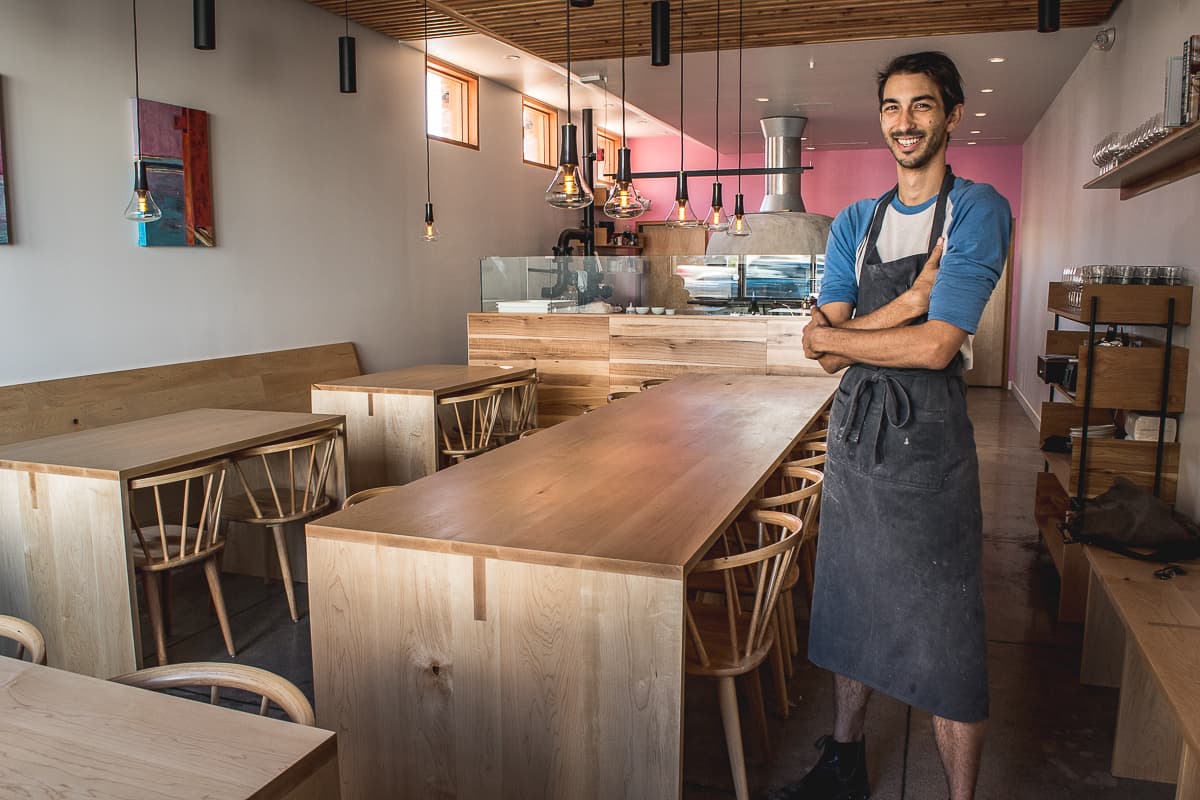
“I’d rather serve the croissant that’s going to get smashed in the face than the most photogenic one,” Alex Phaneuf told me.
It’s not what I expected to hear from someone with his resume. Phaneuf held Chef de Cuisine roles at Dominique Crenn’s three-Michelin-star Atelier Crenn and Iron Chef Masaharu Morimoto’s Napa Valley restaurant, and earned back-to-back James Beard semifinalist nominations for Outstanding Baker in 2017 and 2018.
He’s been around high standards long enough to know exactly what he’s doing, and while Beard nominations don’t make bread taste better, they help tell you something about the person behind it.
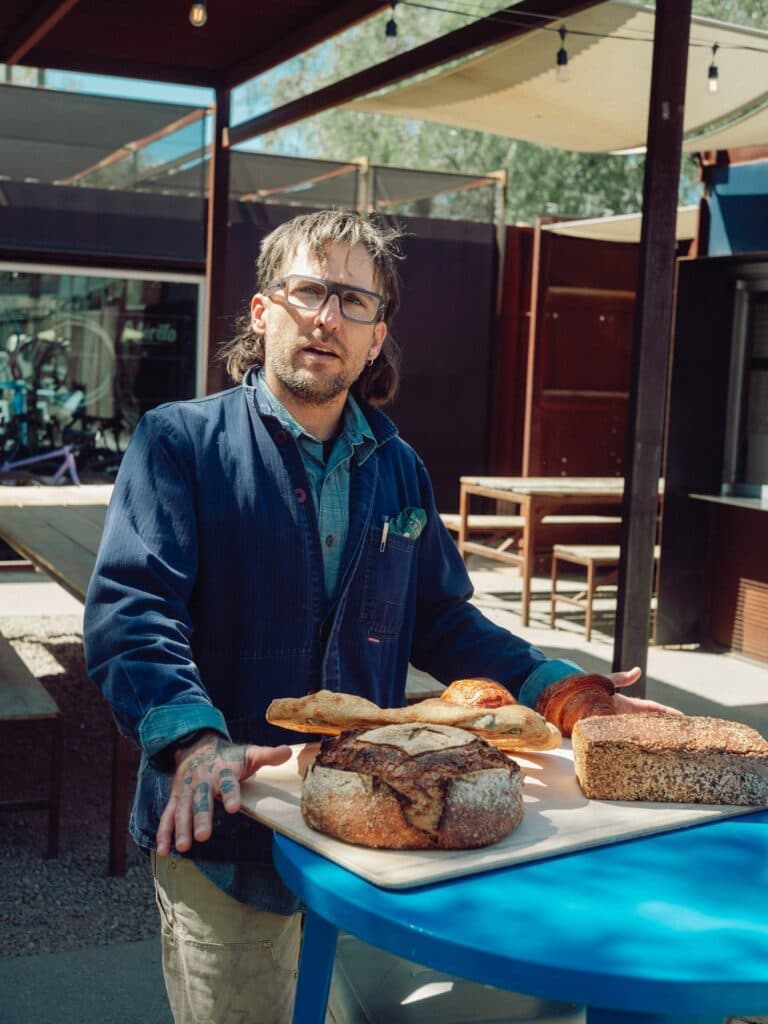
We talked about the importance of mastering a craft and how every craftsman leaves a fingerprint on their work. I asked him what his fingerprint would be. I expected something like “artisanal” or “raw” or maybe “mysterious.”
“Oh, it’s been the same since I decided to open bakeries. It’s definitely punk rock,” he said.
Baking Hard
Hidden Hearth is Phaneuf’s bakery at the MSA Annex on Tucson’s west side. That punk philosophy shows up in many places, but most visibly in the bread.
“It’s darker than most,” he said. “If we can bake hard, we’ll bake hard.”
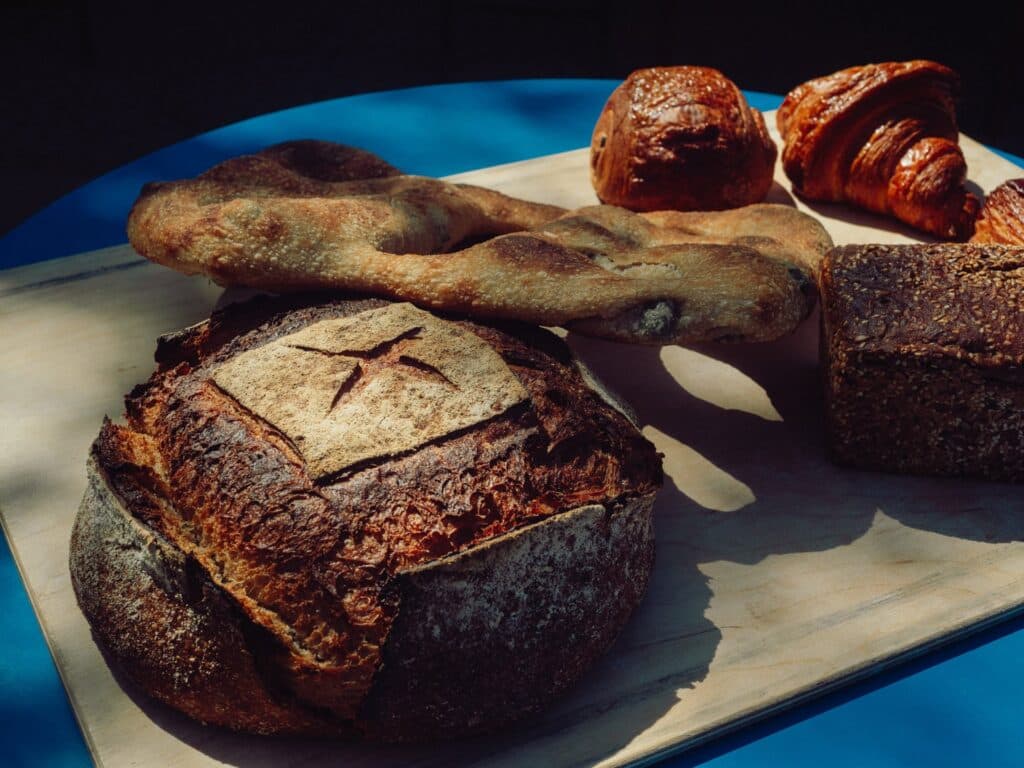
So why is it so dark? It’s a question he constantly gets, and he is happy to answer.
“It all comes down to grain reaction,” he said.
Most commercial bread uses white flour, which is made by removing the bran and germ from the wheat kernel, leaving behind mostly the starchy endosperm. Those removed parts are where most of the nutrition and flavor live, and they’re also what Phaneuf keeps.
“Together they make a really great whole food,” he said. “When you separate them, not so much.”
The bran carries sugars and compounds that brown readily in the oven, which is why whole grain bread bakes darker. The color is just the grain doing what it naturally does.
It also has flavors that are “wildly long,” in his words.
“There’ll be one type of grain that just has four or five flavors that no other type has,” Phaneuf said.
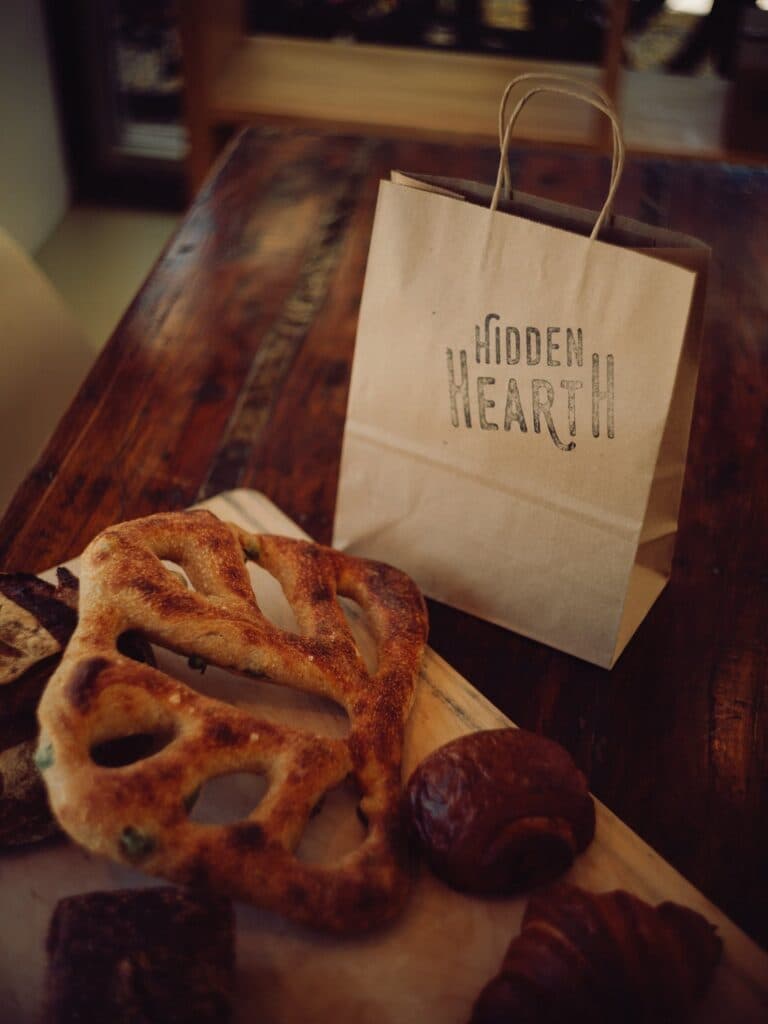
The reason comes down to something wine drinkers know well: terroir. Soil, climate, and geography shape the flavor of any crop, and grain is no exception. A wheat grown in the high desert of Colorado tastes different from one grown in the river valleys of New Mexico. Phaneuf has built his sourcing around that idea, working with farmers across the Southwest from Arizona through West Texas and up into Colorado.
“A wine shop would expose terroir from all over the world,” he said. “The Southwest has an abundance of terroir that you don’t have to go that far for.”
His daily inspiration is trying to bring that experience to Tucson.
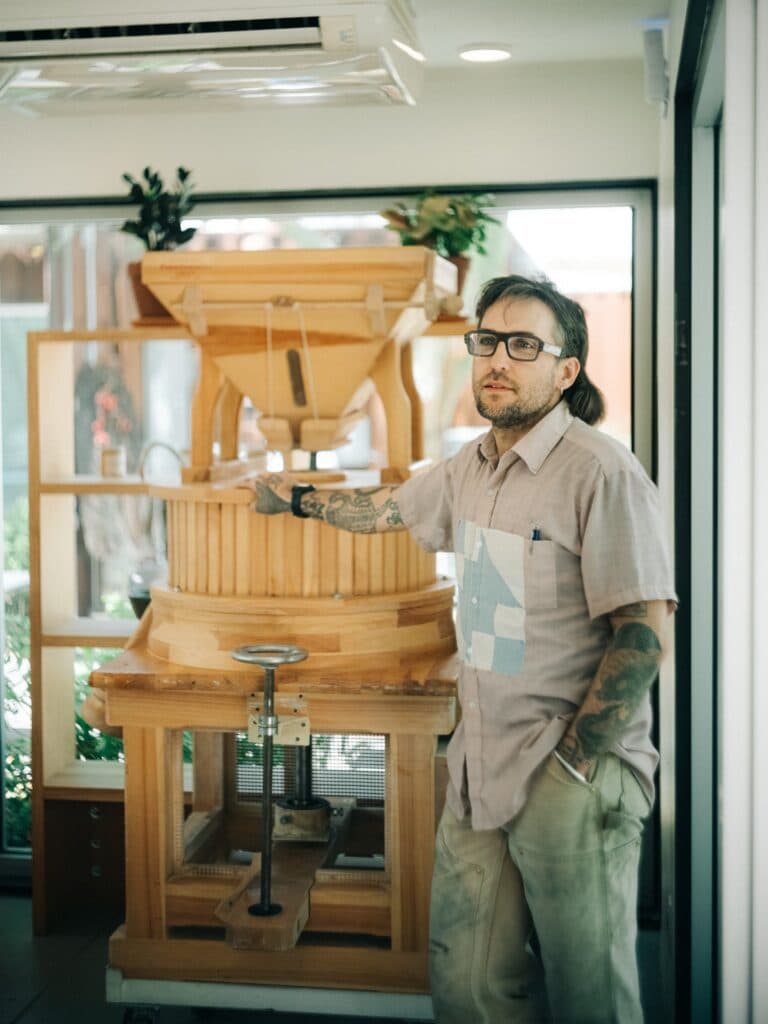
To make sure none of that flavor gets lost before it reaches you, Hidden Hearth mills in-house on a stone mill, an Austrian-made machine gifted to Phaneuf by a mentor. When I asked why he prefers stone milling, his answer was neither romantic nor pretentious.
“We have more control on the grind, and it definitely makes healthier flour,” he said.
The Set List
Whole grains are featured heavily on the menu.
“All the croissants last week got 20 percent more whole grain,” he said.
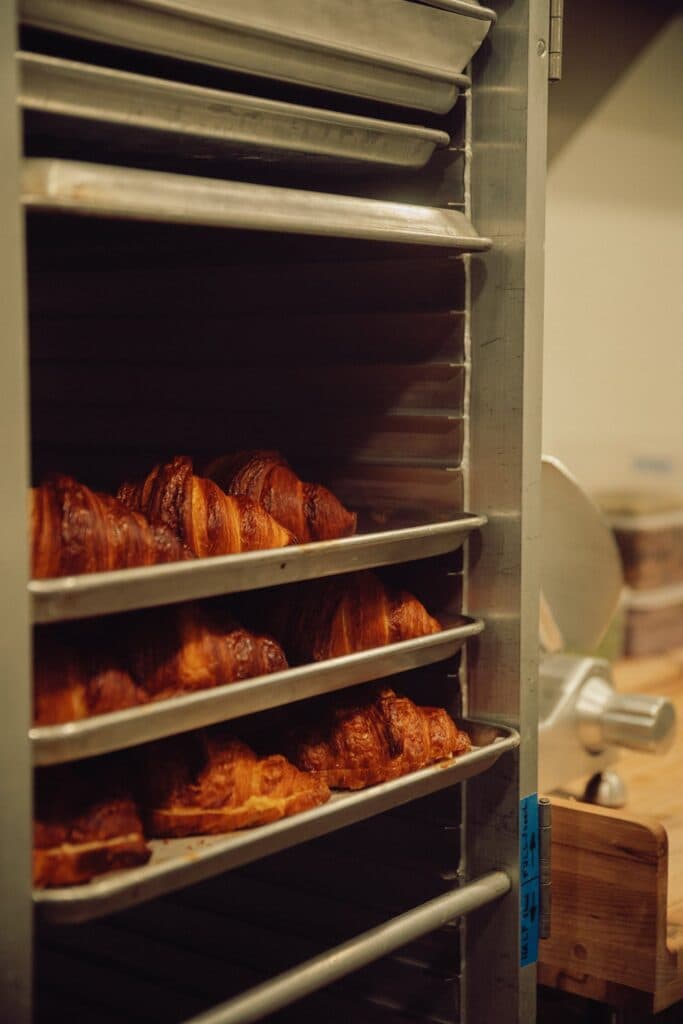
The one I tried came out flaky and dark golden brown, with a rustic crust that was crisp without turning brittle. The layers had weight and substance. I found myself picking up fallen flakes off my shirt and letting them dissolve on my tongue.
The Pain au Chocolat takes the same dough and adds Danish chocolate batons, the chocolate spreading outward through the buttery layers. It swam through my mouth with a satisfying sweetness and just enough bitterness.
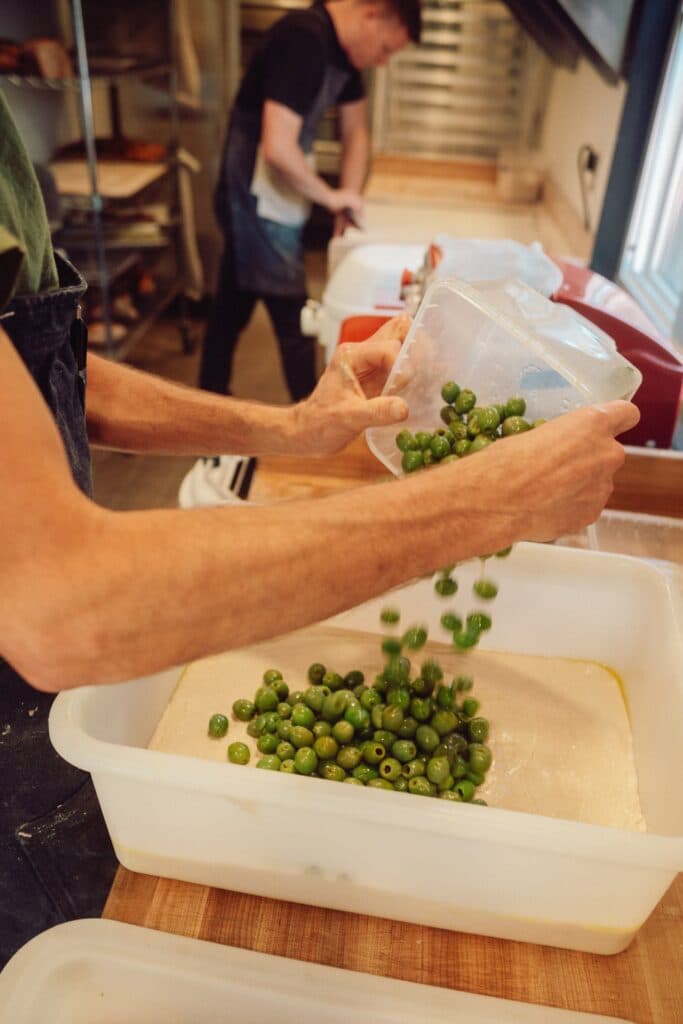
The Lemon Olive Fugasse features a simple ingredient list.
“Sourdough, lemon zest, and Castelvetrano olives. That’s all it is,” Phaneuf said.
The flavor is less simple. Salty and bright, the olives add moisture and a chew that took its time and gave me multiple flavors on the way down, the sourdough and lemon working together to create a complex tang.
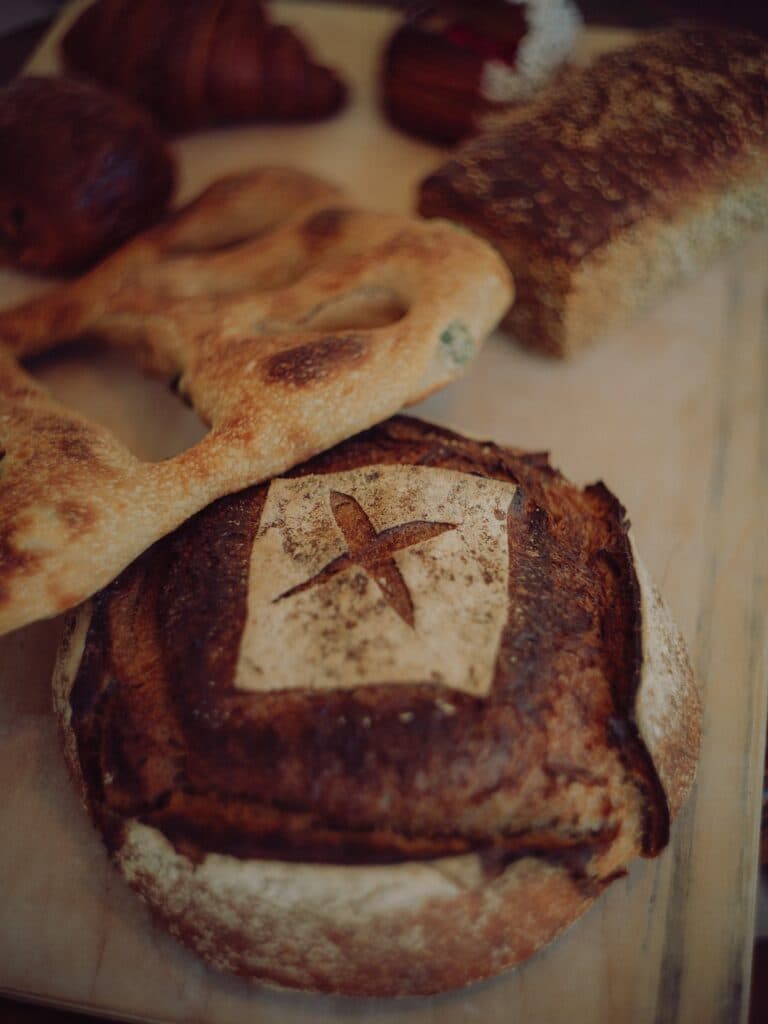
The Pain du Voison, their whole grain loaf made with a house-favorite rye flour, sat on my counter for days and held up through sandwiches, toast, and late-night pinches straight from the loaf. If you want to taste the many flavors a grain can hold, I recommend you start there.
The menu changes like a set list that gets rewritten before every show. When a new rotation of grain excites the team, Phaneuf might buy 1,500 pounds and change half the menu.
“We’re not in it to create a decade of consistency,” he said. “We’re in it to create change and throw your palate off a little. Come to us if you want to experiment a little bit.”
The Band
The people doing the work day in and day out make Hidden Hearth what it is. Phaneuf’s baking team is just three people: Tommy, Savannah, and Eddie. Savannah laminates and shapes the croissants. Eddie tends the sourdough starters and bakes the loaves. Tommy, who came up through LA’s restaurant scene before crossing paths with Phaneuf, now runs production, helps manage grain relationships, and brings his own ideas to the table.
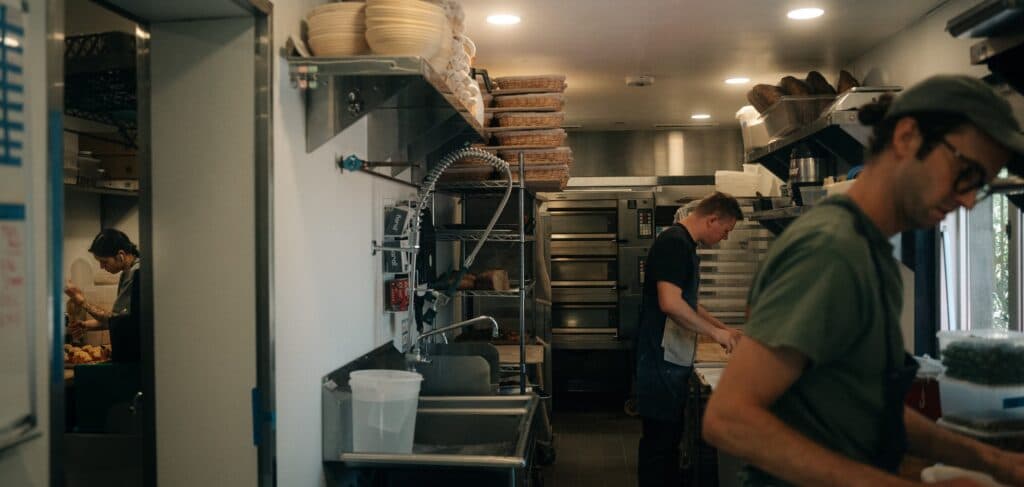
What keeps Tommy at Hidden Hearth?
“Alex has a vision and stays locked in on that vision.” Tommy smiled with his hands buried deep in dough and continued, “until he gets a new idea and everything gets thrown out the window.”
Phaneuf talks about his team with a particular kind of warmth.
“I love what they love. I love what’s giving them a hard time,” he said. “I love what’s keeping them up at night.”
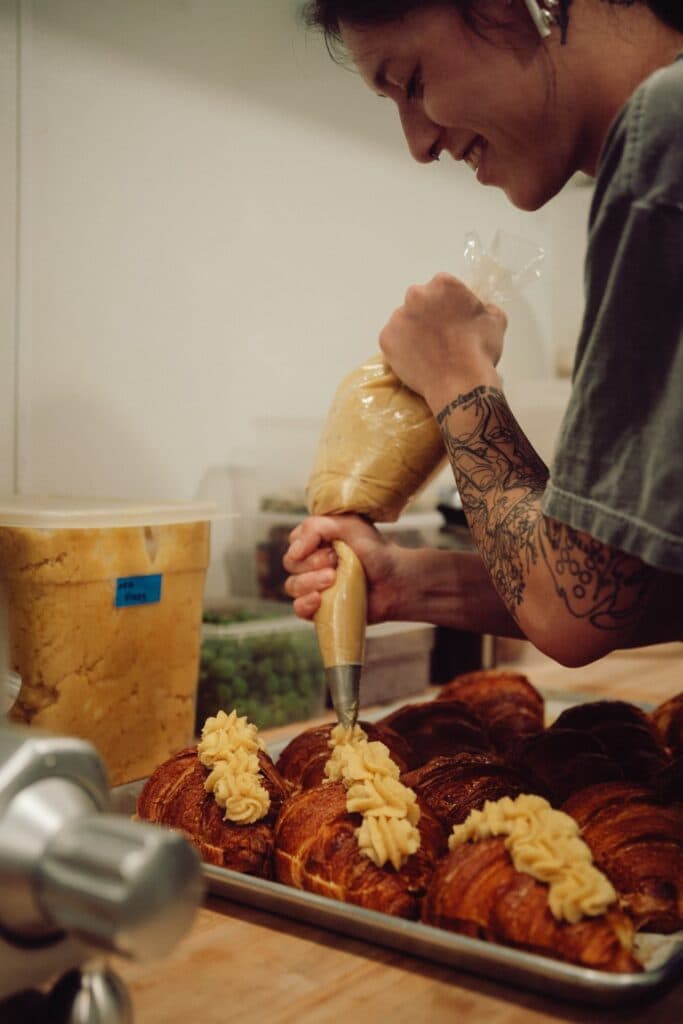
Watching him move through the small space, crack jokes, and stop to help Savannah without breaking stride, you see someone who finds more satisfaction in watching his team grow than in anything else.
“I’d like it to not be about me at all,” he said.
Looking for Curious People
Phaneuf is direct about the kind of customer he’s looking for.
“Usually the consumer is all-knowing, bossy, well-read. They know how to make bread, they know everything,” he said with a laugh. “I wish they knew less. I wish less was crammed down everyone’s throat, because most of it is silly.”
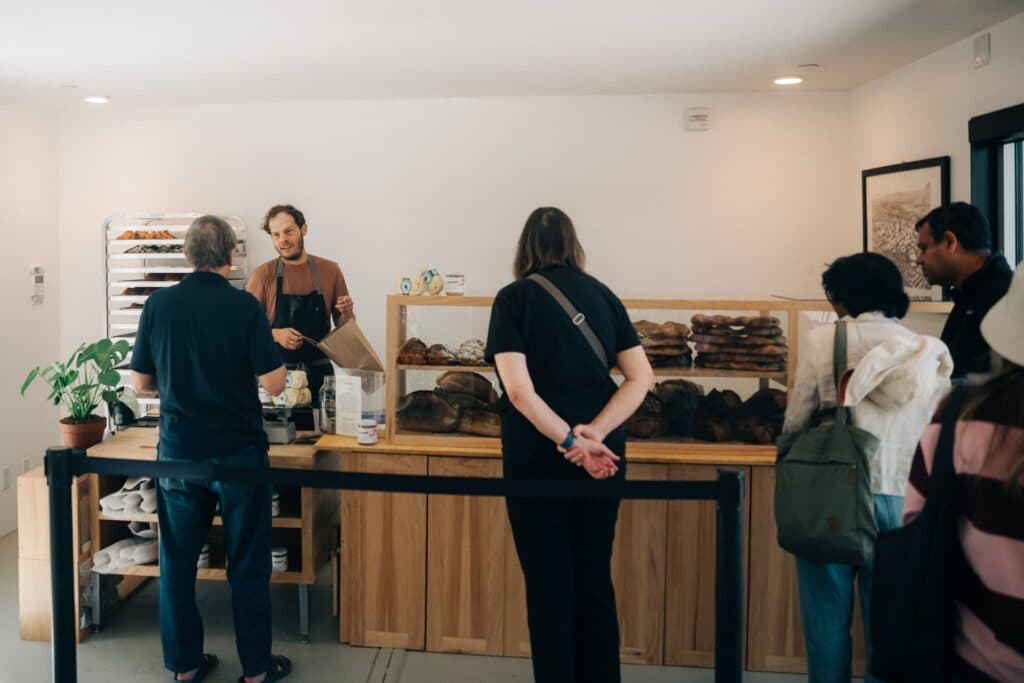
He wants people who show up without their minds already made up.
“I want people to have an open mind, a curiosity, and a willingness to try something new,” he said. “We want the customer to ask us why. We’re looking for curious people.”
At the end of the day, Phaneuf doesn’t romanticize it. He just wants to be a great bakery. He wants his team to grow. He wants to mill more, try more grains, and push things a little further without burning them.
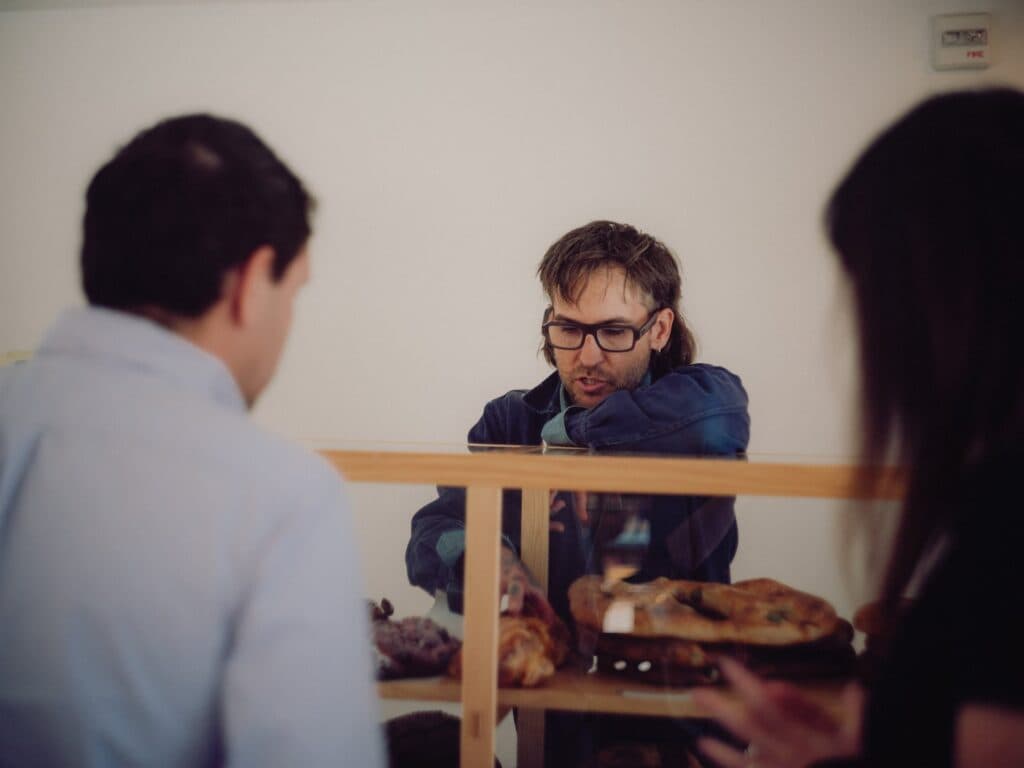
“We’re definitely providing a service. People are going to come just to get bread,” he said. “But we want to provide something with a little different depth and substance.”
He smiled.
“It’s our song. It’s the music we like.”
Hidden Hearth is located at 267 S. Avenida Del Convento, Space #13. For more information, visit hidden-hearth.squarespace.com. Keep up with Hidden Hearth on Instagram.
Article written by:

Jackie Tran
More about JackieJackie Tran is a Tucson-based food writer, photographer, culinary educator, and owner-chef of the now-closed food truck Tran’s Fats. Although he is best known locally for his work for Tucson Foodie, his work has also appeared in publications such as Bon Appétit, National Geographic, and the New York Times.
An adventurous foodie, he enjoys culinary experiences ranging from seasonal omakase to sloppily devouring green chili patty melts in his car afterhours. His favorite foods include aguachile, garlic noodles, and leftover fried chicken illuminated by the fridge light. His favorite drinks include morning micheladas, fireside imperial stouts, candle-lit negroni, and grassy mezcales.
Outside of food, he also loves playing musical instruments, karaoke, Tetris, Super Smash Bros. Melee, and petting Addie’s dog Spaghetti.
If you’d like to stalk him, visit his Instagram @jackie_tran_ or jackietran.com.