This article was written by Summer Williams and first appeared on Arizona Sonoran News.
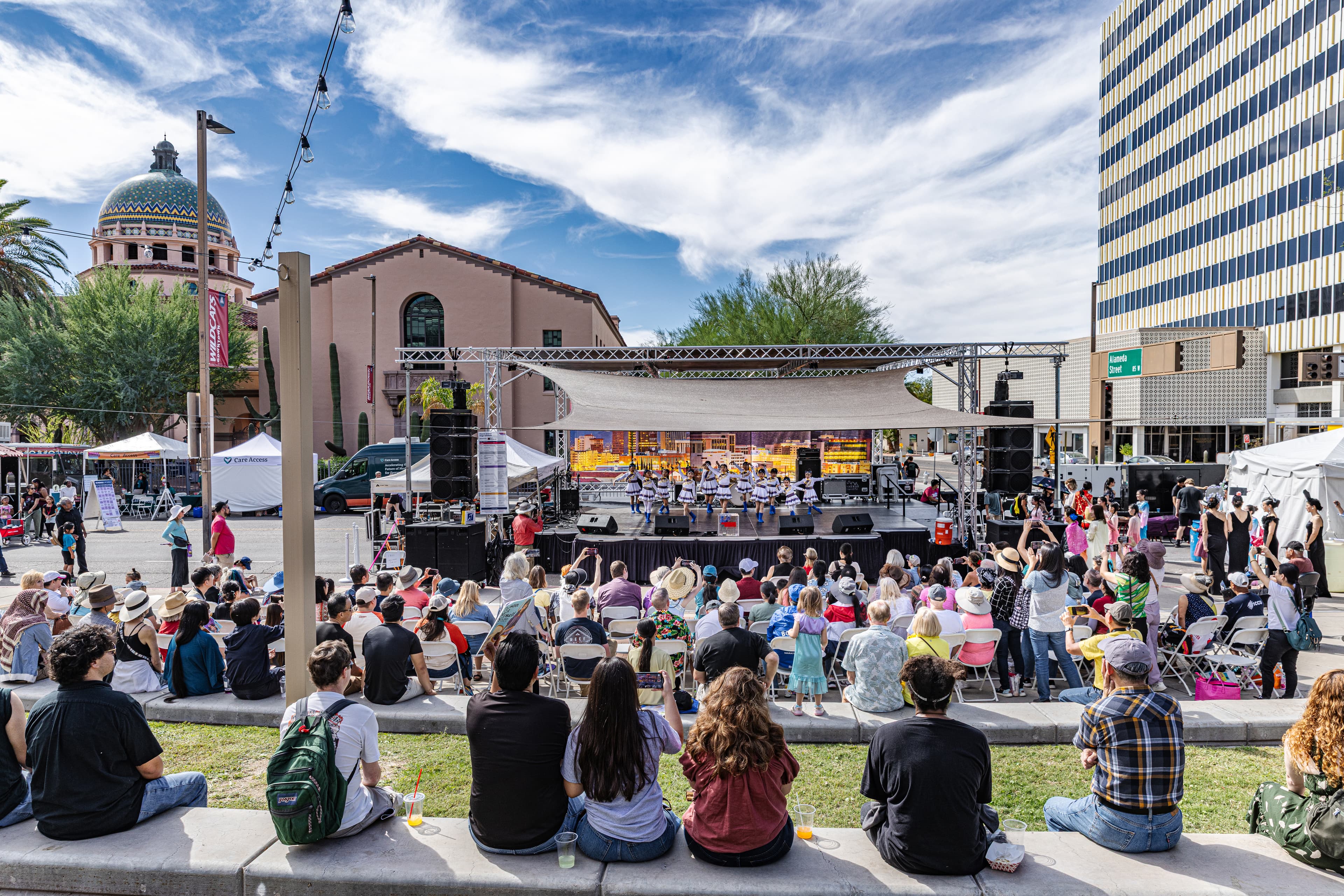
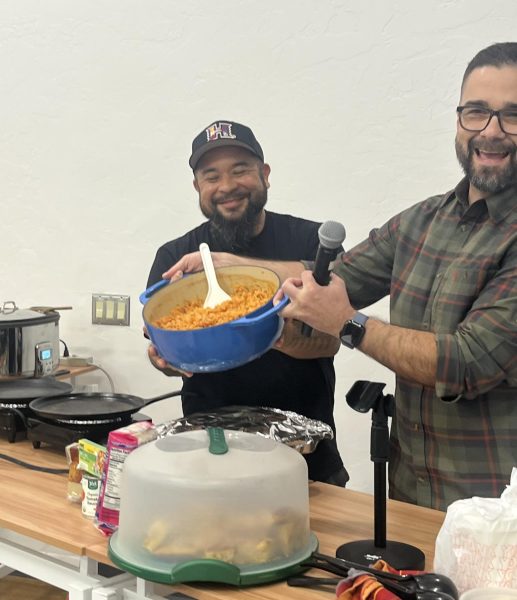
Over two days, academics, community members, local organizations and university students gathered to discuss racial-mixing around food.
People shared recipes and meals. They sat together around tables eating cracklin’ bread, brisket and pork adobo tacos, Mexican rice and beans. And they shared stories of food, justice and cultural heritage.
“Tucson itself is a very interesting city around foodways, food justice and gastronomy,” said Michelle Tellez, a University of Arizona professor in Mexican American Studies and lead organizer of Culinary Mestizaje, a two-day community celebration that highlighted food justice, solidarity and foodways in Tucson.
The city’s history represents an array of cultures and cultural-mixing that many local groups celebrate through shared culinary practices.
The community and diversity created through that sharing is the subject of “Culinary Mestizaje: How cross-racial and ethnic communities have created new culinary traditions and food cultures in the United States,” published in July 2025.
Co-editors Felipe Hinojosa, a Baylor University professor of history, and Rudy Guevarra, an Arizona State University professor of Asian Pacific American Studies, came together in Tucson this month to meet local partners.
They discussed stories that represent the food and history of Southern Arizona and how foodways shape the way communities see and understand the rest of the world.
“We’re living in a time of a lot of need and a lot of disparity,” Tellez said. “And so is there a way we can think about building both food dignity and economic dignity through foodways?”
The history of racial-mixing and foodways in Tucson
In Tucson, efforts to highlight the rich history and diversity of local food cultures are longstanding.
Designated a UNESCO City of Gastronomy in 2015, Tucson was recognized for its continuous habitation and cultivation for over 4,000 years, and for restaurants, chef ambassadors and community members incorporating heritage ingredients into their daily lives and menus.
“We understand that Tucson is a welcoming city and we witness this intercultural collaboration and efforts within the cuisine, within also organizations,” said Paloma Granados, Tucson City of Gastronomy program manager. “So we completely acknowledge the fact that Tucson has a good number of cuisines utilizing and having this creativity realm.”
As part of that recognition, the City of Gastronomy is developing Resilience Kitchen to spotlight communities in Tucson formed around food.
The new program will feature collaborations between home cooks and professional chefs to celebrate heritage foods and traditional knowledge while exploring climate resilience.
“We really want to tap into this traditional knowledge of elders and how recipes have been passed down from generation to generation,” Granados said.
Where does ‘Mestizaje’ come from?
Programs like the Resilience Kitchen reflect the blending of culinary traditions in Hinojosa and Guevarra’s concept of “cultural mestizaje.”
Mestizaje is a term steeped in controversy throughout the Americas, Hinojosa said, because of its connection to the eugenics movement in the early 20th century.
“In the United States, there’s a deeply historic tradition of separation and reservation systems and segregation and so forth,” he said.
José Vasconcelos, a Mexican philosopher who developed the concept of mestizaje, “flipped that idea and that notion and responded by talking about Latin America as a place of fusion, as a place of coming together, of blending and that’s actually a positive thing,” Hinojosa said.
Although Vasconcelos’ conceptualization highlighted the erasure of communities in Latin America, it also ignored people of African descent and Indigenous communities throughout the Americas, he added.
In their book “Culinary Mestizaje,” the editors make an effort to use the term in a way that acknowledges its complex history while highlighting cultural and racial mixing with food, he said.
“We knew that if we were gonna use that term with any integrity, that we better explain ourselves, number one, and that we also better propose a different way to think about racial mixing and the ways in which we were conceptualizing it here through food and through community and through conceptions of justice,” he said.
In Tucson, this concept of culinary mestizaje shows up in the ways communities use food not just as culture, but as infrastructure for building belonging, economic dignity and community-rooted futures, Tellez said.
Several local organizations are doing this work through food and land justice efforts.
Tucson’s food and land justice ecosystem
“One of the main things that we’re all kind of working on is like this resistance from erasure,” said Feng-Feng Yeh, founder of the Chinese Chorizo Project, which highlights the lost delicacy and history of Chinese chorizo in Tucson.
The Chinese Chorizo Project is planning its fifth annual Chinese Chorizo Festival later this year, showcasing the racial-mixing of Chinese and Mexican communities in Southern Arizona.
“Food tells such an incredible story,” Yeh said. “It’s not just nourishment. It’s a great carrier for history, it’s a great way to analyze how communities have survived, how communities have things in common, even though they may be very disparate.”
The nonprofit Oro House highlights that history through native plants from both Mexican and African diasporas.
It was founded by husband and wife Ernesto and Adia J. Olguin after researching their ancestors’ foodways and learning to grow and use those foods themselves. Their work highlights the myriad ways a single plant – including seeds, leaves, fruits, fiber and bark – can be used for nutrition, medicine and art.
“It’s kind of everything that we’ve been doing, connecting to our history, connecting to our foods, connecting to the land, and how they’re not just plants, and it’s not just food but it’s a history,” Ernesto Olguin said.
The Olguins host classes, sell their produce and products at the Santa Cruz River Farmers’ Market at the MSA Annex and offer other resources that share the connections between their heritage, their food, the environment in Southern Arizona and their community in Tucson.
“It’s in our DNA,” Olguin said. “It’s in our ancestors, our grandmas or grandpas, or mothers and fathers and everybody has all these different connections that the farther we go into our genealogy or into our history, into our future, it’s all getting lost.”
Oro House tends a farm in Three Points in southwest Tucson, where they host volunteer days and other events. They also partner with local community gardens, like Mission Garden, to share their resources and programs.
“Once you start connecting to your food, then you start realizing it’s a whole new world that you’re experiencing,” Olguin said.
Arizona Sonoran News is a news service of the University of Arizona School of Journalism.