
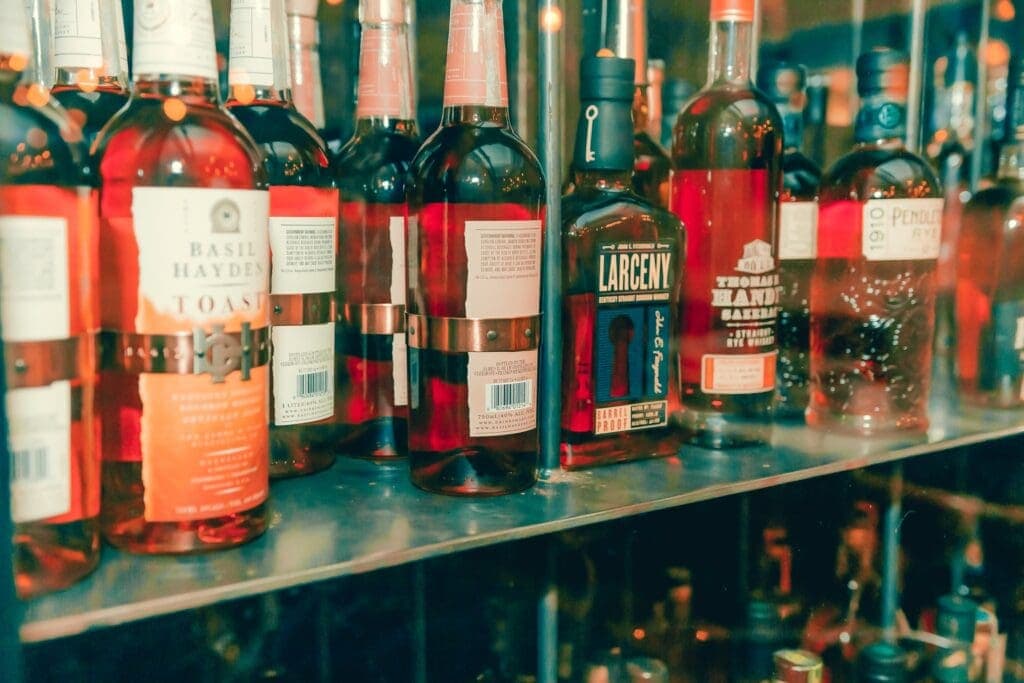
You’re browsing the wine list at a favorite restaurant when you spot a familiar bottle, one you often buy at a chain retailer but priced much higher here. You call over the restaurant’s owner, who is on the floor chatting with guests, and inquire about the markup.
If that owner is Grant Kreuger, founder of the Union Hospitality Group — Union Public House, Reforma, Proof, and The Maverick — you’ll likely get a detailed answer.
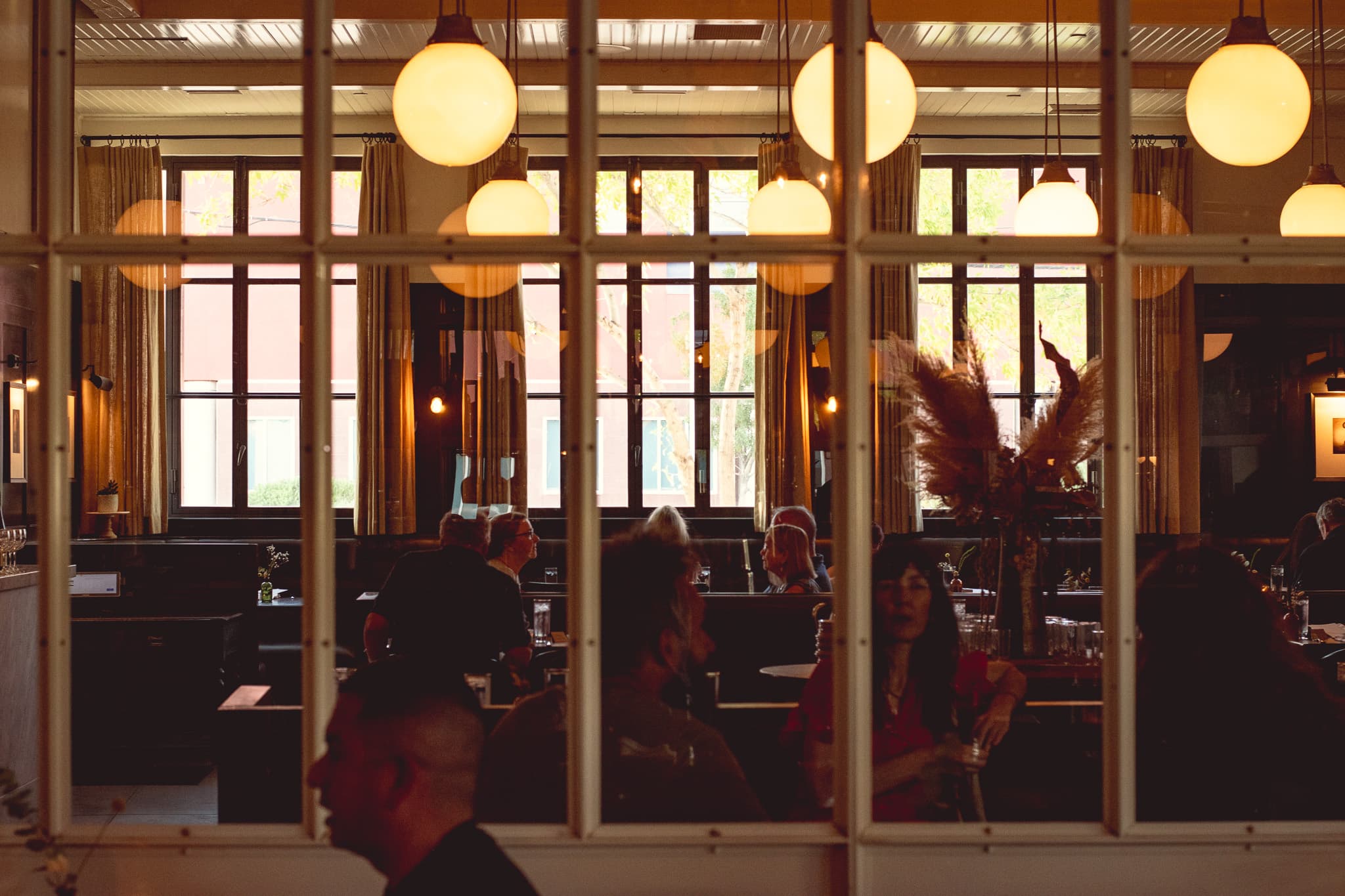
Krueger, who often fields these types of queries, says he might respond, “Respectfully, you’re not in Total Wine where they’re gonna hand you the bottle in a brown paper bag and you’re out of there. You’re paying for the dining room and the air conditioning and the server to bring it to you. You’re paying for the linens, the live entertainment, maybe the commercial TV that is showing the latest sports package.”
And that’s not factoring in the cost of the wine itself. As Kreuger puts it, “We’re paying pretty much the same for that bottle at Total Wine as the customer and in many cases more, based on the oligopoly of how we purchase liquor.”
It’s a scenario playing out all over the country, where restaurateurs with thin profit margins try to accommodate belt-tightening diners who are mistrustful of rising menu prices. The National Restaurant Association cites an average of 4% profit margin for full-service restaurants; that shrinks to 1.8% for full-service restaurants with prices over $25 a plate, according to a recent Deloitte restaurant industry study.
“It’s very hard for people to operate restaurants inside of those margins,” Kreuger observes. “And yet it’s a position that many operators have found themselves in over the last couple of years because of the simultaneous effect of the rising cost of goods, particularly food prices, and labor prices.”
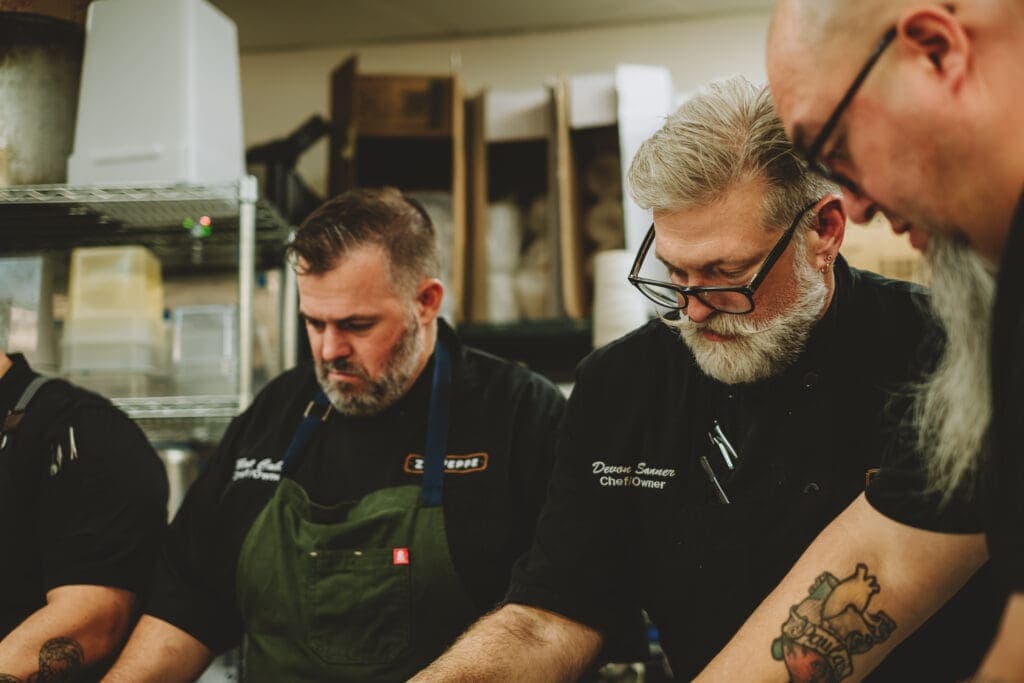
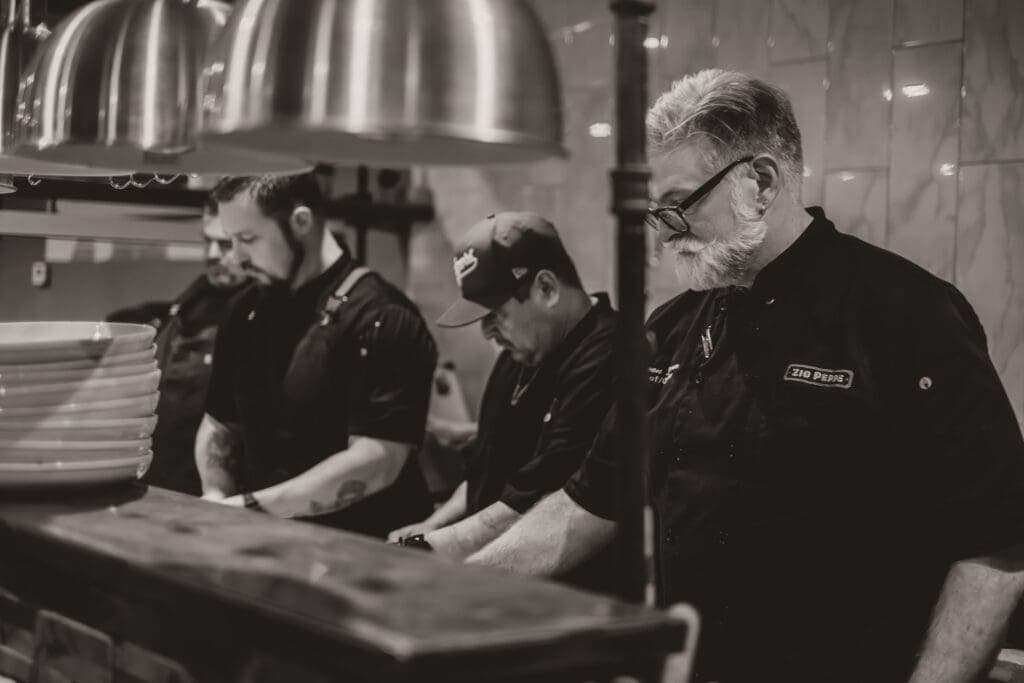
In addition to the key outlays — labor, food, rent, and utilities — restaurateurs have to budget for subsidiary expenses like credit card processing fees and social media/advertising, not to mention such variables as equipment repairs, vandalism – and even petty theft. Devon Sanner, chef/owner at Zio Peppe, says that, when the restaurant opened in 2021, “We had several dozen garlic grater plates made by a ceramicist and emblazoned with our logo. Within a month or so, we had maybe six left.” Since there were no reports by staff of unusual breakage, Sanner was left to conclude, “People must be just going home with them in a doggie bag. I wasn’t counting on having to replace flatware or ceramics.”
Pay It Forward?
Attempts to pass costs along to customers have been fraught, to put it mildly. When Wendy’s announced in February that it was going to introduce surge pricing at peak hours — on the model of rideshares, airlines, and hotels — people were so incensed that representatives of the chain quickly backpedaled, saying that they meant dynamic pricing, designed to give customers a better deal.
In fact, Wendy’s was following in the footsteps of other chains that have already implemented dynamic pricing; it just made the mistake of publicly announcing its intentions. As CBSNews.com recently confirmed, “With the rise of online ordering and digitization of menus, dynamic pricing is starting to pervade restaurants.” Software created for that purpose by California-based startup Sauce Pricing is already being used by several small restaurant groups.
Most independent restaurants can’t afford such software systems, however, nor do many have digitized menus. A few casual eateries in Tucson, such as Tumerico, post daily changing chalkboard menus; on the other end of the price spectrum, upscale BATA prints out new menus daily. But these are outliers. Far more restaurants rely on laminated menus that are costly to replace.
That doesn’t mean that price adjustments tailored to popular dining times and patrons’ desire for discounts don’t exist. Far from it. Happy hours, children’s menus, early bird menus, and daily specials are forms of dynamic pricing used long before there was a technical-sounding name for them.
Another method restaurateurs have recently turned to in an attempt to defray costs is levying “convenience fees” for credit card use. This has come as an unwelcome surprise to patrons accustomed to being rewarded by banks for pulling out plastic and who have been encouraged to use contactless payment since the start of the pandemic.
Similarly, in an attempt to help defray the cost of offering health benefits and/or wages to staff in addition to tips — or, in the case of kitchen staff who don’t always share in the gratuities, in lieu of them — service fees are increasingly being added to restaurant tabs nationwide.
What new fees have you seen at Tucson restaurants?
Alternative Revenue Sources
But discounts and added fees are often insufficient to turn the balance sheet black, so many restaurateurs are turning to complementary revenue sources. Sanner, for example, started taking on higher-end catering jobs and in-home cooking events, as well as booking lunchtime groups. He explains, “Doing a 20- to 25-person lunch pickup with a pharmaceutical or medical office offsets labor costs for the morning, when we have to have folks in to be able to prepare for my entire service.”
Merchandising may also be in Zio Peppe’s future. Referencing the disappearing ceramic garlic grater plates, Sanner says, “I think next time we order, we’ll put them up for sale and get other nice high-end swag that people can purchase rather than stuff their pockets with.”
The Premature Reports of Fine Dining’s Death
If operating a restaurant sounds like an uphill struggle, there’s some good — if counterintuitive — news for one dining segment. According to Yelp’s “State of the Restaurant Industry 2023” survey, while consumer interest decreased nearly 16% for traditionally affordable restaurants, “interest in higher priced restaurants rose nearly 10% and 17%, respectively, compared to pre-pandemic levels.”
Both Kreuger and Sanner have seen this firsthand.
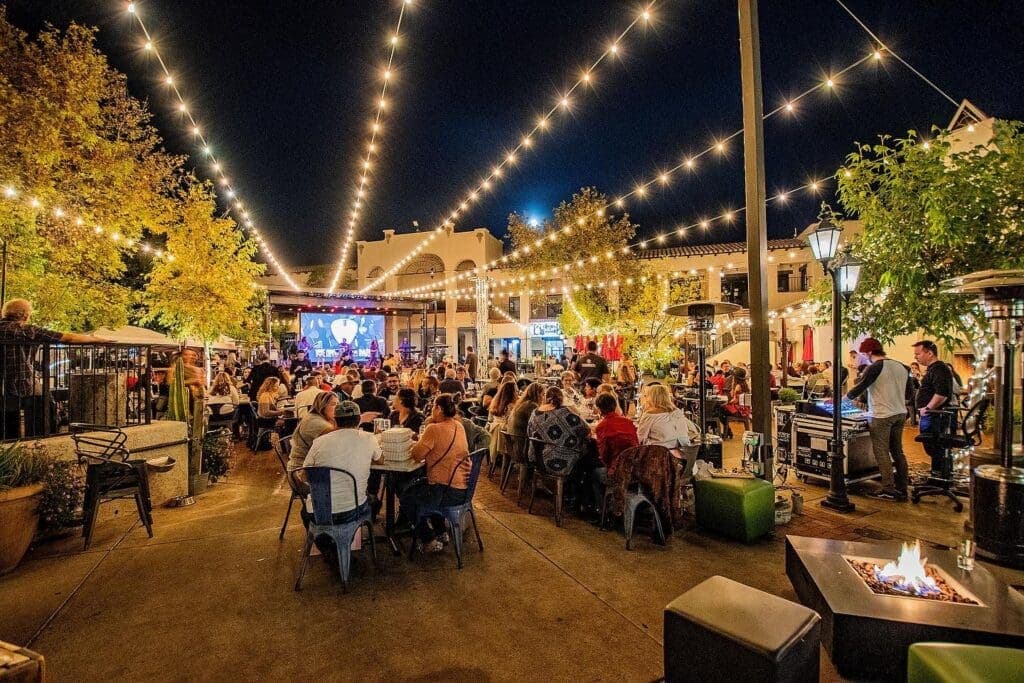
Krueger says, “It’s all about the dining experience. You can buy a bottle of vodka for the cost of a couple of martinis in a restaurant, or you could produce food for a family of eight for cheaper than going out to eat. But at a restaurant, everybody at the table gets to eat whatever they want and nobody has to do dishes.” Part of the experience provided by the Union Hospitality Group restaurants at St Philips Plaza includes live music — and enjoying it around others. “No matter what it costs, you can’t replicate that in your house,” Kreuger notes.
Sanner discovered the craving customers have for a more upscale experience through trial and error. Opening at the beginning of the end of the pandemic, he assumed takeout would be a major part of the business, and created a laid-back, casual atmosphere at Zio Peppe. As it transpired, “People wanted the service and other amenities to match our gourmet food. Now we’re leaning more and more towards fine dining” – including, somewhat to Sanner’s bemusement, cloth tablecloths and napkins. He adds, “We’ve survived so far by the strength of the quality of our food and the good graces of the Tucson dining public. But we’ve had to evolve.”