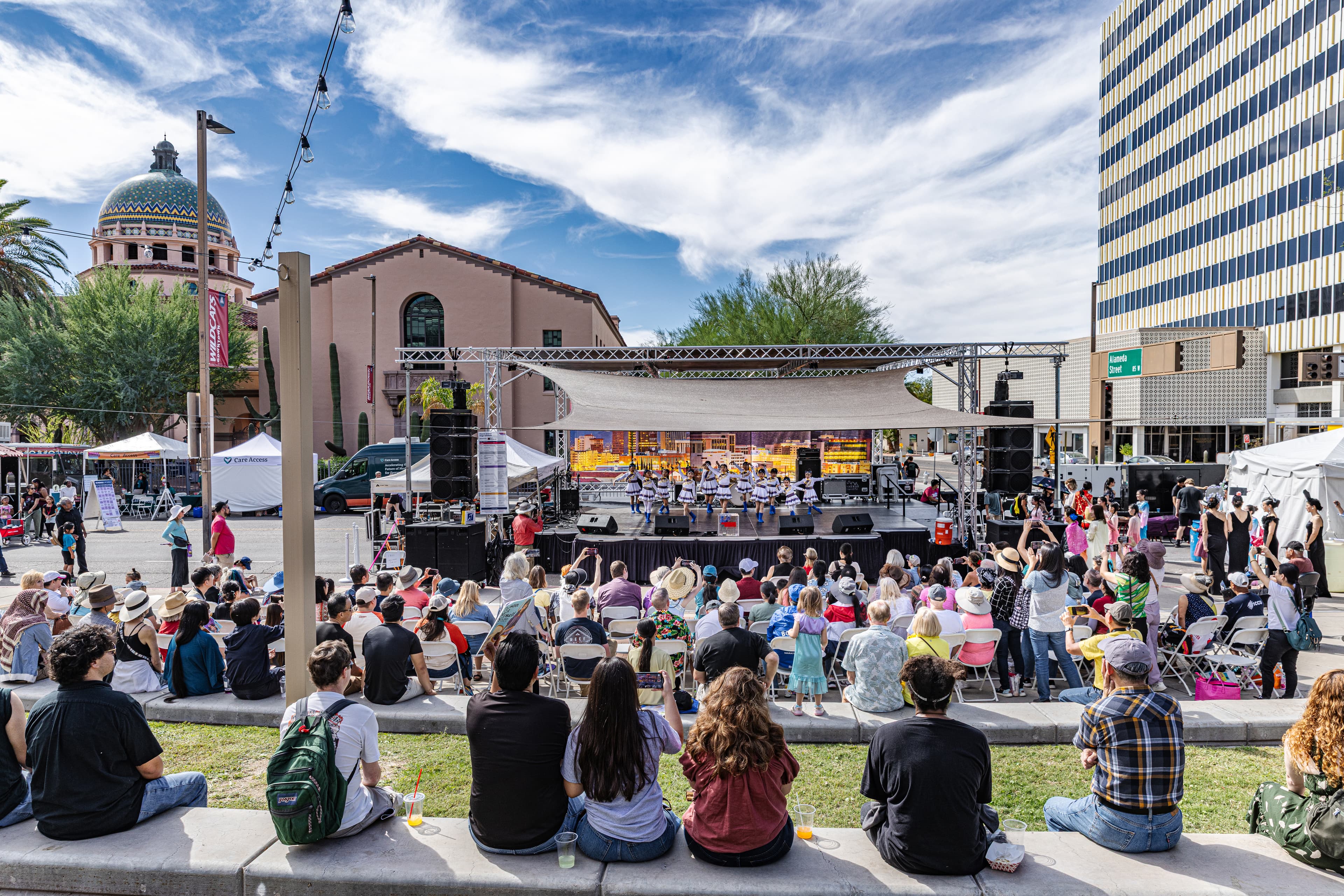

Tucson Meet Yourself, Southern Arizona's signature folklife festival, returns to downtown Tucson from Friday, Oct. 16 through Sunday, Oct. 18, centered around Jácome Plaza and surrounding streets. The festival is free and open to the public. Friday and Saturday hours run 11 a.m.-10 p.m.; Sunday runs 11 a.m.-6 p.m. About 50 food vendors representing cultures and culinary traditions from across Southern Arizona and beyond set up across the festival grounds all three days.
This year's festival includes a new partnership with the Smithsonian's Center for Folklife and Cultural Heritage as part of its national "Of the People: Reclaiming and Reimagining Community" initiative, commemorating America's 250th anniversary. Tucson Meet Yourself is one of about 40 community festivals nationwide selected to participate.
"For more than five decades, Tucson Meet Yourself has celebrated the remarkable diversity of our community," said festival director Bryan Falcón. "This year we're creating more opportunities for visitors to slow down, engage in conversation, and experience the stories, traditions, and people that make this festival unlike any other."
Tucson Eat Yourself
The food has always been the center of gravity at Tucson Meet Yourself, enough so that regulars have nicknamed the festival "Tucson Eat Yourself" for decades. This year brings 50 vendors cooking dishes that represent cultures across Latin America, Asia, the Middle East, Africa, Europe, the Pacific Islands, and the American Southwest. Each booth runs by community members cooking the foods of their heritage. The 2026 food vendor lineup:
A Picantear (Peruvian)
BarDown Fitness & Nutrition (Puerto Rican)
Biggie Boy BBQ (African American)
Boriken Modern Puerto Rican Cuisine (Puerto Rican)
Calle Ajo Paella Y Mas (Flamenco Sonora)
Churros Inzunza (Mexican)
Cocina Oaxaqueña (Oaxaca, Mexico)
David's Outdoor Kitchen (American South)
Eatgypt (Egyptian)
El Golden Taco (Mexican)
Elif's Kitchen Kumpir and Gozleme (Mediterranean, Middle Eastern, Turkish)
Empanadas El Dominicano (Dominican)
Espressoul Cafe (Persian, American)
Heart of Africa Kitchen (African: South Sudan, Kenyan, West African, and more)
Herculean Chicken (Taiwanese)
HUHU's House of Dumplings (Chinese)
J's Kettle Corn (American)
Juice N Fruit Raspados (Mexican)
La Fondita Chilena (Chilean)
Los Chiquilines Aguas Frescas (Mexican)
Los Poblanitos (Puebla, Mexico)
Malta Joe's Baked Goods (Maltese)
Moreno's Roasted Corn (Mexican)
Muna Food (Palestinian)
Natalka Ukrainian Bakery (Ukrainian)
Nohpalli (Pakistani)
O'odham Ladies (Tohono O'odham, Indigenous)
Order of Ahepa Tucson Chapter #275 (Greek)
Palenque Chiapas (Chiapas, Mexico)
Pam's Kitchen (Jamaican)
Patricia's Cuban Kitchen (Cuban)
Planet of the Crepes (French)
Polish Dance Group Lajkonik (Polish)
Pupuseria Rosita's (Salvadoran)
Purple Devil Donuts (Classic American)
Purple Tree Truck (Brazilian)
Ricuras de Venezuela (Venezuelan)
San Xavier Cooperative Farm (Tohono O'odham, Indigenous)
Sema Foundation (Türkiye)
Sonoran Delights (Mexican)
Sticky Fingerz ft. Off The Hook Seafood (Southern style comfort food)
Sumaj Bolivian Street Food (Bolivian)
The Makan Bowl (Singaporean)
Tucson Eat Yourself Sonoran Hotdogs (Sonoran, Mexico)
UA Filipino Student Association (Filipino)
UA Muslim Student Association (Mediterranean)
UA Pasifika Collective (Pacific Islands)
UA Vietnamese Student Association (Vietnamese)
Wat Buddhametta (Thai)
Yum Yum Pocha Sweet (Korean)
The Taste of the Festival Passport offers another way to work through the lineup. Each passport includes five vouchers for exclusive small plates from 15 participating vendors. Passports cost $30 in advance or $35 at the festival store. Early purchase is the better deal, and prior years have sold out.
The new festival footprint
The 2026 festival redesigns its physical layout around 10 themed villages, five performance stages, and a series of intimate micro-pavilions. The structure creates more spaces for conversation and participation than previous layouts. At the center sits the Smithsonian "Of the People" Village, which features demonstrations, exhibits, conversations, and interactive experiences built around the everyday traditions and work that shape Southern Arizona.
Part of that village focuses on occupational folklife: boxers, desert landscapers, Sonoran glassblowers, bootmakers, and the Delgado family of luthiers, a four-generation Nashville institution whose handcrafted instruments appear across country, Latin, and roots music. Author Jeff Chang, known for Can't Stop Won't Stop: A History of the Hip-Hop Generation, joins the festival to discuss his newest book Water Mirror Echo: Bruce Lee and the Making of Asian America.
Among the festival's micro-pavilions are Caseta de Flamenco, Expo Peru, Asian Cultures of Tucson, Jewish Cultural Community, Qazaq Dalasy, Tucson Museum of Art, Disability Cultures, the Smithsonian's National Museum of the American Latino, and the Tucson Lotería exhibit featuring 56 original pieces by Kim Fernandez. More than 500 artists, musicians, dancers, cooks, and tradition bearers participate across all three days.
How to attend
Tucson Meet Yourself is free and requires no ticket or registration. The festival runs in downtown Tucson, centered around Jácome Plaza and surrounding streets. Friday and Saturday hours run 11 a.m.-10 p.m.; Sunday hours run 11 a.m.-6 p.m. The Taste of the Festival Passport is $30 in advance or $35 at the festival store. For tickets, schedule, interactive map, and accessibility information, visit tucsonmeetyourself.org.