
Article and photos by Kimi Eisele for Border Lore
Extreme heat and scant monsoon rains—this year, at least—can make gardening in the Sonoran Desert summer challenging. But in late July, one particular green was flourishing at the Iskashitaa Refugee Network garden in midtown Tucson.
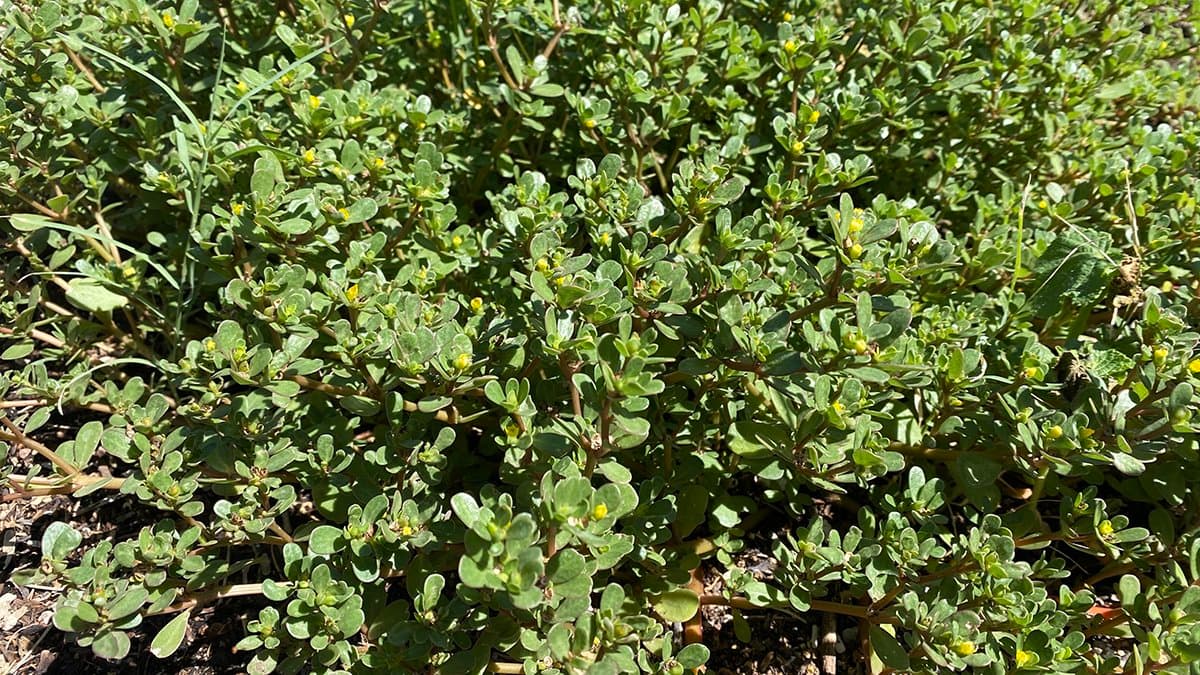
Known in Spanish as verdolagas, or in English as purslane—also, Mexican parsley, pirpirim, pursley, or little hogweed—Portulaca oleracea is often considered a weed. But this edible succulent, which grows abundantly in gardens and in wild patches along streets and sidewalks, is a beloved vegetable in Southern Arizona, Mexico, and throughout the globe.

The plant’s green, oval-shaped leaves and purplish stems can be steamed, sauteed, blended; chopped finely into pesto or tzatziki sauces; stewed with chile, tomato, and pork; or eaten raw as a snack or in salads—bringing a tart, earthy flavor to meals. It’s also got omega-3 fatty acids and vitamins A, C, and E, and is said to help reduce inflammation, strengthen the immune system, and boost organ health.

Barbara Eiswerth, founder and director of Iskashitaa—a nonprofit organization that works to integrate United Nations refugees into the Southern Arizona community and increase food security through gardening, foraging, and education—says over the years, dozens of refugees have enjoyed verdolagas as an enduring staple. “It freezes well, works well in soups, and can be pickled,” she says.
Refugee network members have helped harvest the “weed” from several local farms. “But now we just grow our own,” she says, standing near several garden beds overflowing with the green plants.
On Wednesday mornings, the Refugee Garden Arts Program gathers refugees and volunteers to share gardening tasks, artmaking activities, language lessons, and stories.

When a sprig of verdolagas gets passed around under the shade of the mesquite trees, Susan Musa holds it up and nods. In her home country of Sudan, she says, people eat the plant as a vegetable side dish, served with bread or rice. “You take off the flowers, cut it into pieces, mix with onion and tomato, with a little bit of water, then cook it,” she says by way of translator Alexis Ndimurwimo of Burundi.

For Aissatou Mere Sangobolo, of Central African Republic, the plant has medicinal value. Eaten with smoked fish and palm oil, she says, it can heal infertility. “You can also crush it and rub it like a salve on sore parts, your knees, for example.”
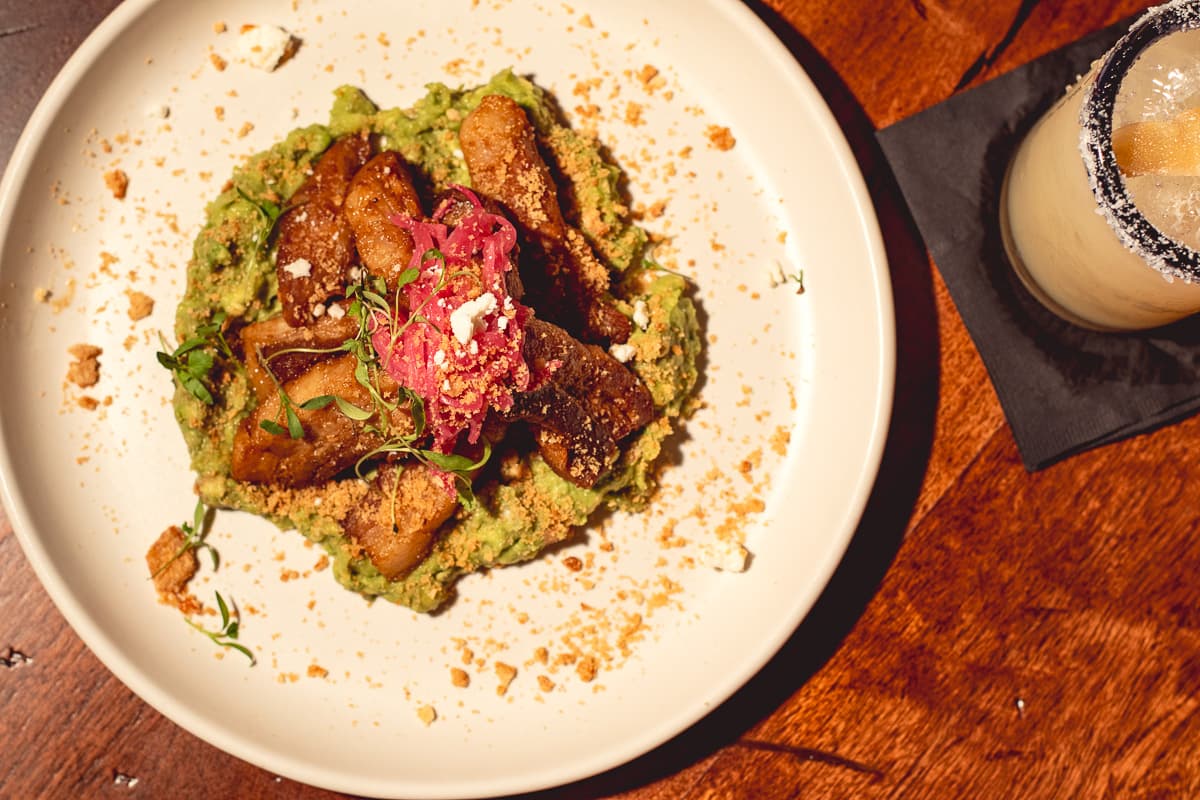
Iskashitaa volunteer Suzie Garrett, who moved to Tucson two years ago from Hawaii, learned about verdolagas from a Mexican friend. While on an urban walk, they came upon the plant growing up from the sidewalk. “He was so excited,” she says. “He stopped and gathered it into a plastic bag. We went to his house, and he cooked it with little pieces of pork and little bit of chiles. It was so delicious.”
Garrett says she puts verdolagas in salads and smoothies and cooks it with meat or other vegetables. Slightly mucilaginous, it can help thicken soups and sauces, she says. She also uses the flowers atop foods for decoration.

Another garden volunteer Leah Ndimurwimo says she didn’t know the value of verdolagas until she came to Tucson. Originally from Tanzania, she’d been living in South Africa. “I always tossed it out thinking it was just a weed. But when I came here, I learned it was edible and good, so I took some home and cooked them with eggs to make an omelet,” she says.
A few miles away at Tucson Village Farm, an urban farm that connects young people to agriculture, culinary education, outdoor adventure opportunities, and community engagement, verdolagas also grows in abundance. But not because anyone planted it.
“It showed up on the farm the way it shows up in your backyard. It just comes along in the spring and goes straight through till the frost,” says Leza Carter, the farm’s founder and program coordinator.
The young people who learn about gardening and local foods during the farm’s summer camp offerings (of which there are more than thirty!) almost always help harvest the verdolagas, Carter says. “They all get to taste it and clean it and get it ready for market and take some home.”
But making sure the kids—and the public—know which “weed” is verdolagas is important, Carter says. At the farm’s market stand, she often explains to customers the difference between verdolagas or purslane and its cousin plant, Trianthema portulacastrum, sometimes called pigweed, hierba de chochi, or desert horse-purslane.

“Pay attention to the leaves. Look for the oval-shaped ones,” Carter says. “The pigweed has a similar look, but its leaves are round. It will give you a stomachache.”
Of course, you don’t need a farm to grow this tasty succulent. The plant does well as a cultivar in small gardens and can be foraged wild from urban neighborhoods and edge environments—driveways, yard boundaries, and other areas disturbed by human activity where seeds can accumulate.
Amy Valdés Schwemm, a gardener and forager, prefers the verdolagas in her garden to those she finds on the street, which can get “dogged,” she says, or sprinkled with dog pee.
But she learned about verdolagas from her maternal grandfather, Eliud Valdes, in Guadalupe, Arizona, a small town in Maricopa County. She remembers foraging near Phoenix for the wild greens. “He would take us out and pull over on the side of the road and jump a fence. We’d be like, ‘I don’t think this is okay,’ and he’d say, ‘Don’t worry, it’s all right.’”
He’d then go in search of verdolagas and quelites or amaranth, another wild green. At home, he would sauté one of them up, but not together, she says. “He was not a mixer of foods, so he’d stir fry one of them with onion, garlic, and salt, and maybe a tomato.”
Valdés Schwemm inherited her grandfather’s wild harvesting gene, but eventually she learned the pleasure of mixing ingredients and eventually made a small business of it, grinding spices, nuts, seeds, and chiles to make small-batch Mexican mole sauces.
She has also experimented with creative verdolagas recipes, straying from the family tradition to put them in stews and enchiladas. But mostly she eats verdolagas the way her grandfather did, in simple sautés of leaves and chopped-up stems. “No reason to get rid of the small stems,” she says.
Carter agrees. “We try not let anything go to waste at Tucson Village Farm.”
Her favorite verdolagas recipe is a vegetarian Caesar salad to which she adds the fresh, crunchy leaves and stems, sunflower seeds, and fresh tomatoes. “But I’ll put it in anything. I’m a big fan. I love it. It’s the ultimate, free gift from the earth.”

Verdolagas (or purslane) can occasionally be found for sale at Mexican grocery stores, such as El Super, and farmers markets, such as Heirloom Farmers Markets.
To read more about the heritage and culture of the US Southwest and Northern Mexico, visit borderlore.org.