
This is one of a series of articles highlighting this year’s Agave Heritage Festival taking place on April 27-30. Other articles include features about Dr. Ivan Saldaña of Nocheluna, Carlos Camarena of Tequila Ocho, the roots of Origen Raiz Mezcal, and all you need to know about the Agave Heritage Festival.
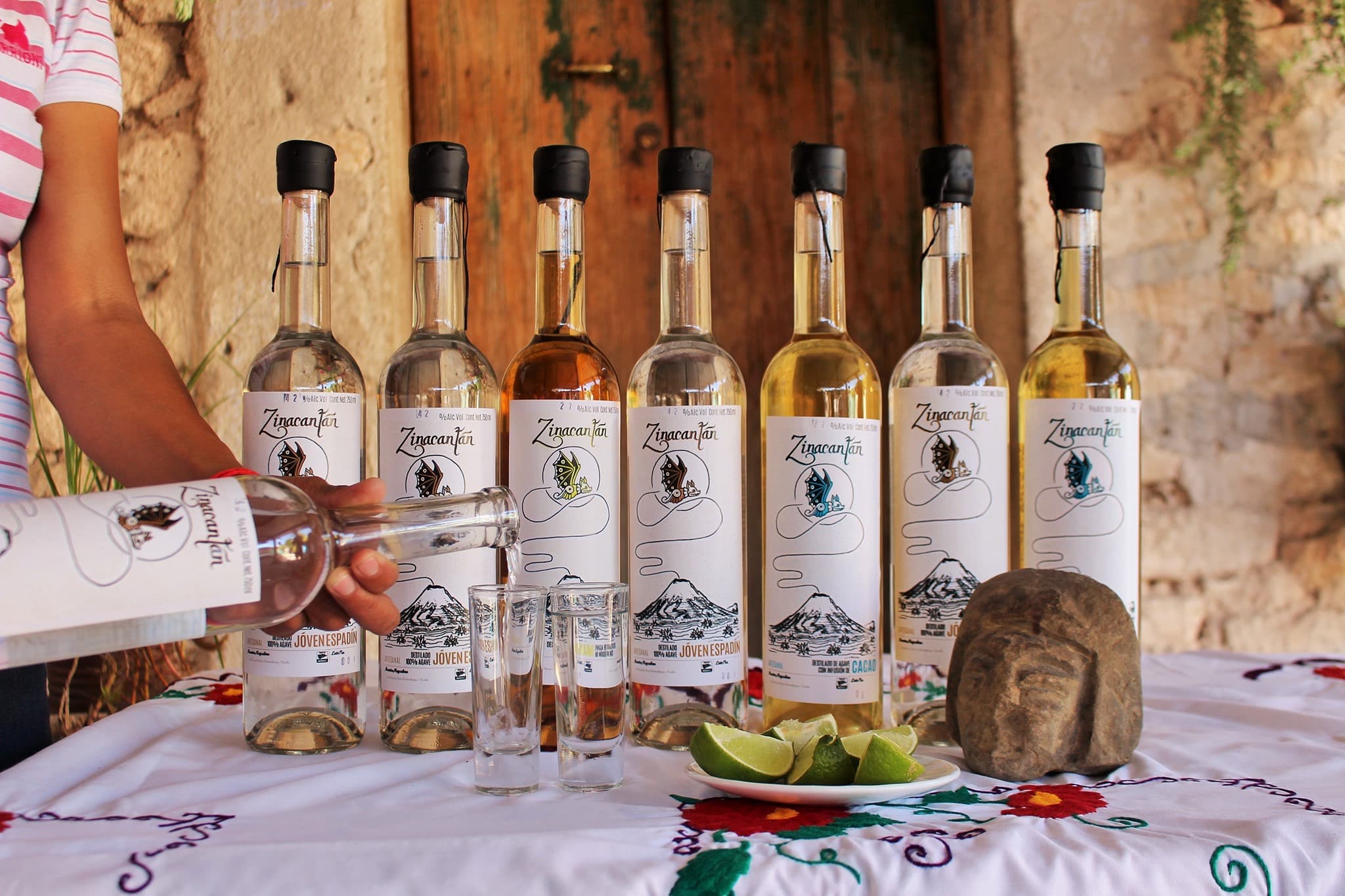
On Wednesday, May 3, Zinacantán Mezcal will celebrate its 10th anniversary and the second anniversary of its completed planque, or factory, located in Puebla, Mexico among the hills of San Diego La Mesa Tochilmitzingo. On that day, we can be sure that Diana Pinzon will wear a triumphant smile.
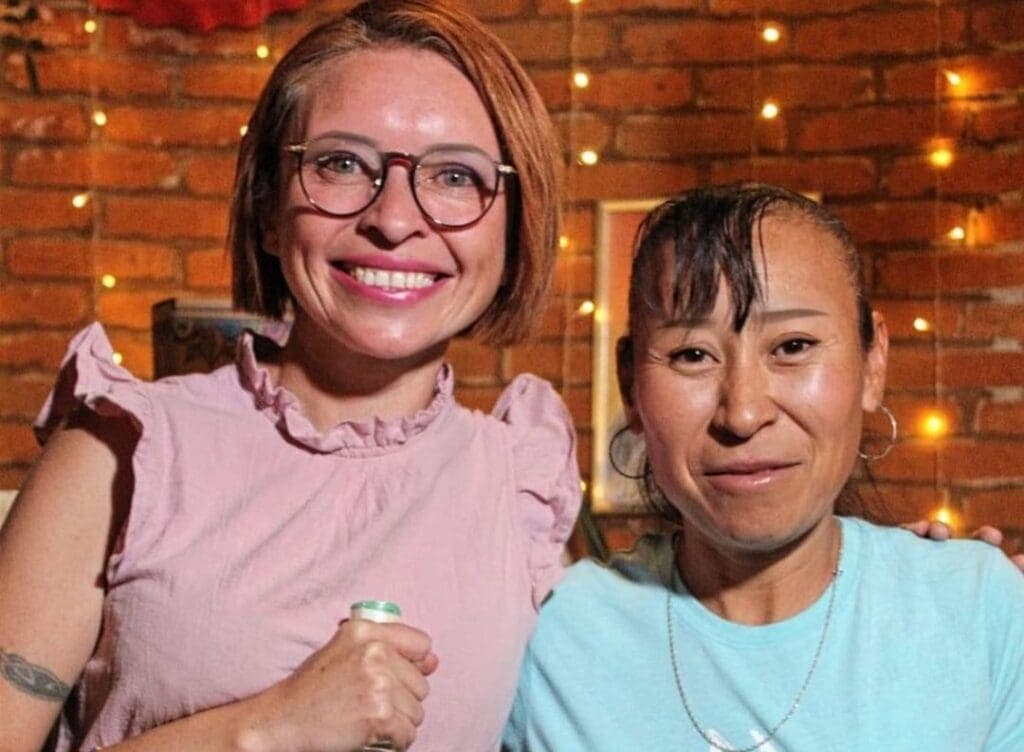
Co-owning Zinacantán with Maestra Mezcalera, Fabiola “Faby” Torres Monfils helps Pinzon maintain the company’s mission: restoring and preserving the ecosystem that makes the production of mezcal possible.
A product of the agave plant which takes 12 years to come to maturity, mezcal is one of the original craft beverages of Mexico. It is currently gaining a foothold across the American Southwest and, for Zinacantán, places as far-flung as New York City and Denmark.
A presenter for the 2023 Agave Heritage Festival in Tucson, Arizona as a part of the “Show & Tell: Mujeres de Mezcal” seminar, Pinzon, who is Colombian-Mexican, will bring both her training and her passion. A forest engineer, she approaches agave cultivation and mezcal creation from the lens of someone who has the values of environmental stewardship in her blood and breath.
She explains that “agave is an ecological element” and mezcal is “ the skill to communicate the importance of the traditions and of the territory.” Zinacantán’s unique philosophy holds that mezcal production, in its purest form, is a seasonal endeavor that should spur makers of the beverage to ask themselves, “What is the [environmental] impact of this batch?”
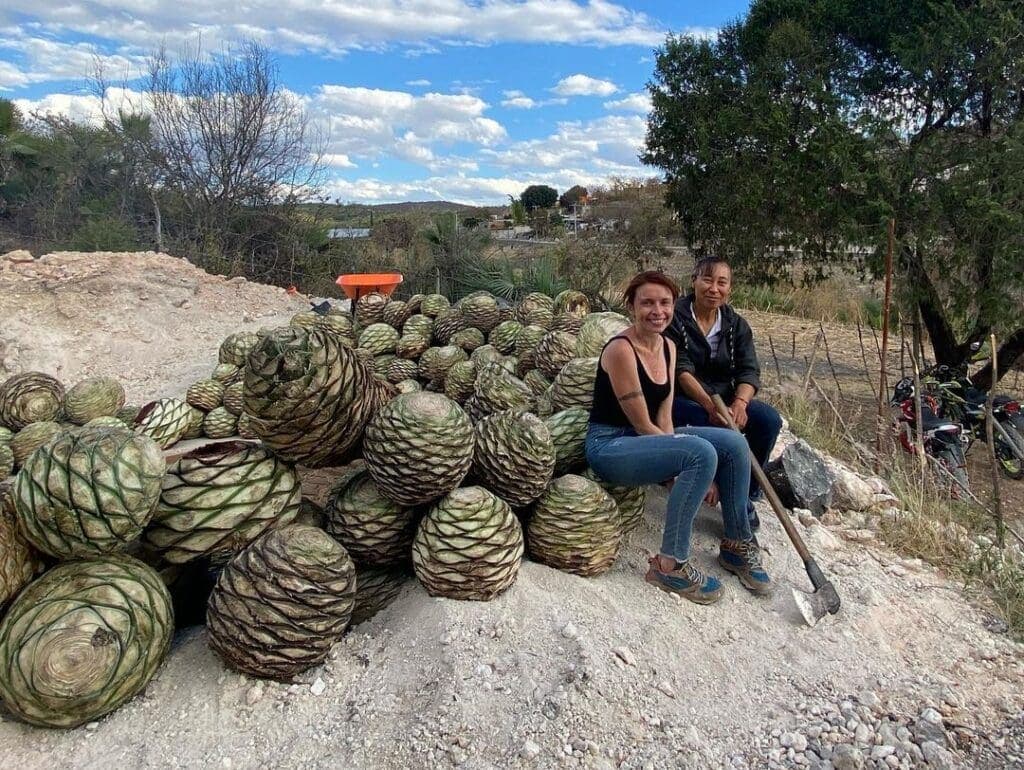
Unlike larger mezcal houses that harvest agave during several different seasons a year, Pinzon shares that Zinacantán harvests their organic, wild agave once a year between February and April when the plants are mature, healthy, and richest in sugar content. Zincantan embodies the idea of a small-production, craft fabrica because they produce only one charge of mezcal annually, amounting to between 1,200 – 2,000 liters. Considering that Mezcalistas published that in 2020, 2.4 million liters of mezcal were bottled for use in the local Mexican market and 4.8 million liters were bottled for markets abroad, we can see that Zinacantán’s production is ultra “boutique.”
Why work like this when the possibility for greater revenue lies in multiple harvests? Pinzon is building awareness that mezcal is meant to be, by Mother Nature’s design, a sustainable, desert-farmed beverage that offers a place-based flavor.
“Human beings need to take time for a breath to see insects in a flower,” she said.
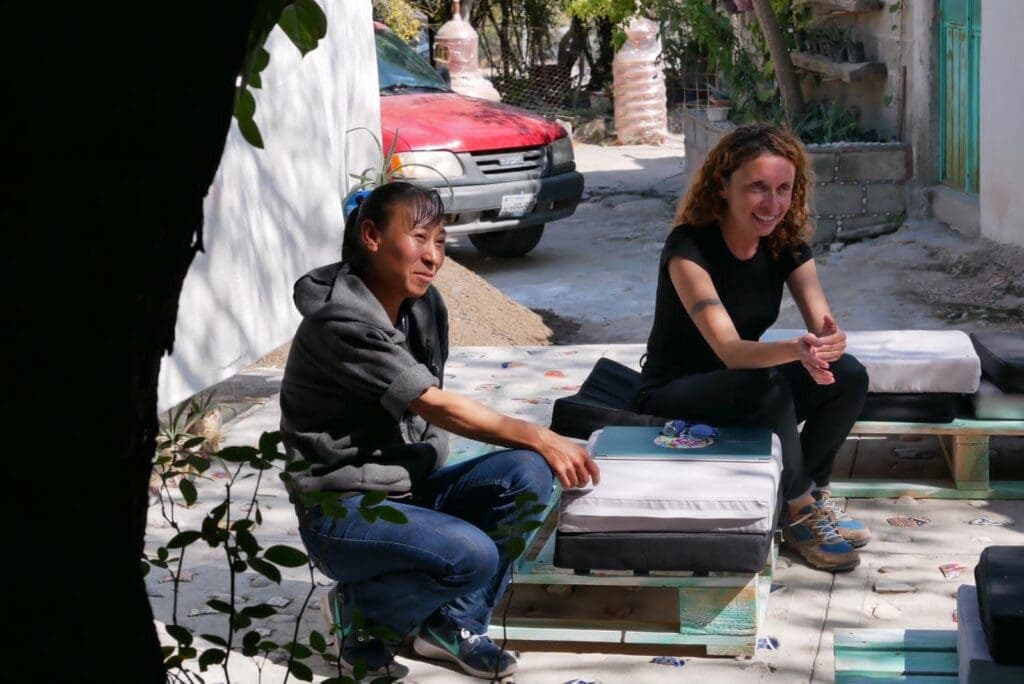
From the observation and experience of Pinzon and Torres Monfils, mezcal is not meant to be mass-produced and is inherently a premium product worth every penny. Combining their knowledge about the natural world, Pinzon, who is university trained, and Torres Monfils, who is autodidactically trained, have both learned that agave is only one aspect of the San Diego La Mesa hills ecology and its interconnection with a balanced ecosystem allows it to thrive.
Pinzon cautions that if agave cultivation is out of balance, this ultimately affects the longevity of mezcal production. It can also cause ripples of imbalance in other parts of their integrated agriculture including growing corn, stewarding wildlife conservation, banking heirloom seeds, and maintaining an agave “pups” nursery. If the natural ecosystem is out of balance then socioeconomic systems can fall out of balance too.
A prime example of the importance of conserving and regenerating agave’s role in nature, for both environmental and economic reasons, is the interaction between long-nosed bats and agave plants. Pinzon is fervent about the interplay between the two when she speaks about the lands Zinacantán cultivates. “This is a house for a lot of species,” she said. “Bats, for example, depend on agave. They have depended on agave for 10-million years .”
On their property, the two have installed camera traps in order to record local wildlife and to better understand their movements. It was with the help of camera traps that they saw, firsthand, the interdependence between long-nosed nectar bats and agave.
Bat Conservation International goes as far as to say, “The interdependence of bats and agaves is so strong that one might not be able to survive without the other.”
Pinzon agrees that they are inextricably linked because pollination from nectar bats is connected to the viability of agave seeds that produce healthy plants. “Seven years ago, we didn’t know about the bats,” she said. “We put money into natural science and now we learn this.”
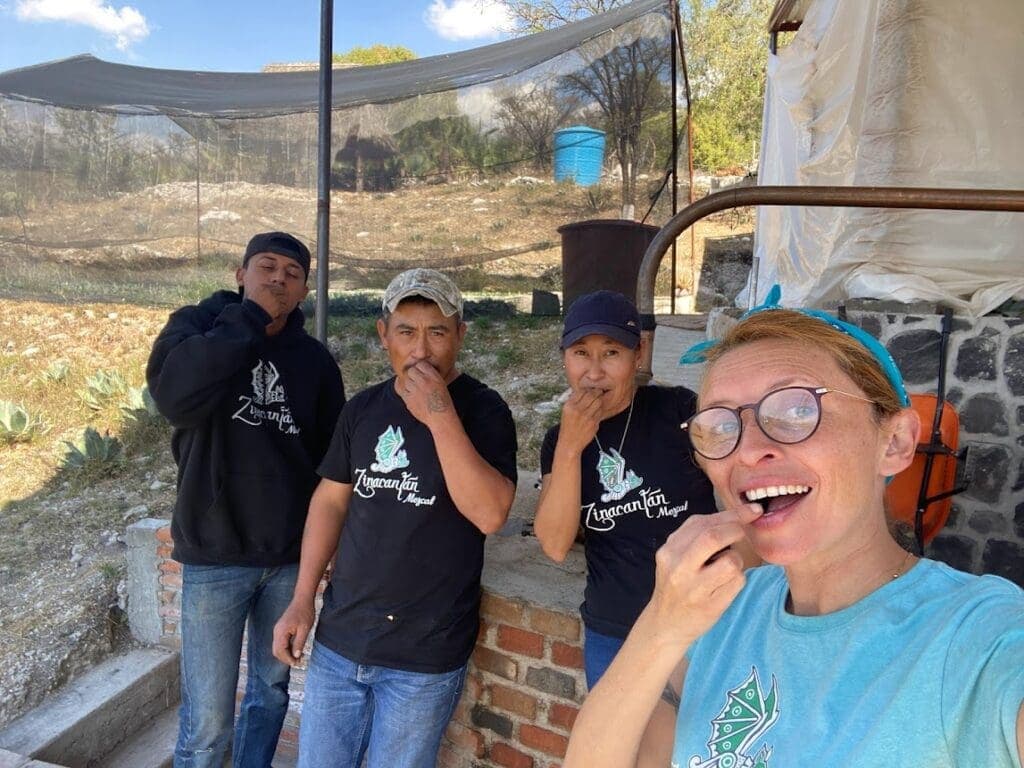
For Pinzon, assessing the work of preserving the natural environment, conserving tradition, and restoring what has been used or lost is part of identifying the real labor costs associated with the production of mezcal.
Pinzon, a self-identified environmental activist and community builder, is aware that not all members of the Mezcal industry share the same values or viewpoints she and Torres Monfils agree upon. Both have bumped up against what she calls the “crystal ceiling” of Mexican patriarchy. Challenges with land ownership laws and unspoken male-centered social rules invigorate her drive to invite discussion within the mezcal world and to bring awareness of how it can become a more socially inclusive and environmentally responsible industry.
“Traditionally, for 300 years, we harvested agave from January to May,” said Pinzon. “Now we harvest from February through April with a restoration time in May. The rainy time was usually May to September. Climate change has made it dry sometimes until June which is bad for growing corn.” Yet, she is hopeful that information like this about challenges and successes alike could be shared to lift up the industry. Still, being that she’s a woman in the industry, bringing up these ideas often faces a difficult audience.
To this end, the stage at Tucson’s 2023 Agave Heritage Festival should be welcoming to Pinzon’s incandescence. Her grounding and expert viewpoints fueled by an unwavering drive to champion holistic mezcal production are sure to be met with curiosity and interest. Her message to the world about mezcal includes this sentiment, “Agave takes about 12 years to mature. When you toast with Mezcal, remember your life in the last 12 years; agave produced what is in this bottle. Take your life slow. Take your mezcal with responsibility.”
For more information about the 2023 Agave Heritage Festival, read our article “Education with a Kick: The 15th Agave Heritage Festival goes big.” For more information about Zinacantán Mezcal, visit zinacantanmezcal.com.