The coronavirus pandemic is affecting small and large producers in unexpected ways. Local producers, as are most businesses, have been forced to forge creative solutions in order to sustain themselves and continue to nourish Southern Arizonans.
Because many families are staying indoors to try to protect themselves and their communities, oil prices are plummeting and other commodities markets are at near all-time lows. Farmers markets are closed to hands-on browsing and grocery stores are regulating the density of shoppers. The demand for and distribution of farm products would logically be down.
In the Midwest and Florida but also in other parts of the country, farmers have had to destroy millions of pounds of produce. Even in parts of Arizona, large-scale dairies have had to dump about 125,000 gallons of milk daily, owing to a lack of demand from hotels, grocers, and restaurants.
Pivoting with Pivot
But overproduction is not the case for most Southern Arizona farms. Regional consumers’ demand for local foods has “gone through the roof,” said Erik Stanford, founder of Pivot Produce. His company distributes Southern Arizona farm products to approximately 25 local eateries — a number that is growing. A waiting list of 150-200 people wants to sign up for his services but he is so busy that he cannot accommodate them at this time.
Stanford speculated that this spike is due to consumers’ concern about how many hands have touched and thereby potentially infected their foods with COVID-19 — a risk that farm-to-restaurant distribution fundamentally mitigates. He also attributes the increase in sales to a movement to support local businesses in general.
The Tucson area does not have industrial-scale vegetable production, Stanford noted. “Because the size of most of our local farms averages two acres or fewer, fields and farmers are more resilient to this kind of loss,” he said.
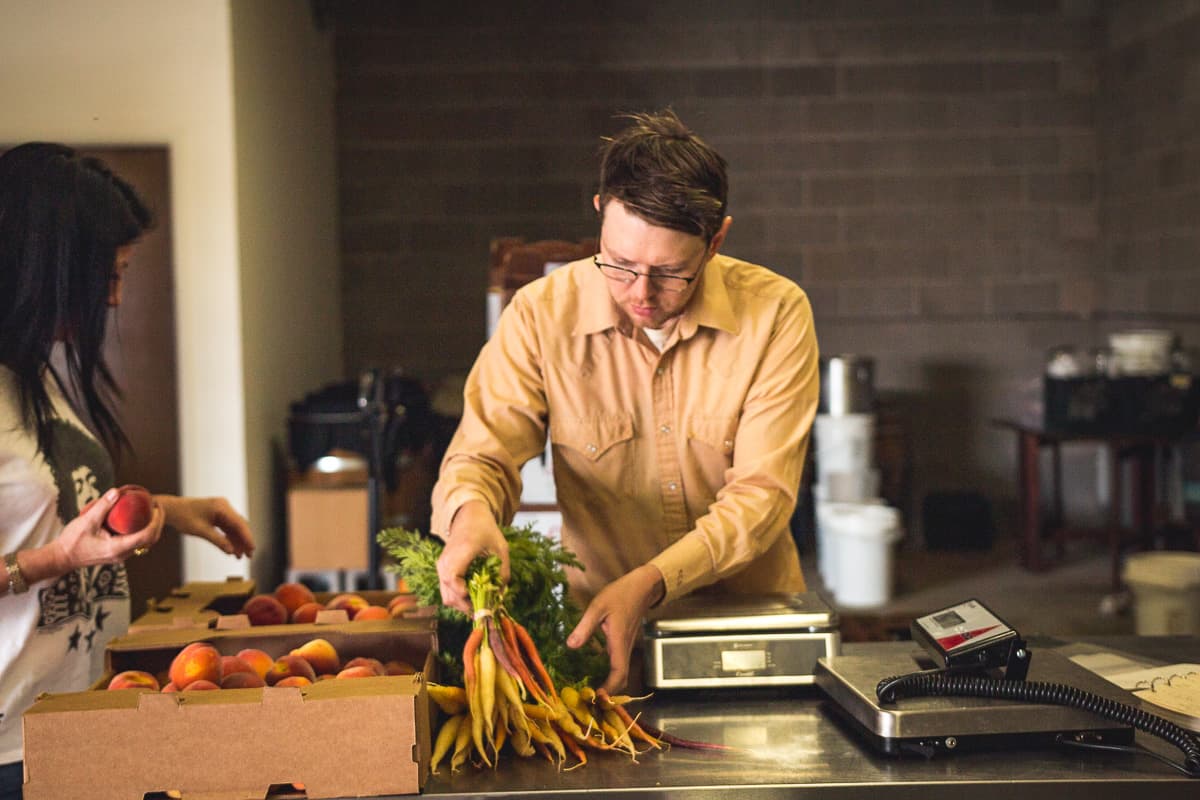
Some producers are adapting to, and even thriving, in the face of the pandemic. To accommodate new demand, local producers have had to rapidly pivot, as it were, learning new sales techniques for which they might or might not be adequately set up.
“It’s a different way of making sales,” Stanford said. Now, farmers have switched to an online platform, or they work with an online grocer. The adaptation is … rethinking and retooling sales and distribution.”
But an annual slowdown in production is coming. As Stanford noted, Southern Arizona’s growing season is the opposite of everyone else’s.
“This is the last gasp of the season and a slowdown would be due to the time of year as well (as the pandemic),” he said.
5 Points Market
Local restaurateur Jasper Ludwig co-owns of 5 Points Market & Restaurant with her partner Brian Haskins. Both are invested in serving their own produce, as well as that of nearby farms. Prior to the pandemic, 5 Points’ menu featured many local ingredients.
The duo also helped operate Riverdale Farm near downtown Tucson. It’s only 3,500 square feet in size, but it produces up to 4,000 pounds of herbs, veggies, and flowers seasonally. This farm stocked 5 Points’ Sunday farmers market before COVID-19 became a public health threat, as well as feeding the restaurant. Now, the restaurant offers its full menu for pickup and delivery.
The market component of the business has become a much more substantial focus as well: produce and sundries are available for pickup and delivery too. Hotel Congress’ eateries, Johnny Gibson’s Downtown Market, and other small businesses have become pop-up grocers as well.
Drive-Thru Hydroponics
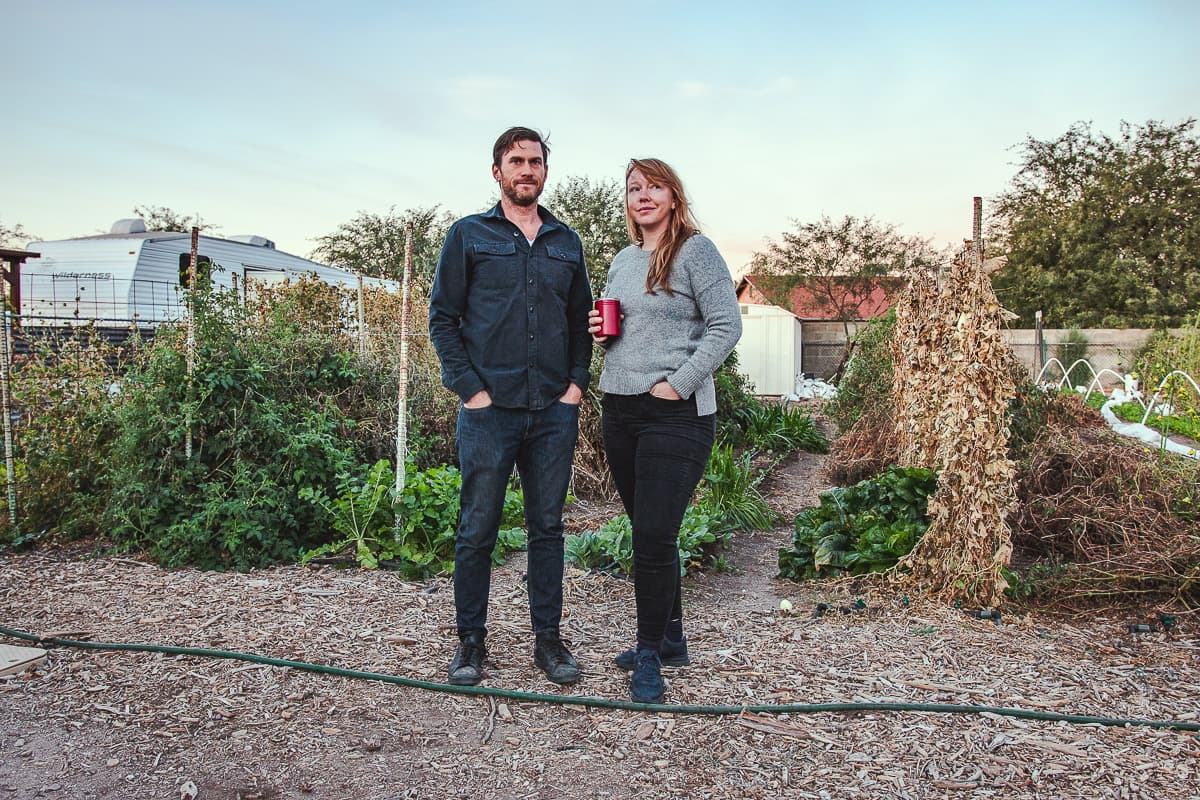
Chaz Shelton is the founder of Merchant’s Garden, an urban Tucson hydroponics and aquaponics company that provides fresh produce to restaurants, schools, and grocery stores.
“Just like the restaurants, these are the highest-grossing times of the year for us,” said Shelton. “Without a solid March and April, it makes for a very difficult rest of the year, and a long run until fall (because) sales really dip from May through September.”
Shelton noted that farms were struggling at the onset of the pandemic, even going so far as to lay off local workers. He saw two immediate pain points the public was experiencing that Merchant’s Garden now helps ease: scarce supply, and safety. First, he said, grocery stores did not have the products that people need. The second was the issue of safety. People needed to avoid contamination.
“We immediately started offering a drive-through farmers market because our farm is in the heart of the city. We harvest and pack up our fresh leafy greens and offer them to the public three days a week through a drive-through.”
The drive-through is open from 9 a.m. to 6 p.m. Thursdays and Fridays and 9 a.m. to 1 p.m. Saturdays. The farm is located at 555 South Tucson Boulevard.
“What is cool is that it’s actually a farm, not a farmers market. So people are literally able to drive to the farm and get their greens,” he said. “We feel very lucky to be considered an essential business.”
Merchant’s Garden also provides a farm-to-table delivery service — free home delivery of greens to specific ZIP codes.

“This is the first of its kind in Tucson by a farm that isn’t a CSA (Community Supported Agriculture),” Shelton noted. “We don’t use a broker, wholesaler, distributor, or retailer, so we can ensure that our customers get fresh and safe food because no one else has touched it.”
“The Community Food Bank of Southern Arizona has been a great resource for farmers too,” he said. “They are providing disaster loans to farmers in the county. They’re also buying food from farmers and helping provide them to Tucson Unified School District for emergency meals. Governor Doug Ducey offered $250,000 to food banks of emergency funds to purchase local food.”
Community Food Bank
The Community Food Bank’s warehouse is adjacent to Pivot Produce’s. In mid-April, the food bank’s warehouse saw up to 300 vehicles lined up for food every day, Stanford said, although its products come from all over as opposed to just Southern Arizona.
In order to help feed the sharp increase of people seeking food assistance across Southern Arizona, the Community Food Bank has partnered with local producers in a number of ways. According to Audra Christophel, Local Food Pathways Program Manager at CFB, makes “weekly purchases from farmers and vendors to supply the drive-through farmers’ market and to help stabilize reduced revenues for farmers.”
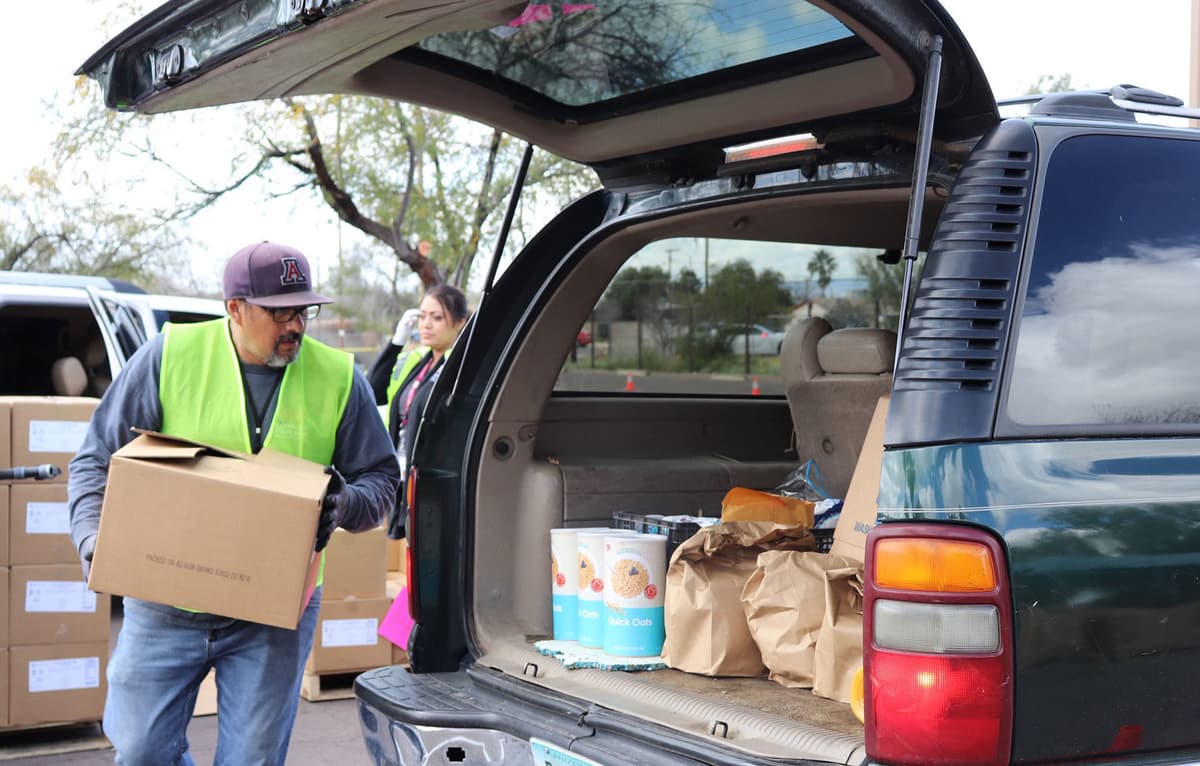
Further, the organization is purchasing much of the produce that would normally go to schools and colleges in order to avail it to the entire community. The food bank has also redirected funds to support a small, locally-owned distribution company that moves exclusively regional products as they pivot from wholesale to a home-delivery CSA model, including the delivery of free and reduced shares for those most affected by the crisis, Christophel said.
She added that the CFB is “working with a community advisory committee to shift the CFB-supported weekly farmers market to a low-touch drive-through model while providing an unlimited match for SNAP (Supplemental Nutrition Assistance Program, formerly referred to as food stamps) purchases and ensuring fresh, natural produce remains available for community members.”