
The Pink Rose of the Desert
There is an unmistakable feeling that comes with walking into a cathedral. The walls climb high, your neck cranes, and if it is exceptionally beautiful, at some point your muscles ache from looking up. It is a sensation that makes you feel small yet significant, evoking reverence even from the unreligious. Certain buildings, such as the Benedictine Monastery on Country Club Road, have gravity.
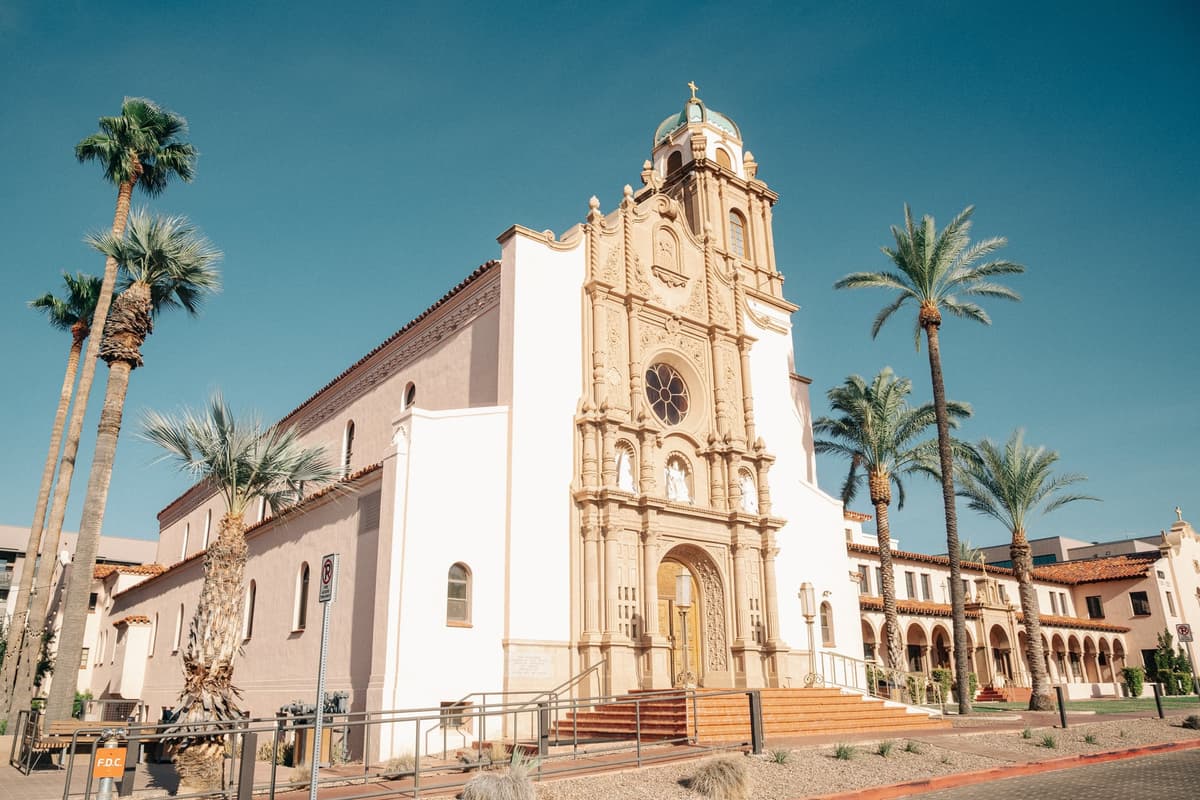
Completed in 1939 by architect Roy Place, the Spanish Colonial Revival chapel spent nearly eighty years in stoic serenity. During that time, the Benedictine Sisters of Perpetual Adoration maintained an unbroken prayer vigil inside, taking shifts day and night before the chapel altar, while the facade’s delicate hue at sunset earned the building the name "The Pink Rose of the Desert."
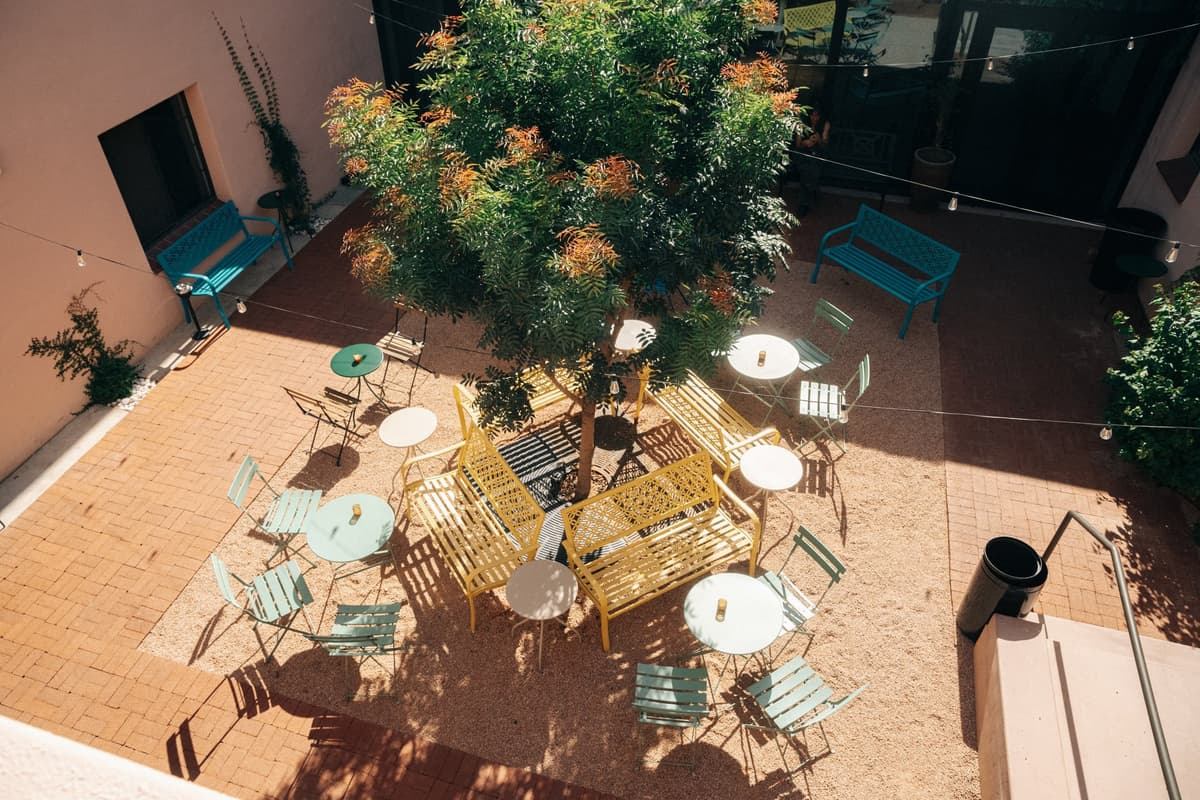
When the Sisters relocated in 2017, the community feared it would lose its Rose to commercial developers. Instead, the property found stewards who had spent decades running independent gathering spaces: David Slutes, a Tucson native who spent twenty-five years as the entertainment director at Hotel Congress, and Charlie Levy, the promoter behind Phoenix venues like Crescent Ballroom and Valley Bar.
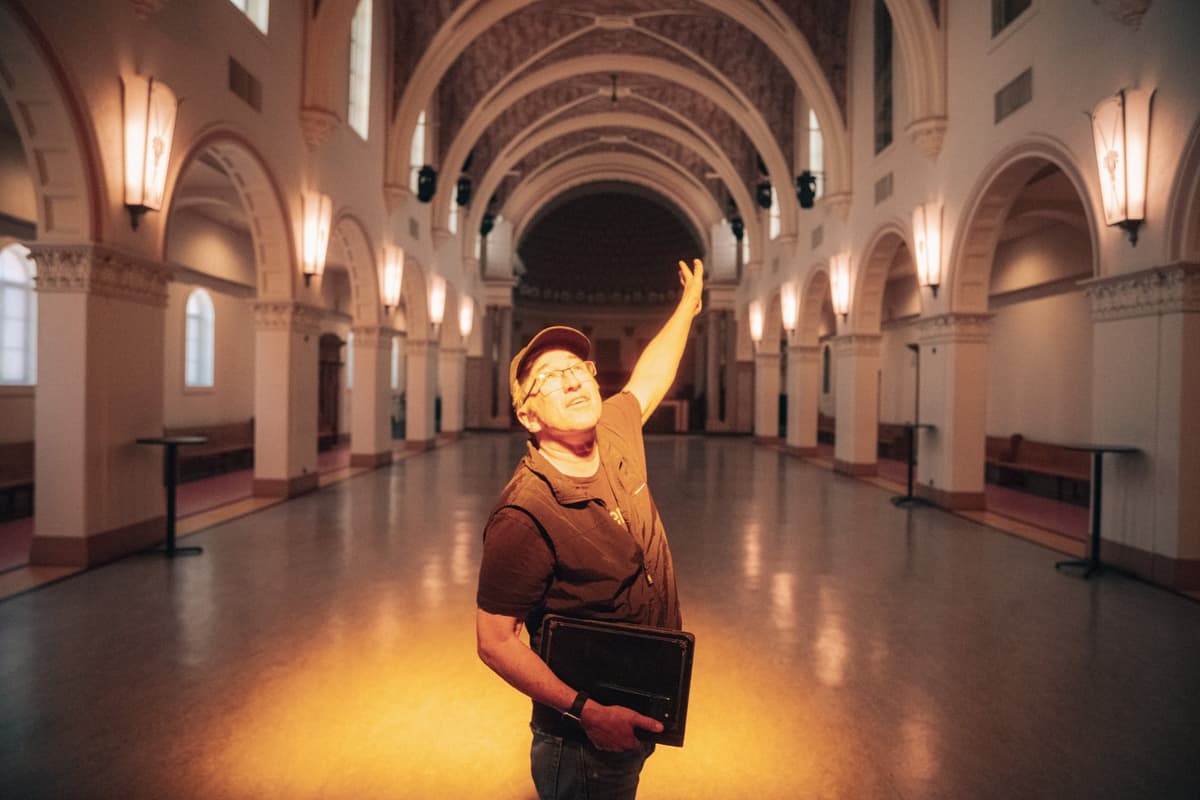
Together, they repurposed the property into two connected spaces. The chapel became La Rosa, a live music venue. Next door, where the citrus orchard once stood, they built Sisters Restaurant & Bar at 800 N. Country Club Rd., Ste 3170.
"When we walked in, we said, 'Oh, Lord. This is beautiful,'" Slutes remembered about the chapel. "We realized we wanted to keep it all the same. There's something about walking into this sacred, communal space that translates so well to live music."
The Full Experience of a Night
Sister Kathleen, one of the monastery’s former residents, returned to walk the grounds during construction of the restaurant and attend some of the first shows.
"She told us so many secrets. She fell in love with our vision of it," Slutes said. "We didn't rip it apart like some weird developer. There was a through-line of preservation."
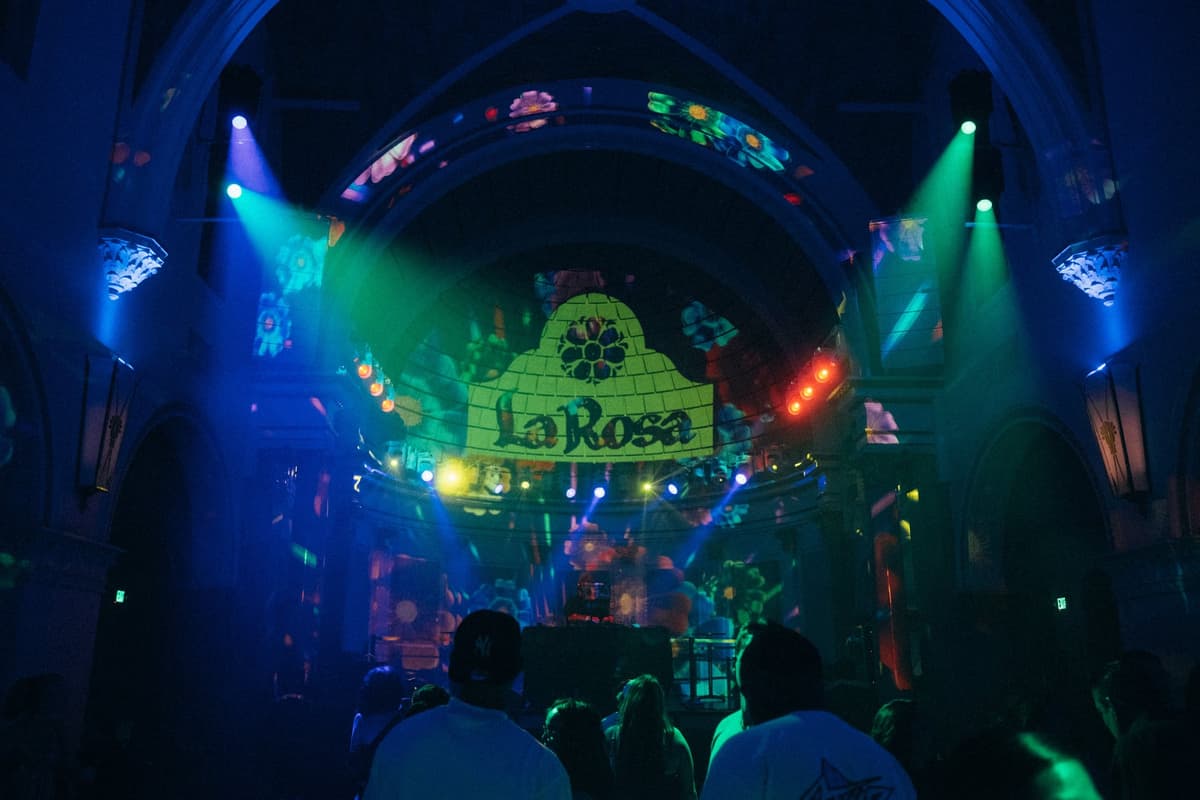
That through-line shaped how they built out the property. Instead of an isolated venue where crowds scatter after the encore, they wanted a neighborhood gathering place where locals could spend an entire evening.
"The neighbors could be from the Benedictine Apartments or down the street, just walk over here and get some pizza," Slutes said.
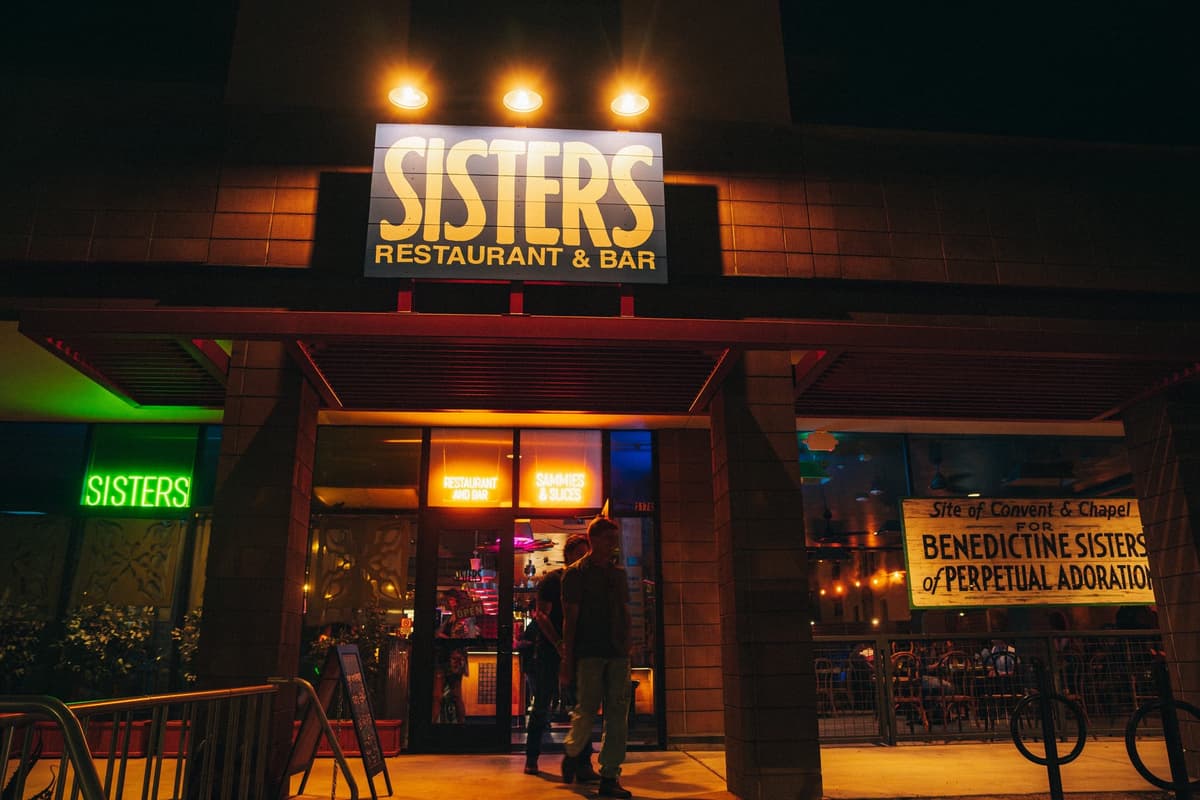
"We always knew from both of our experiences that having a restaurant is not only a cool something we'd like to do," Slutes added, "but also it really is a nice package you put together for the full experience of a night."
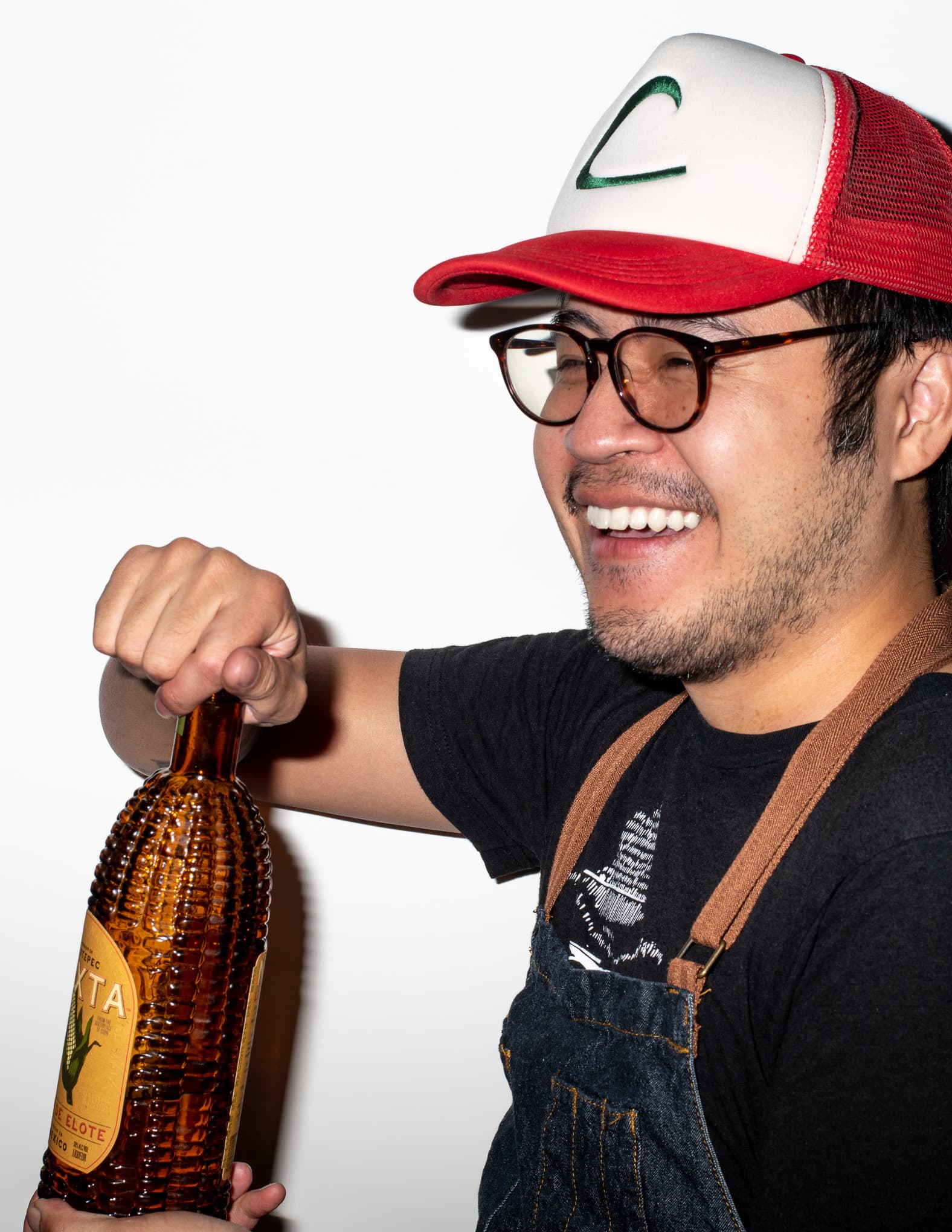
Executive chef Christian “Chris” Bidegain sees that neighborhood connection in action every day.
"I'll get off work here sometimes and walk to the Red Garter, walk to Casa Video," Bidegain said. "You can go see a movie at The Loft, come eat at Sisters, and then go to a dance party at La Rosa next door."
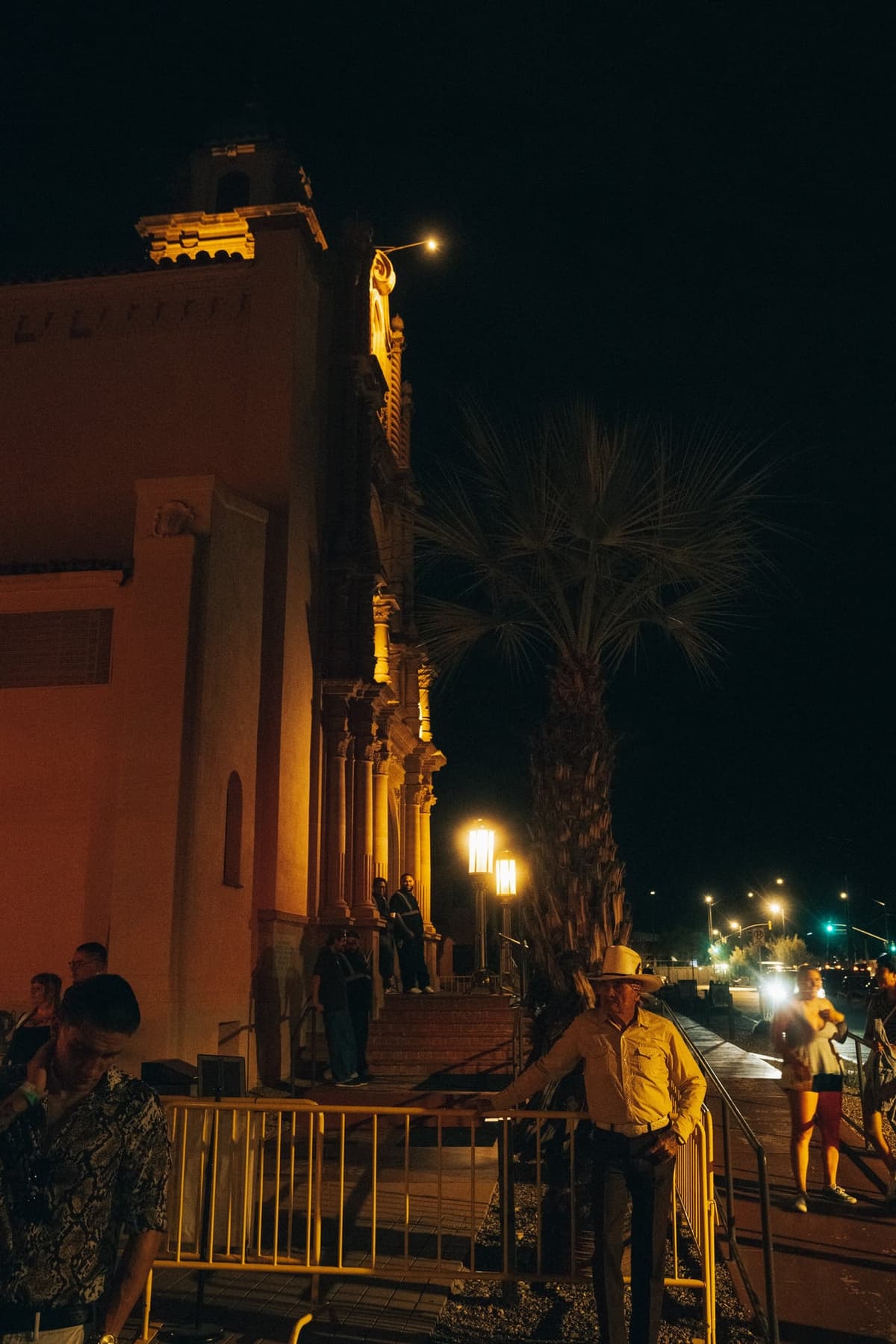
The restaurant takes its name directly from the women who tended the grounds for decades, translating their open-door spirit into contemporary community life. Gathering around a table to break bread and share a meal carries that welcoming tradition into the neighborhood.
The Chef
Bidegain was not originally slated to run the kitchen at Sisters, but an early tour of the space cemented his commitment.
"At that point, Sisters was dirt floors, like nothing was in here at all," Bidegain remembered. "But just seeing the progress inside La Rosa, I was immediately like, something really magical is happening here, and this is a project that I want to be a part of."
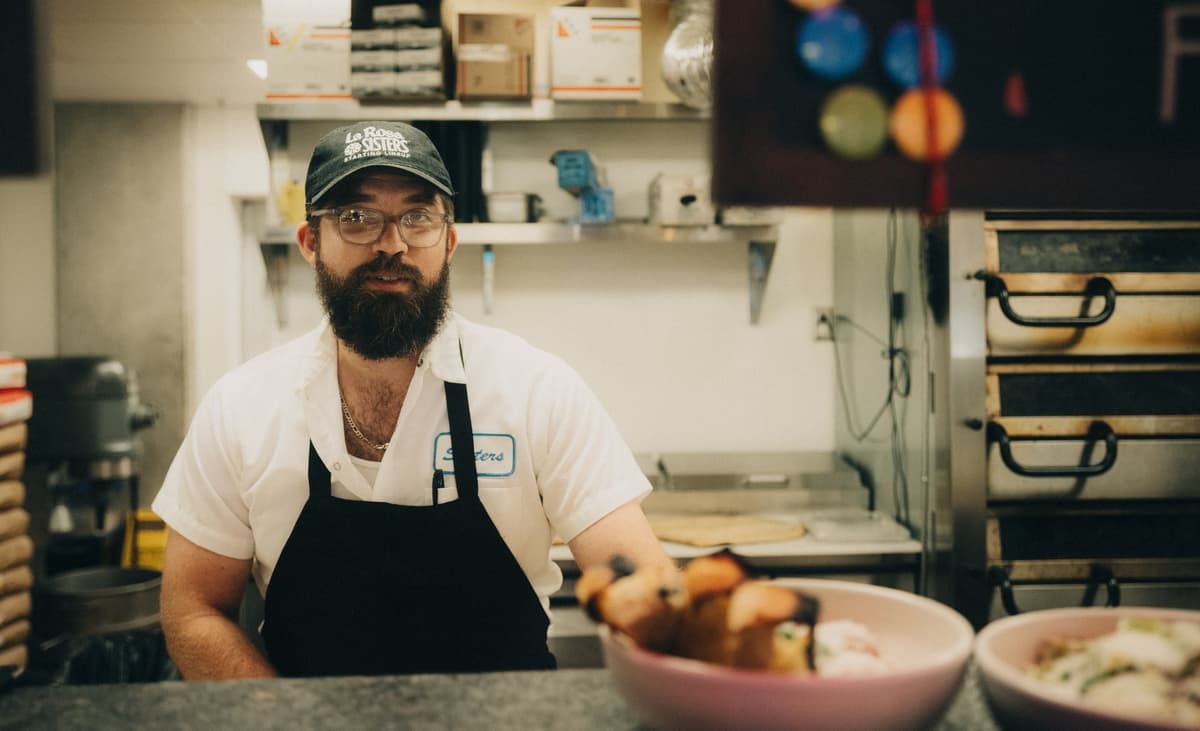
Slutes took notice of his dedication while watching him work.
"We kept watching him, and we go, 'Jesus, he's so freaking good,'" Slutes said. "I asked him to put together a menu for a private event, and it was dialed in perfectly. I said, 'We have our guy.'"
Bidegain’s culinary ethos is more than fitting for the location.
"At its core, you're serving people," he said. “You're providing an experience for people, you're nourishing people, and I think that's like a really kind of sacred relationship between the kitchen and the guests. You never really know why someone is coming into your restaurant, but you serve them as best you can every single time."
Bidegain grew up in Sonoita, the youngest of five kids. His understanding of what a restaurant means to a neighborhood started early, watching his mother work as a waitress at The Cafe.
"Every day after school, I would walk the quarter-mile from the bus stop to go meet my mom at work," Bidegain remembered. "I'd sit at the bar, and it was just a hub for the community there. That's what I want this place to continue to become."
When he decided to cook professionally, he started at the bottom. "I was begging a friend to get me a job anywhere," Bidegain said. "She told me, 'I can get you a job dishwashing, but you've got to be here till one in the morning and you have to drive 45 minutes.' And I was like, 'Sign me up. Let's do it.'"
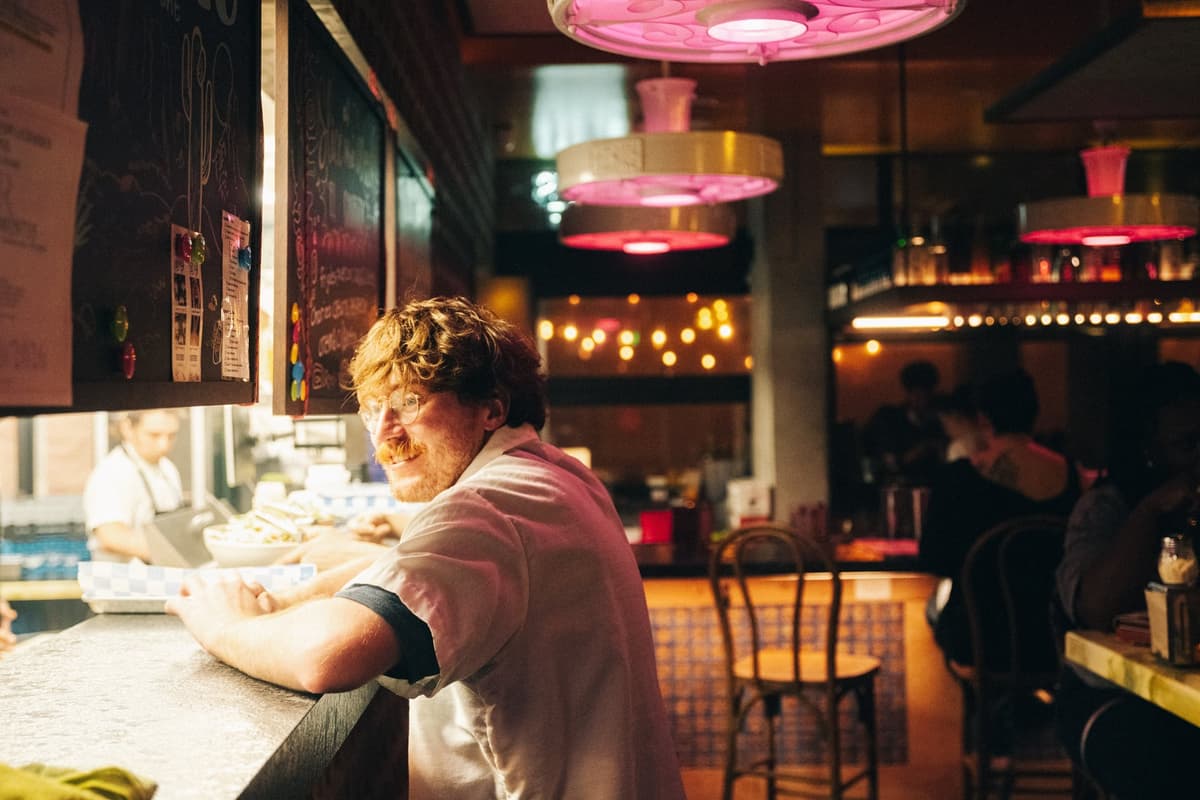
Fifteen years later, after working his way through Tucson kitchens like La Cocina, he still carries that same enthusiasm and determination, and at Sisters, he’s always searching for ways to improve.
"That idea is really what made me fall in love with cooking," Bidegain said. "It's this tangible thing you can work on every single day and get better at."
Perfecting the Slice
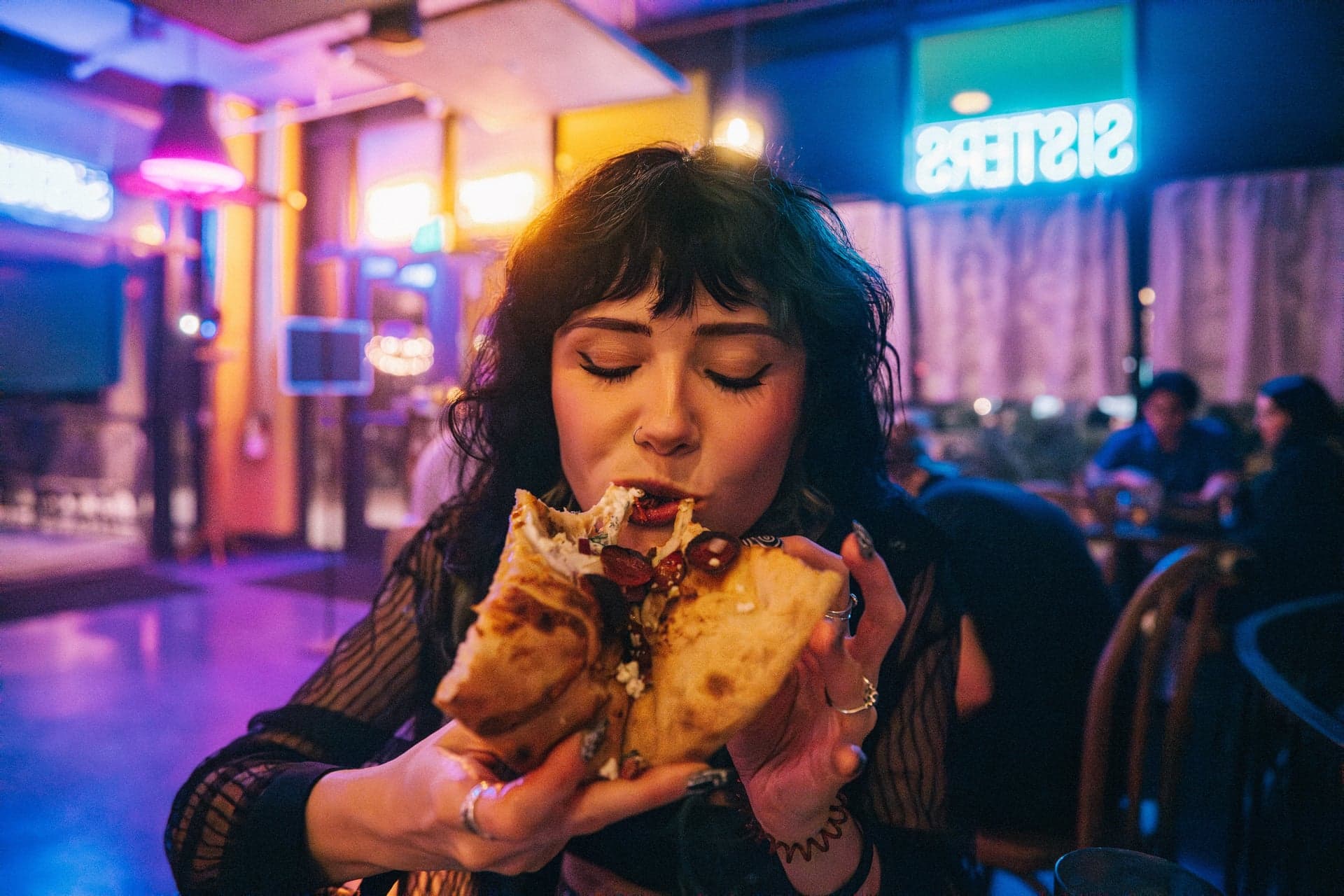
The pizza crust is the clearest example of the chef’s meticulous process. Bidegain subjects the dough to a twenty-four-hour cold fermentation, then balls it and lets it ferment cold a second time. “It has to go this long,” Bidegain said. “You can taste it if you try to get it out too soon. We'll 86 it if it's not there.”
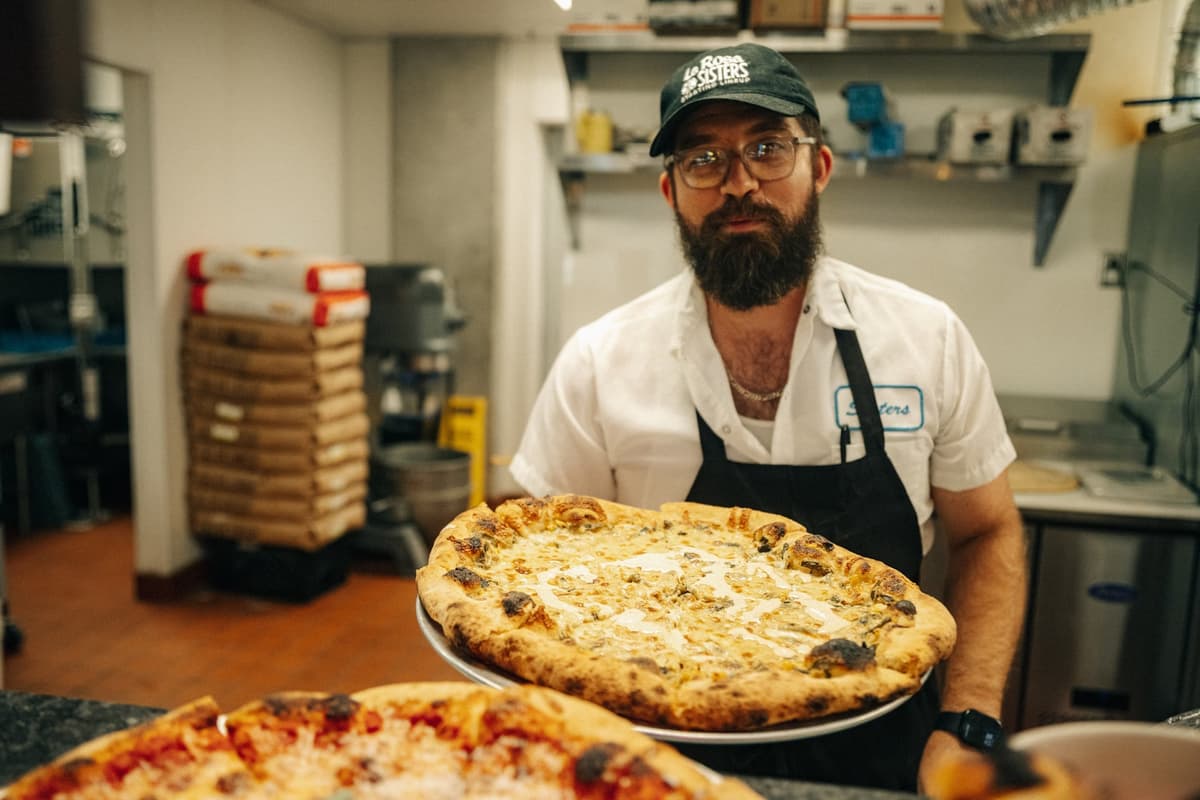
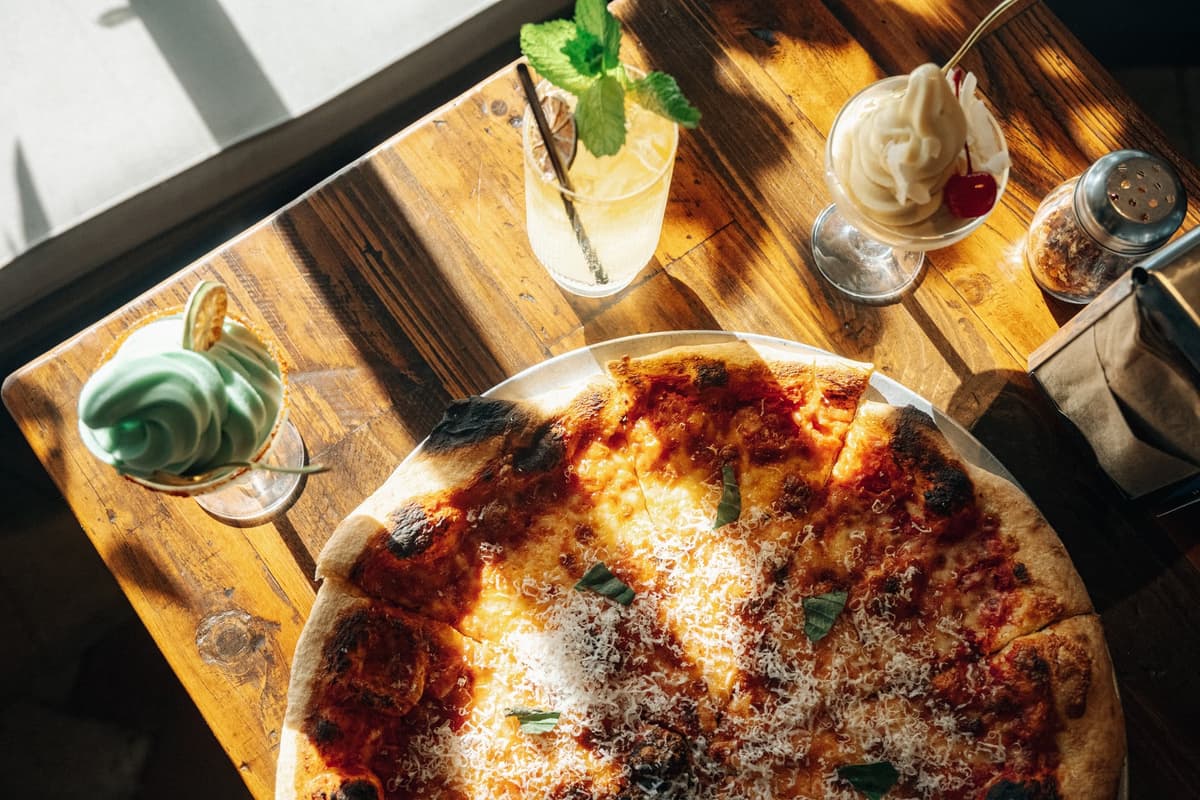
When you pick up a slice, it folds nicely in your hand with a thin, crispy yet chewy crust that has a distinct sourdough tang. The tomato sauce tastes clean and bright, made from crushed organic Bianco DiNapoli tomatoes, garlic, and salt. For the cheese, Bidegain shreds a 50/50 blend of whole-milk mozzarella and provolone, creating just the right moisture and stretch, finished with tiny ribbons of shaved Parmigiano-Reggiano and fresh chopped basil.
A customer who recently moved from New York stopped at the counter to tell Bidegain it was the closest cheese slice to what he used to get in Brooklyn. "That was the greatest compliment we could get here," Bidegain said.
Getting Creative
Beyond the classic slice, the Sonoran Rajas Pie stands out. In place of red sauce, Bidegain lays down a silky roasted poblano cream base with corn. The sweetness of the corn hits first, followed by the mild, charred heat of the rajas, smoothed out with cool chile crema and a generous crumble of queso fresco on top.
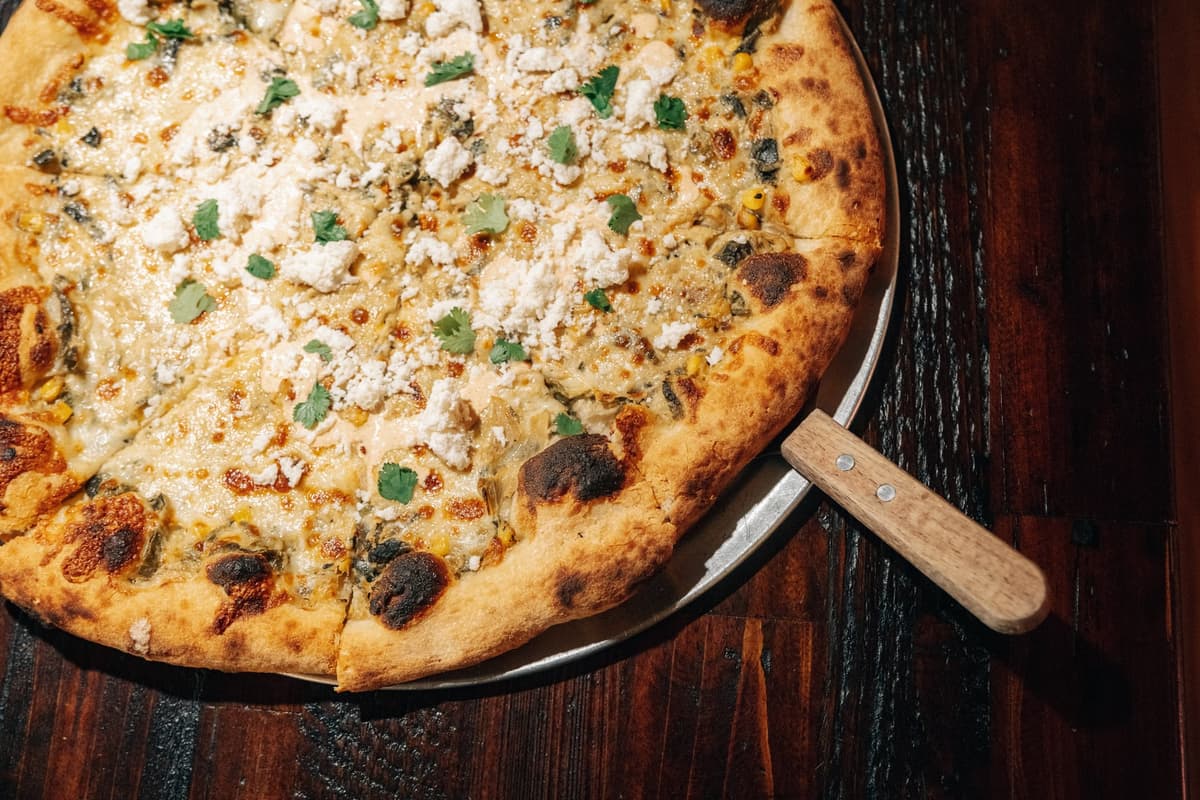
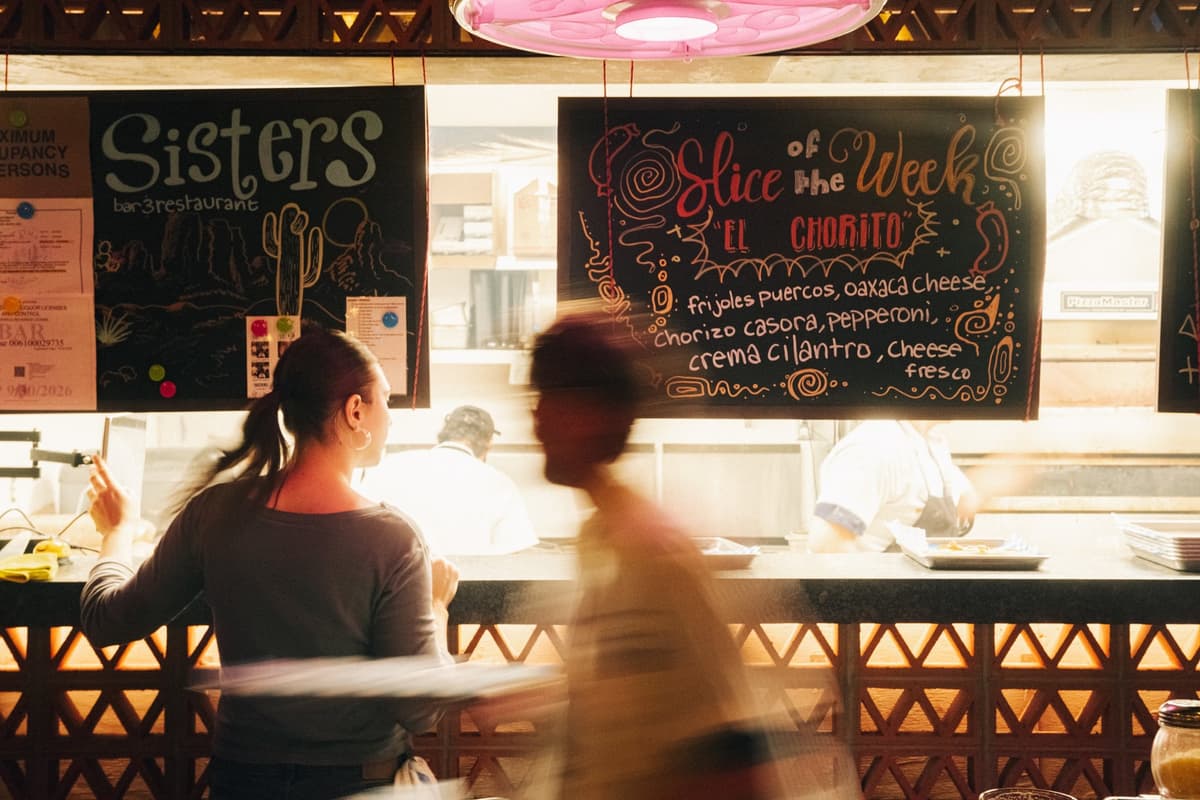
The "Slice of the Week" will keep you checking in to try the kitchen's latest experiments. During this visit, it was "El Chorito," a pie layered with rich, savory frijoles puercos (refried beans with pork involved), melted oaxaca cheese, spicy house-made chorizo, pepperoni, and a drizzle of crema cilantro.
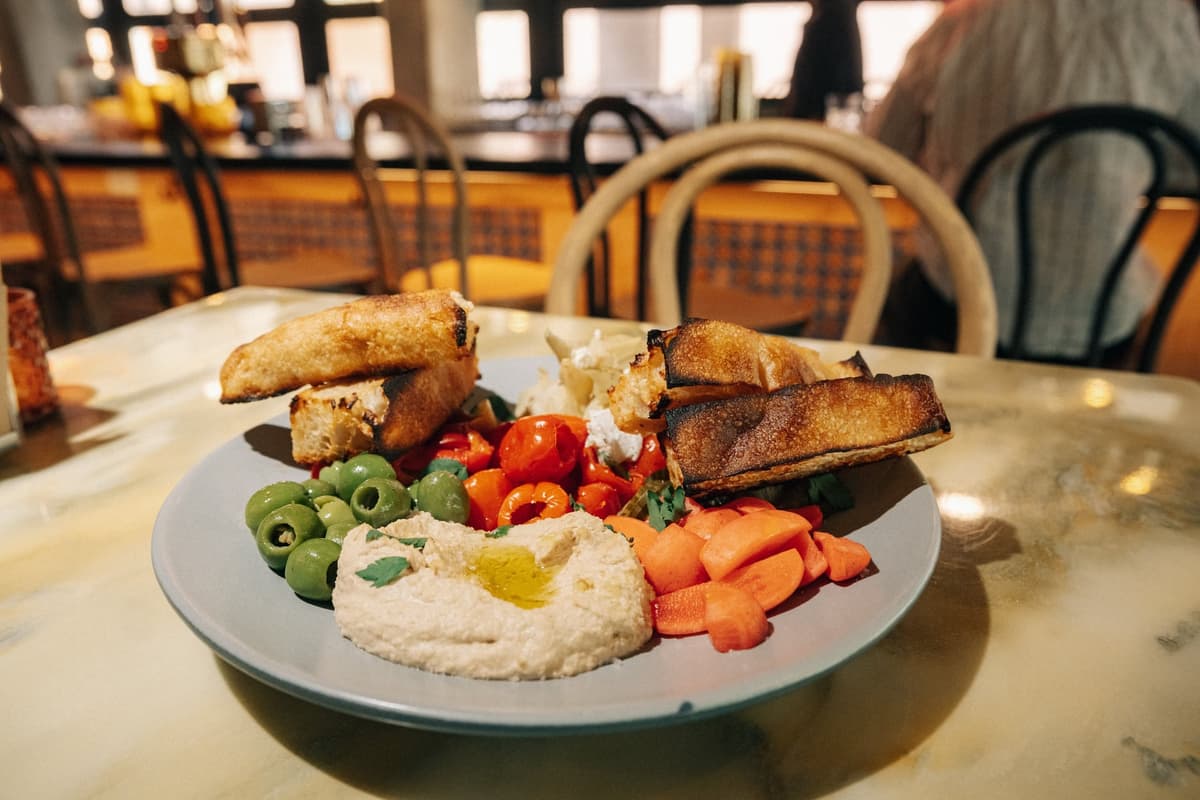
For starters, Bidegain serves a Mezze plate that offers a vibrant contrast of color and texture. A rotating spread of house-pickled radishes, beets, and sweet peppadew peppers deliver a sharp crunch that cuts right through a bowl of velvety, garlic-heavy hummus, served alongside marinated olives and warm focaccia.
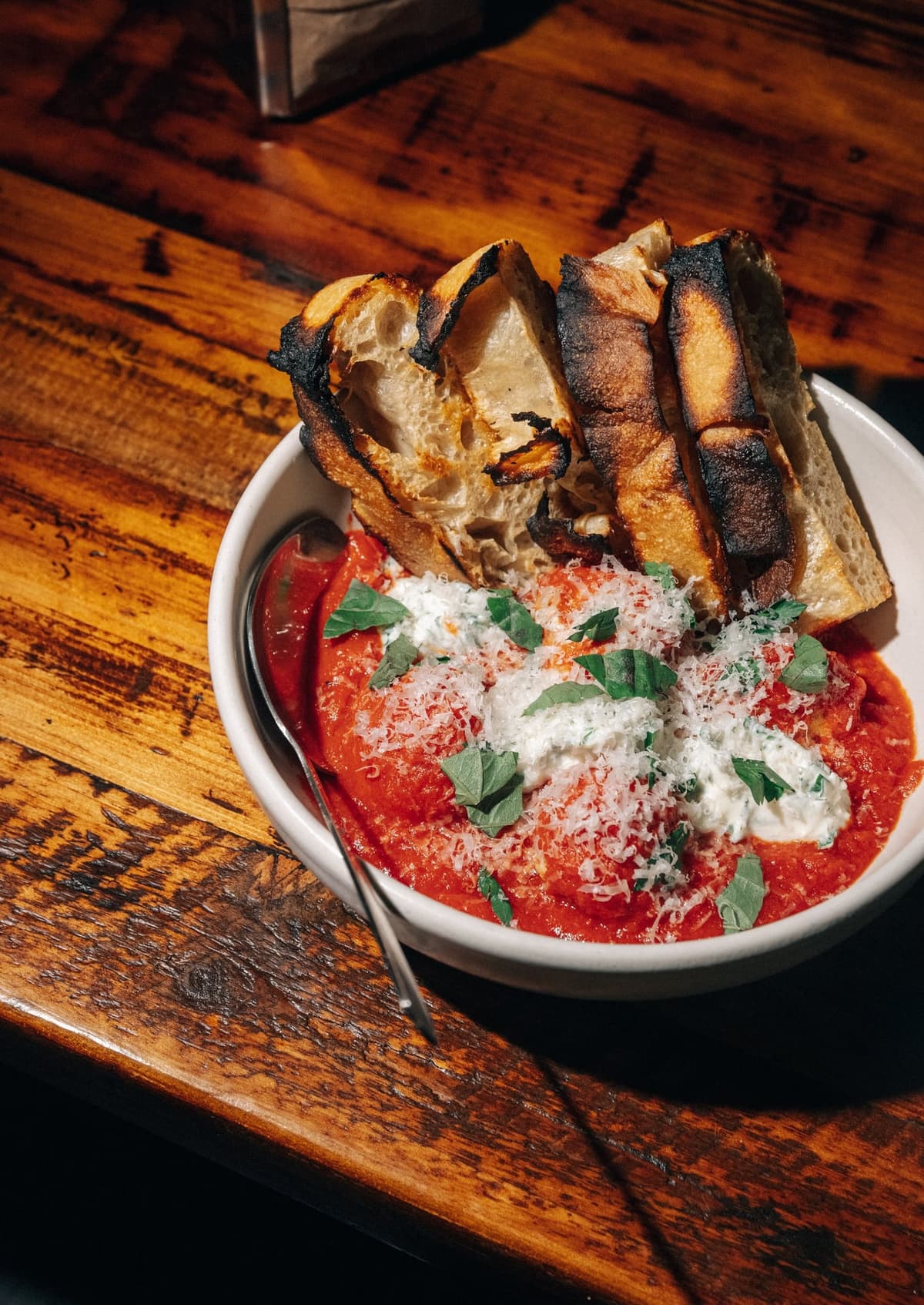
Frankie, the kitchen’s baker, arrives at dawn every morning to bake fresh sheets of that focaccia. Bidegain pairs the thick, airy bread with meatballs made from equal parts veal, pork, and beef. The meatballs are tender and juicy, yielding gently to a fork. Coated in marinara and dolloped with whipped ricotta and fresh basil, they invite you to practice la scarpetta, an Italian term which Bidegain explained meant tearing off a warm crust of Frankie's bread to wipe the bowl completely clean of sauce.
Shaken, Stirred, and Soft-Serve
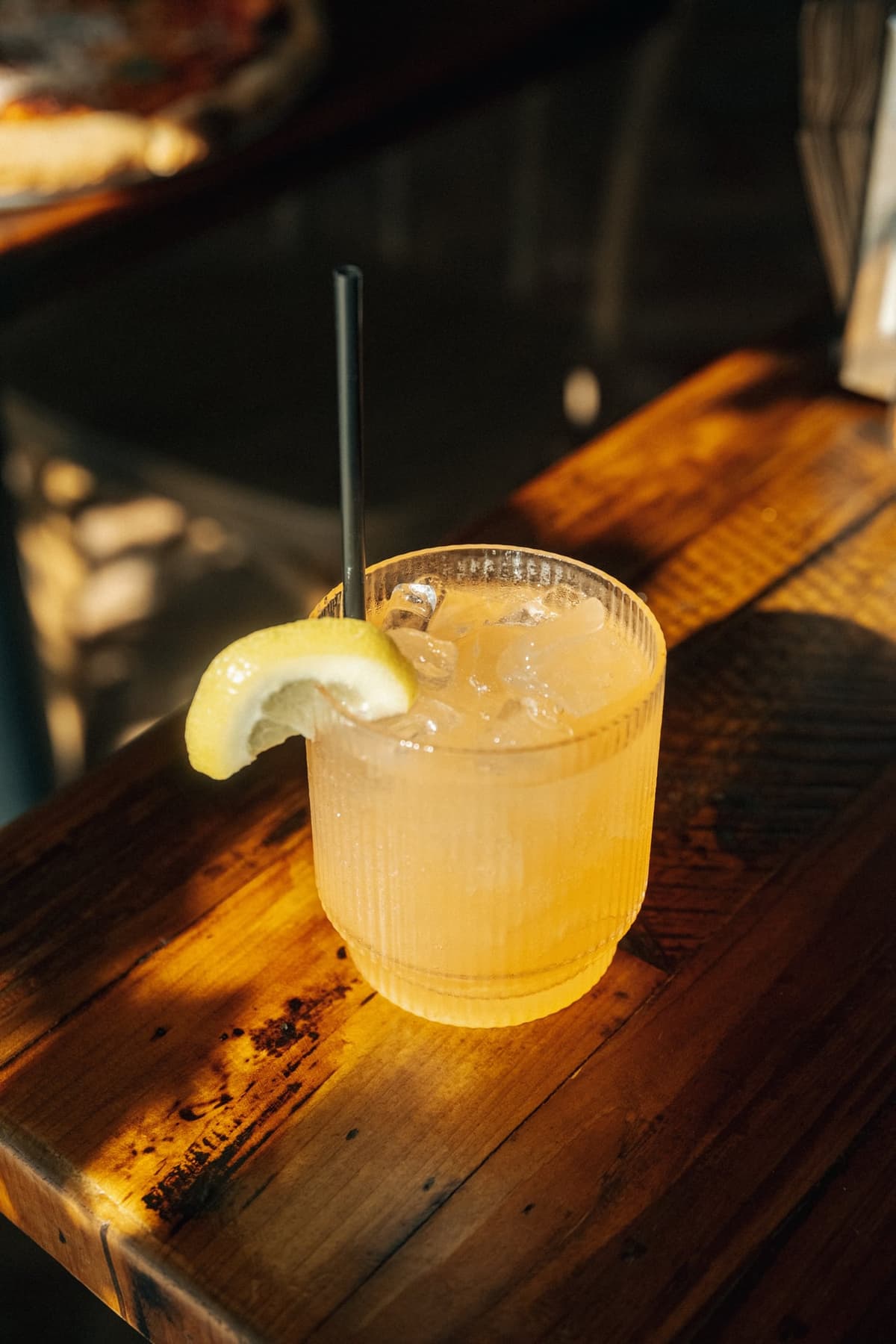
The cocktail list includes the Golden Hour, a balanced mezcal drink shaken with fresh lemon and elderflower, the acidity and florality smoothing out the mezcal's smoke.
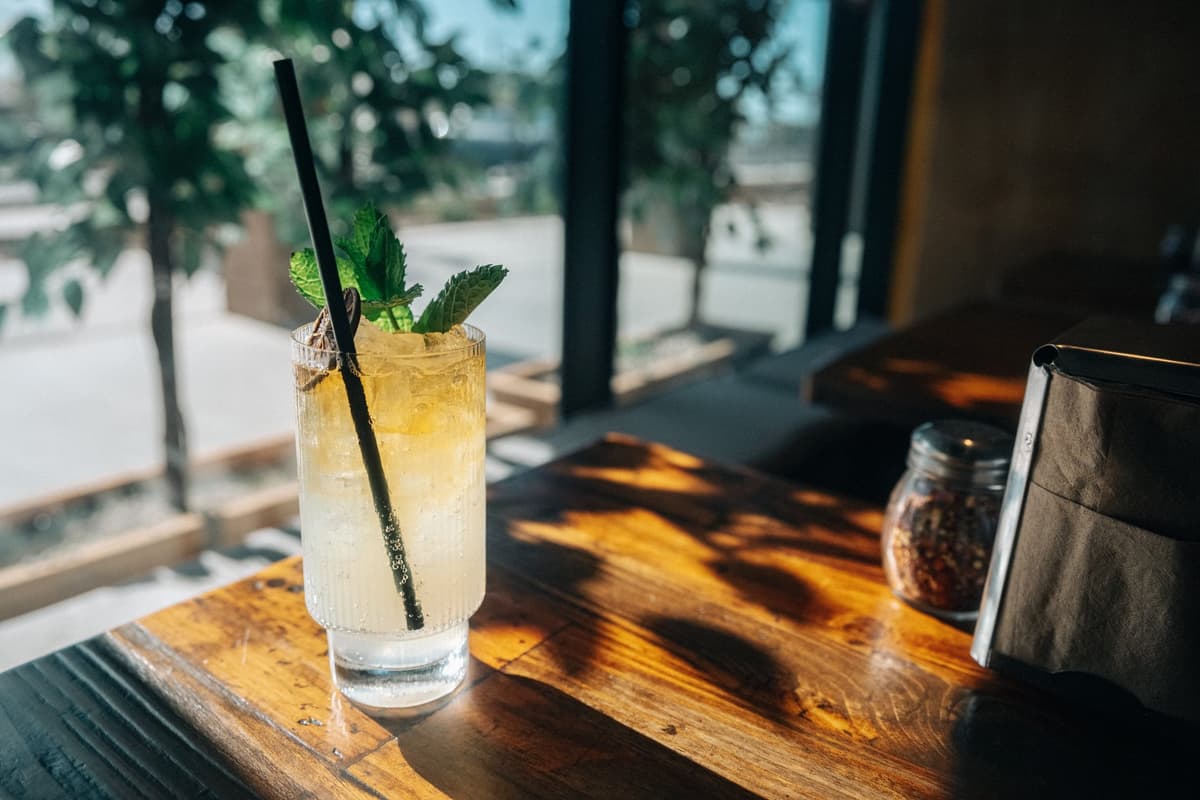
Paul’s Shipwreck includes a dark rum poured over ginger beer and lime, garnished with mint.
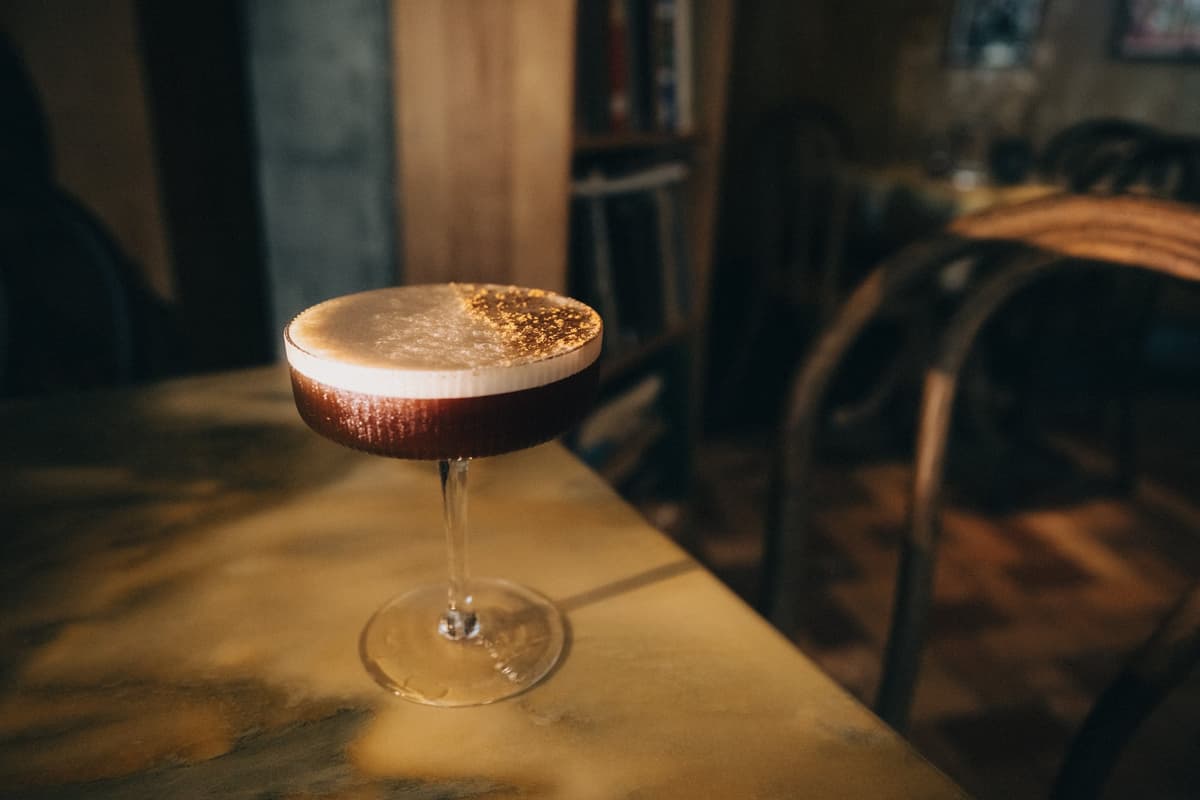
My personal favorite, the Second Thought, is an ‘espresso’ martini built on rich cold brew from neighboring Yellow Brick Coffee with a frothy, cinnamon-dusted head.
The biggest hit came after Charlie Levy suggested boozy soft-serve ice cream.
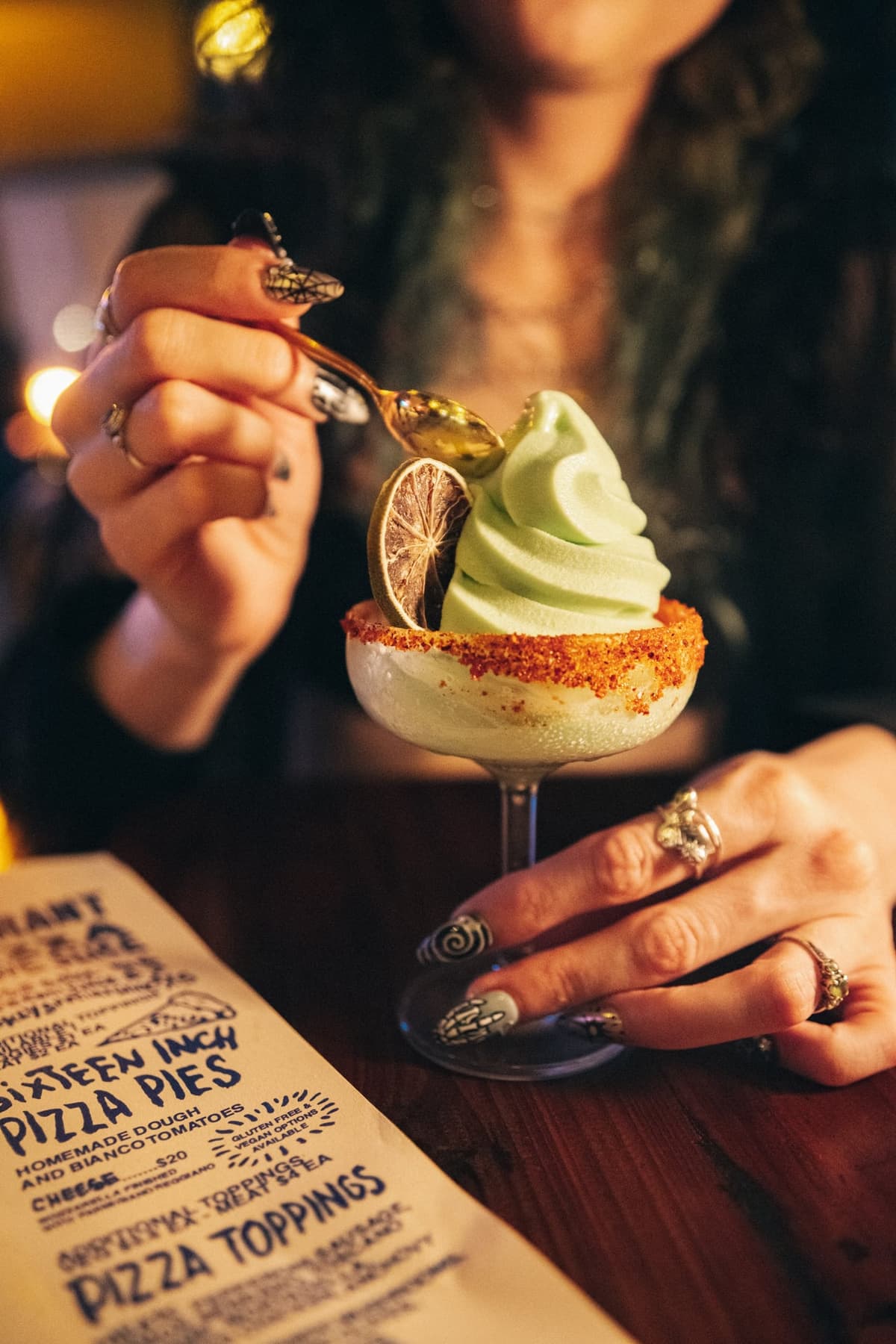
"Charlie came back from New Orleans with the idea for a soft-serve margarita, and something just took off," Slutes said. "We went from a normal restaurant to an extraordinarily busy restaurant overnight. It snowballed for us!"
The recipe uses Straus organic dairy and 100% blue agave tequila. Served with a Tajín rim and a dehydrated lime wheel, it tastes a bit like a key lime pie: tart, creamy, and smooth, with the Tajín adding some extra tang before the cold sweetness takes over.
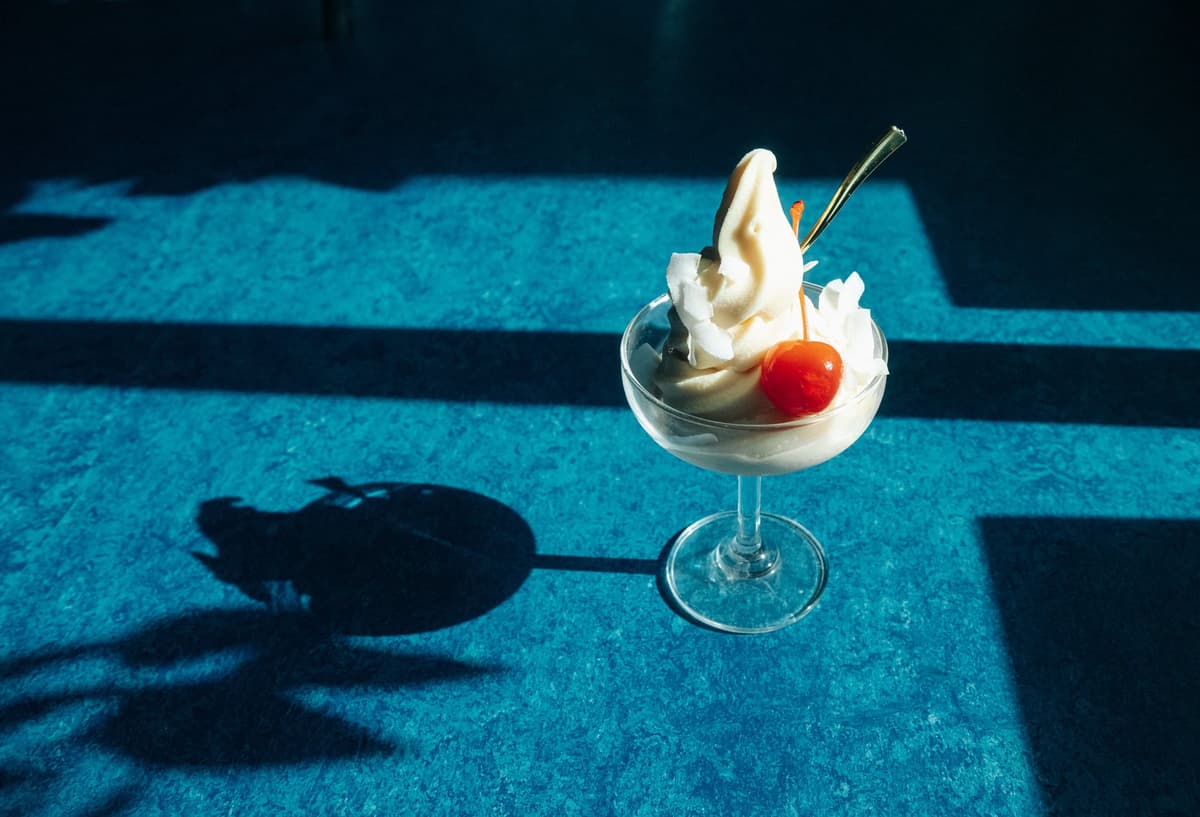
The piña colada soft-serve mixes rum, cane sugar, Coco López, and pineapple juice, topped with toasted shaved coconut and a bright red maraschino cherry.
"We went back and forth on whether we wanted to use a really nice Luxardo cherry," Bidegain admitted. "We were like, no, we need the clear, nuclear red." As a fan of classic maraschino cherries, I agree with the choice.
Writing on the Wall
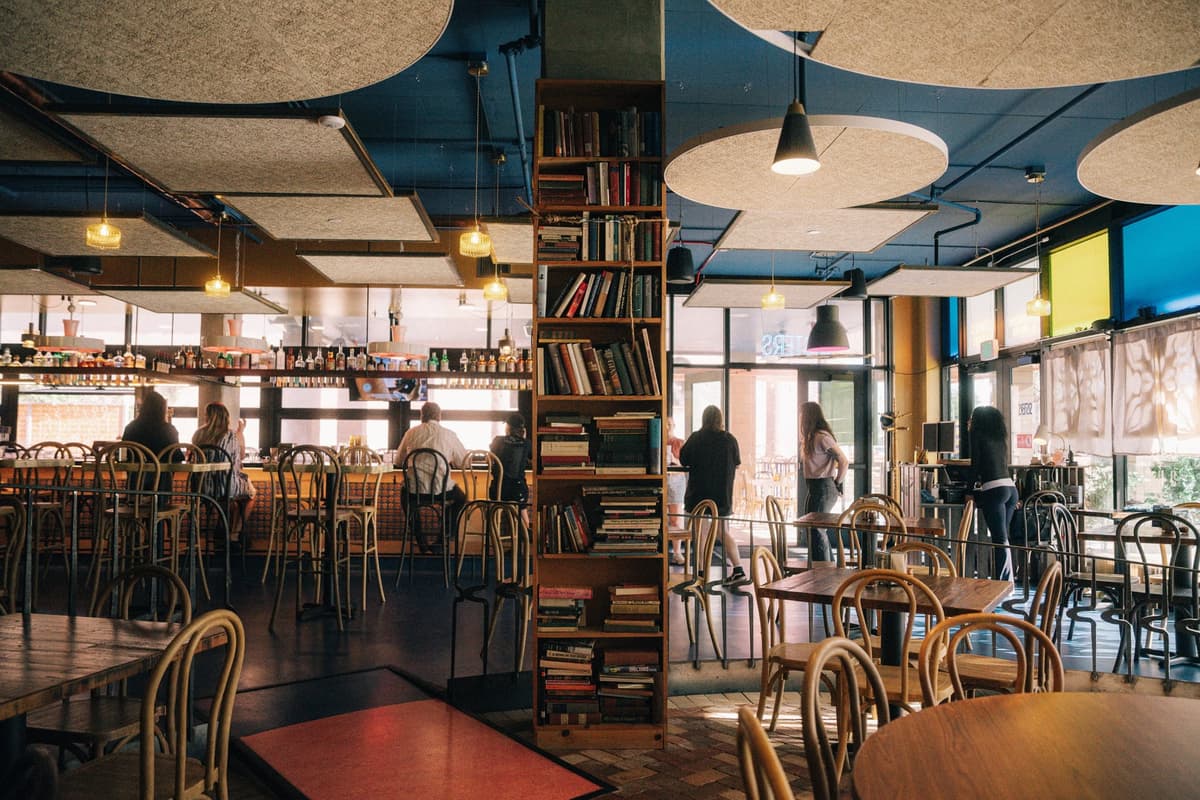
When it comes to the atmosphere, Sisters gracefully blends vibrant pops of pink, blue, and yellow to create a setting that feels both playful and elegant. In the beginning, Slutes leaned on familiar habits, spinning a sprawling two-thousand-track playlist heavy on punk and alternative rock. Yet, surveying the room, he noticed neighborhood retirees sitting right alongside local students and young families.
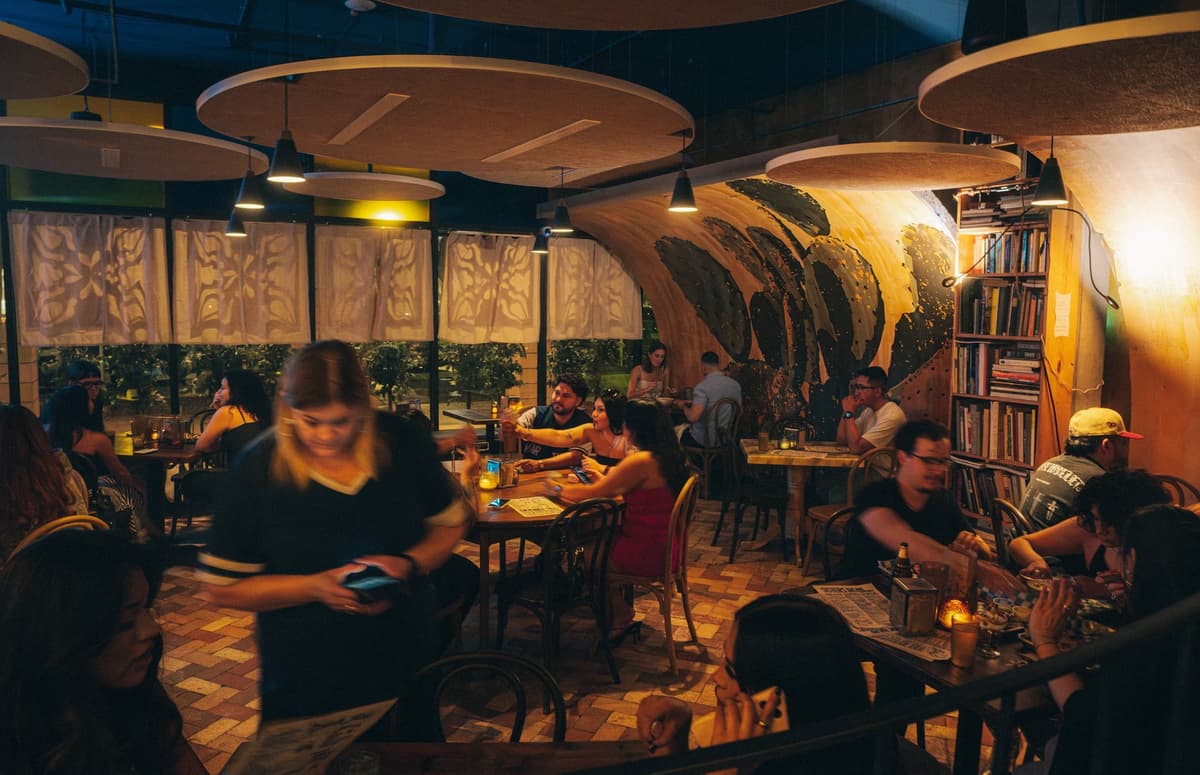
"We shifted our soundtrack in here!" Slutes laughed. "We saw all the older folks coming in, and the young kids coming in. That's what we want. Everyone gets along."
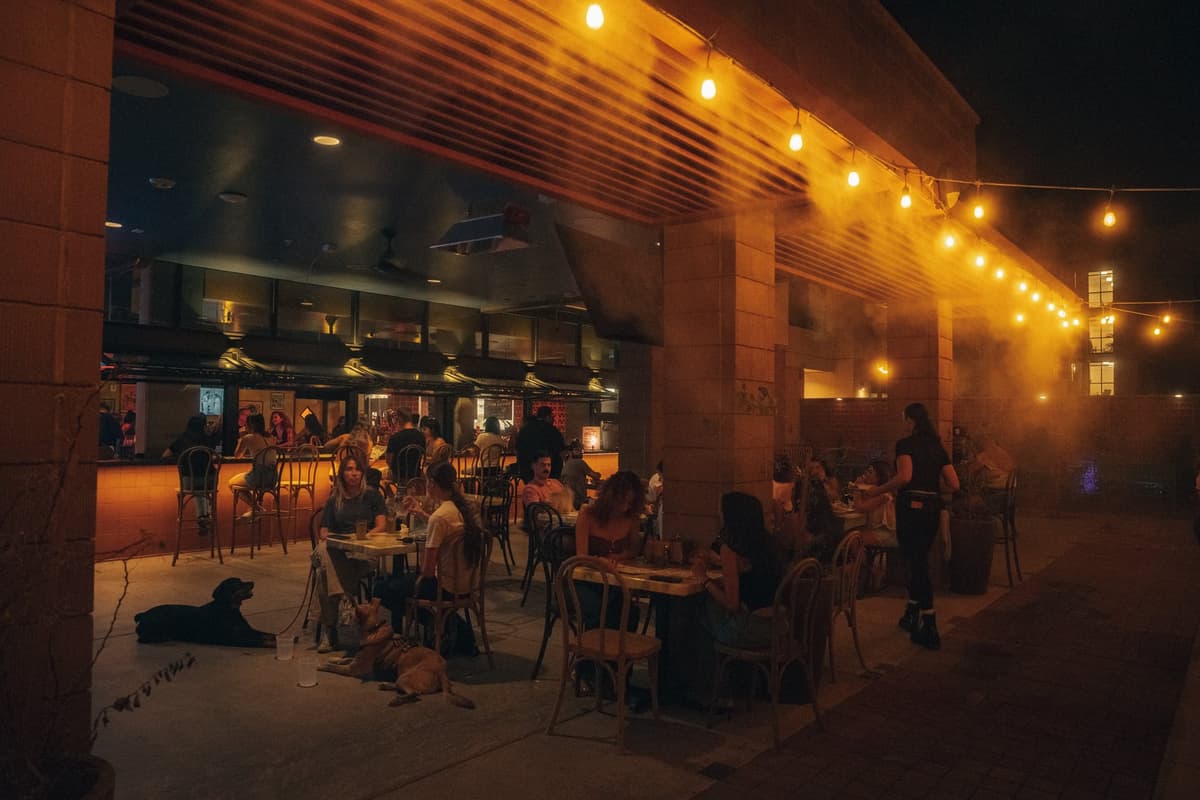
"Serving everyone from a heavy metal show, to a country-western show, to a hip-hop show," Bidegain said. "Tonight we've been doing a summer salsa series every Thursday, and a lot of the salsa dancers come in here and get dinner beforehand. It's really been this cool melding of a bunch of different little pockets of Tucson that I've known for a long time."
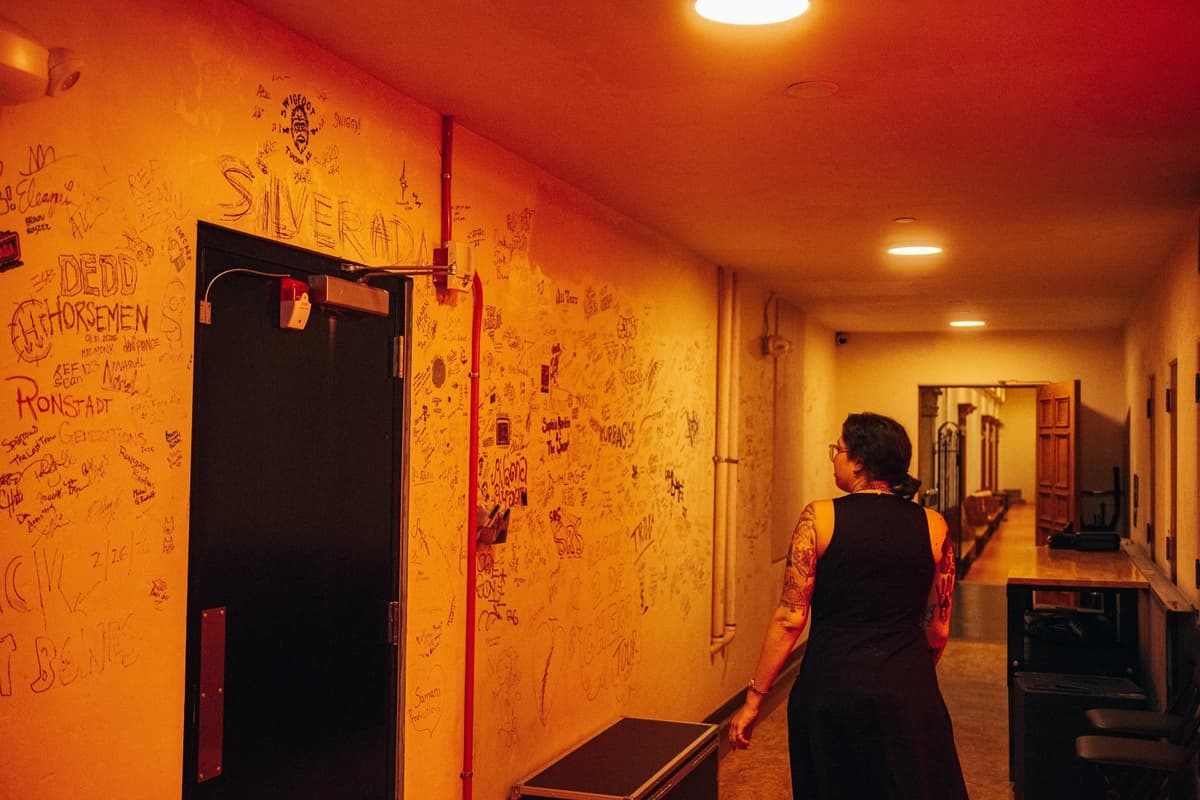
On one of the walls inside, names written in black marker have started to multiply, left by neighbors, showgoers, and regulars claiming a small stake in the room.
"I want in ten years for the wall to be covered in people's signatures," Bidegain said, looking across the dining room. "People coming back to find where they signed the wall, and knowing this was a home for both neighborhoods and the rest of Tucson."
Article written by: