A shared platter of colorful dishes, torn injera, and no utensils: Ethiopian food has a way of inviting you to slow down and make your meal a communal experience. As a Nutritional Sciences student and an Integrative Medicine physician who teaches culinary medicine, we set out to explore a nourishing,delicious experience, focusing on nutrition and the experience of eating.
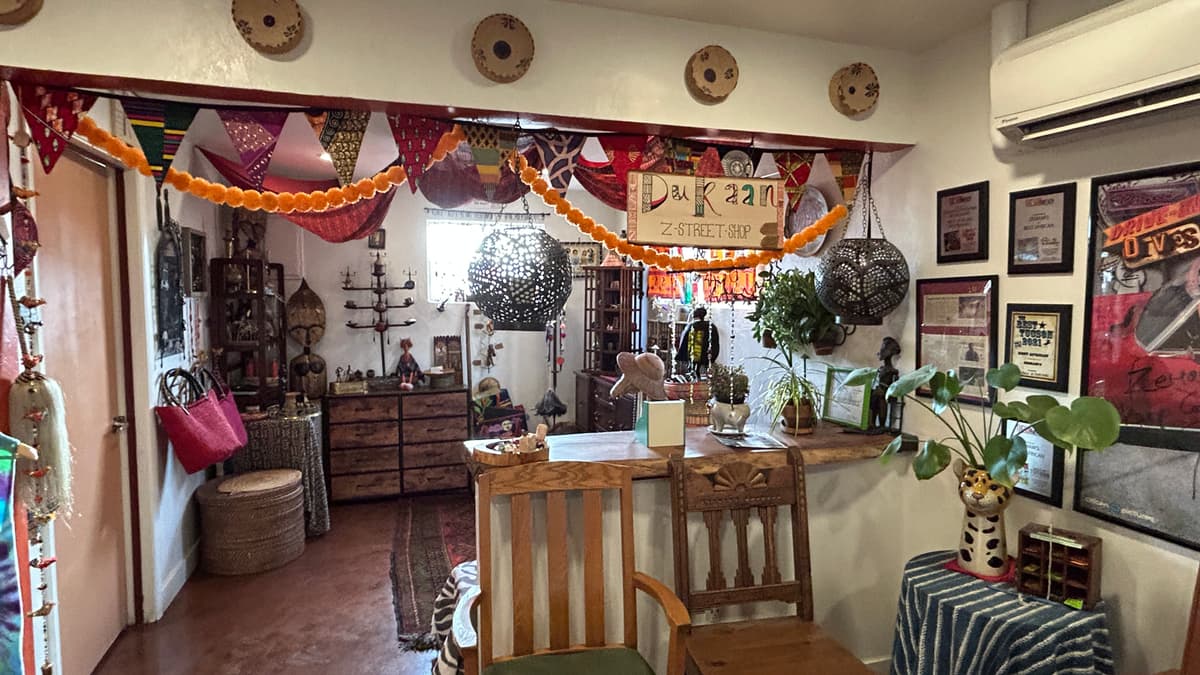
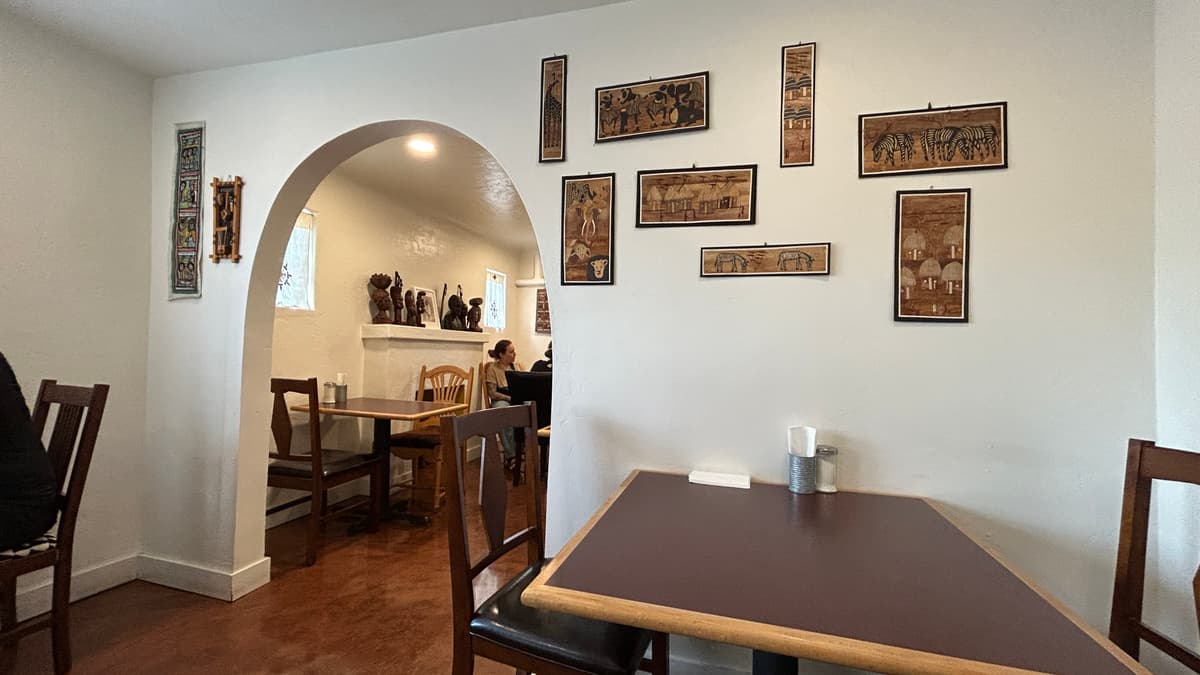
From the moment we stepped onto Z-Street, we were welcomed by vibrant colors, Ethiopian artwork, and a sense of community that extends far beyond the dining room. Family-owned and serving the Tucson community since 1993, Zemam’s Ethiopian Cuisine is part of a colorful gathering place alongside Zerai’s International Bar and Zedamo Coffee & Tea — a space where food, culture, and connection come together.
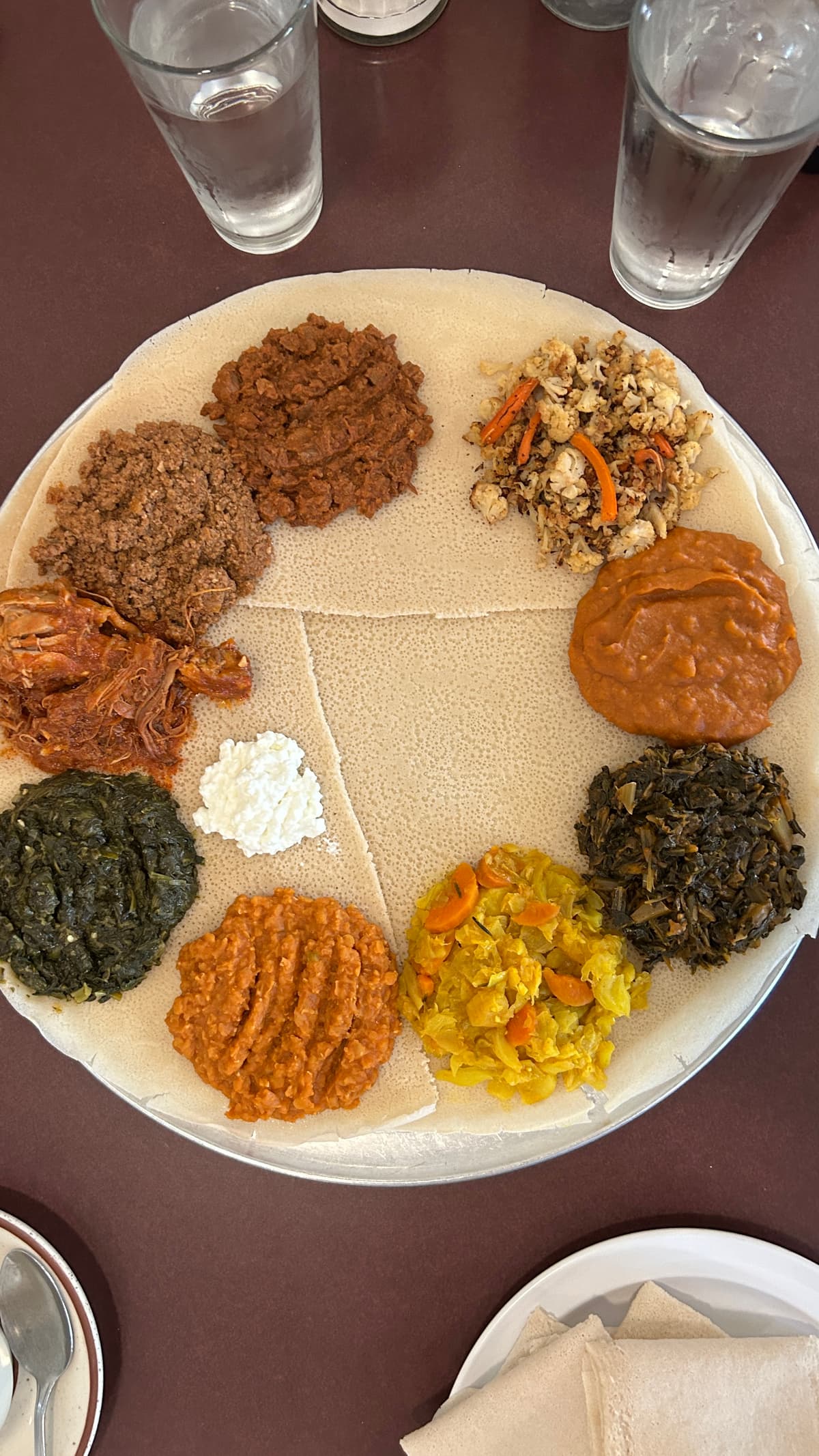
At Zemam’s, eating is meant to be shared. Our meal arrived on one large platter lined with injera, Ethiopia’s signature fermented flatbread. Instead of utensils, we tear injera by hand and use it to scoop up every bite. Sharing a plate naturally slows us down. It invites conversation, encourages us to try something new, and reminds us that nourishment is also about who we are sharing it with.
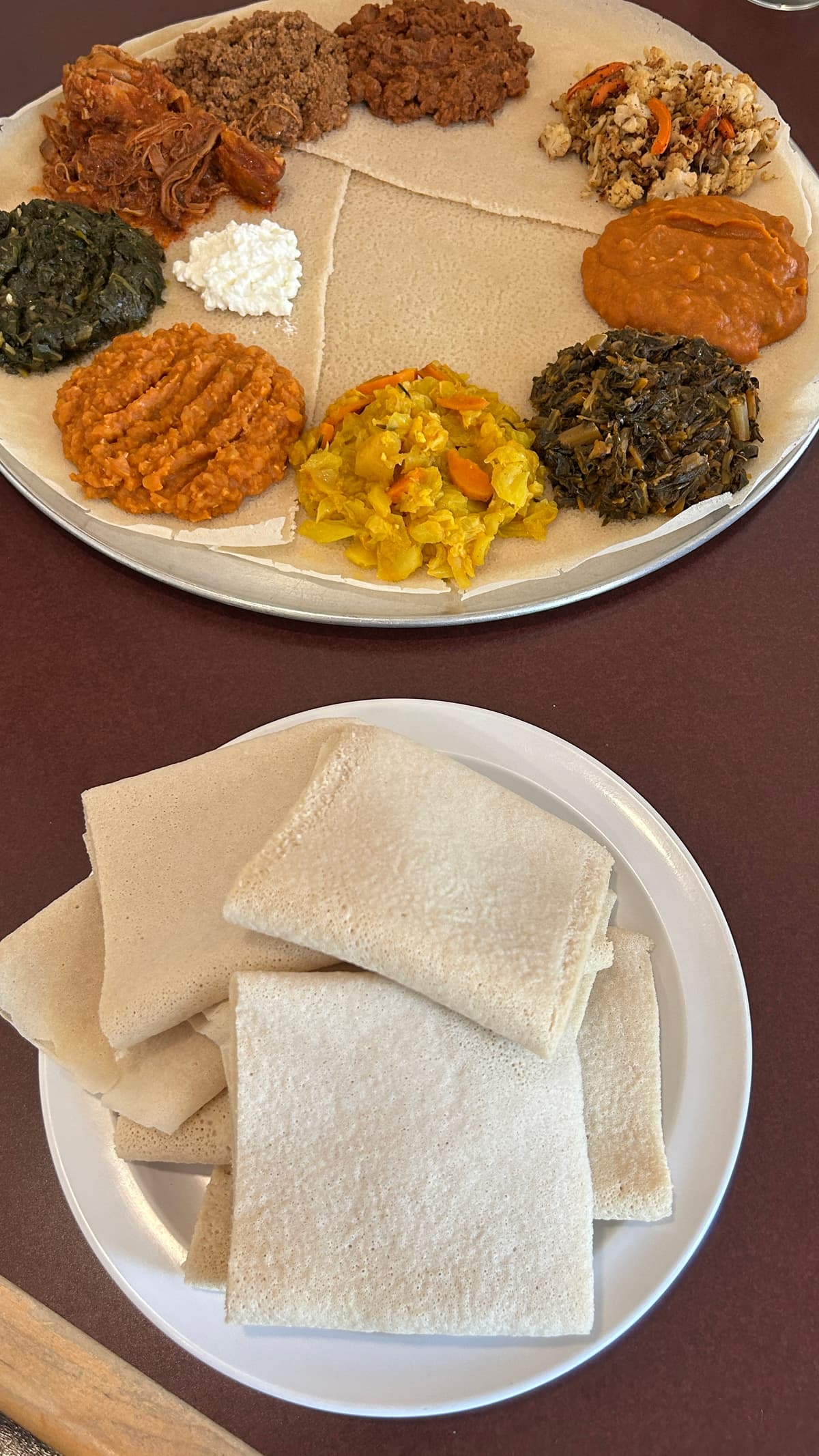
One of the nutritional standouts of Ethiopian cuisine is teff, an ancient grain that is traditionally used to make injera. Teff contains 10-13% protein, making it one of the more protein-rich grains while also providing fiber, iron, and other important nutrients. For those who avoid gluten, 100% teff injera is naturally gluten-free. Its fermentation gives injera its classic tangy flavor and spongy texture reminiscent of sourdough bread.
Ethiopian cuisine demonstrates how satisfying and nourishing plant-based eating can be. Our platter included shiro, a chickpea dish seasoned with traditional Ethiopian spices; yemisir wat and yemisir kay wat, lentil dishes rich in flavor; and yetakelt wat, a medley of vegetables and potatoes. We also enjoyed two preparations of greens, gomen wat and gomen alicha, with cauliflower and other vibrant vegetable dishes that showcased both variety and abundance.
Rather than focusing on a single “superfood,” Ethiopian cuisine celebrates diversity on the plate. Eating in community and sharing multiple dishes means eating a variety of flavors, textures, and nutrients in one meal. Lentils, chickpeas, vegetables, and teff each contribute something unique, showing that nourishment often comes from a combination of foods rather than a single ingredient. For example, chickpeas have bioactive peptides that help lower cholesterol and blood pressure.
The spices used throughout Ethiopian cooking add both depth of flavor and a rich culinary heritage. Berbere is a combination of spices that includes fenugreek, garlic, ginger, cardamom and others that bring warmth and complexity to many dishes, while cardamom lends its fragrant notes to traditional Ethiopian tea. Alongside garlic, turmeric, and other aromatic spices, these ingredients transform familiar foods into something memorable. Garlic can lower blood pressure and turmeric can decrease inflammation. The combination of these spices is functional and delicious.
Perhaps the greatest lesson Ethiopian food offers has nothing to do with nutrients. Eating from a shared platter encourages us to pause, to reach for a new dish, offer a favorite bite to someone else, and to savor both the meal and the moment. Taking more time with a meal can be good for us, too. Research has linked a slower pace of eating with better metabolic health and lower risk of conditions such as diabetes and cardiovascular disease. Sometimes, one of the healthiest things we can do is simply sit down, share a meal and take our time.

Elena Sofia Piña-Loucks is a Nutritional Sciences student at the University of Arizona and an active member of Upsilon Theta Sigma, the first pre-professional integrative health fraternity.
Dr. Mari Ricker is an integrative medicine and family medicine physician leading the Integrative Medicine Residency program at the University of Arizona Andrew Weil Center for Integrative Medicine.
For more information on the University of Arizona Andrew Weil Center for Integrative Medicine, check out their Instagram @andrewweilcenter or visit their website here.
Article written by:

Elena Sofia Piña-Loucks
More about ElenaElena Sofia Piña-Loucks is a Nutritional Sciences student at the University of Arizona and an active member of Upsilon Theta Sigma, the first pre-professional integrative health fraternity.